Midrashic Reading and the Temptation of Christ in Luke

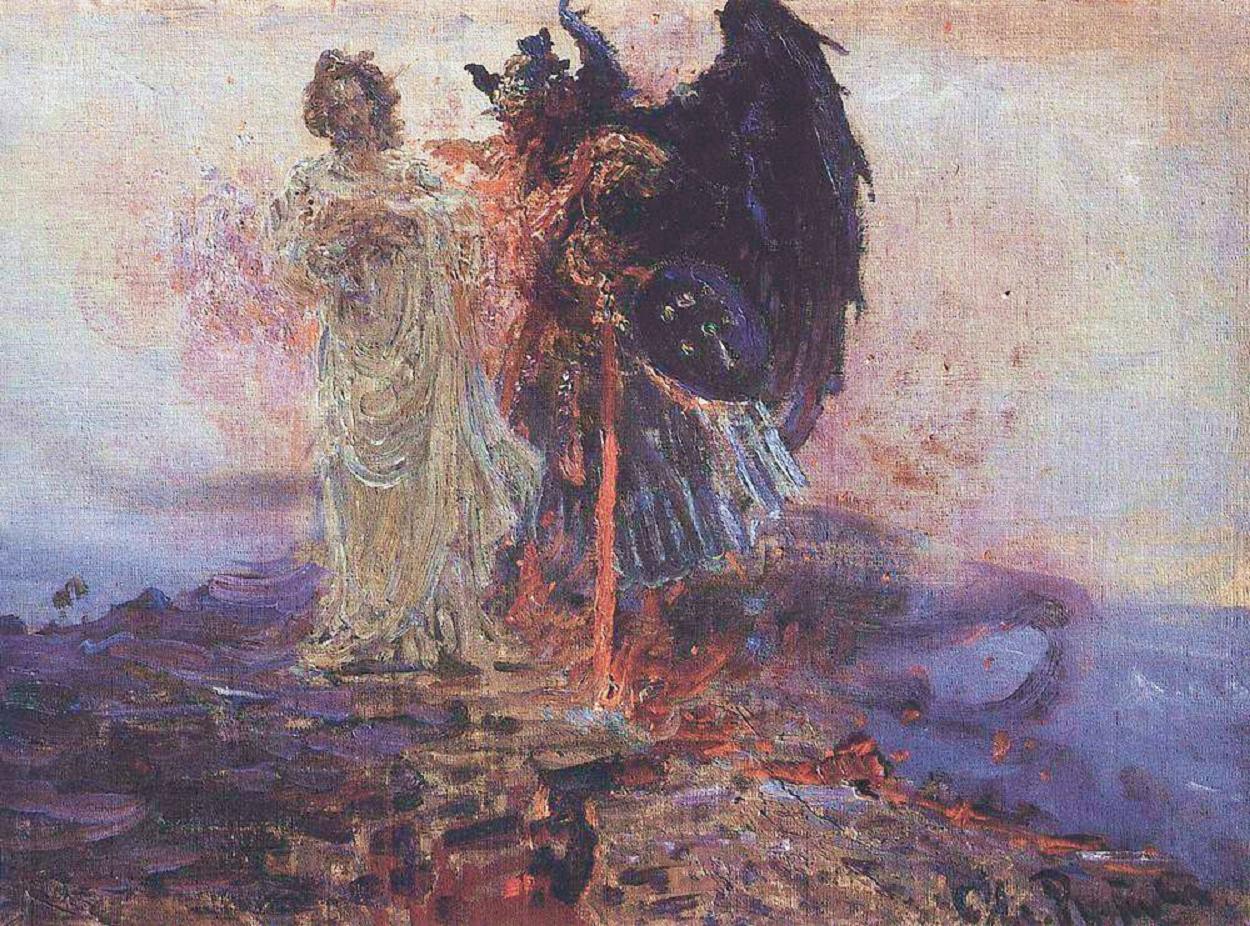
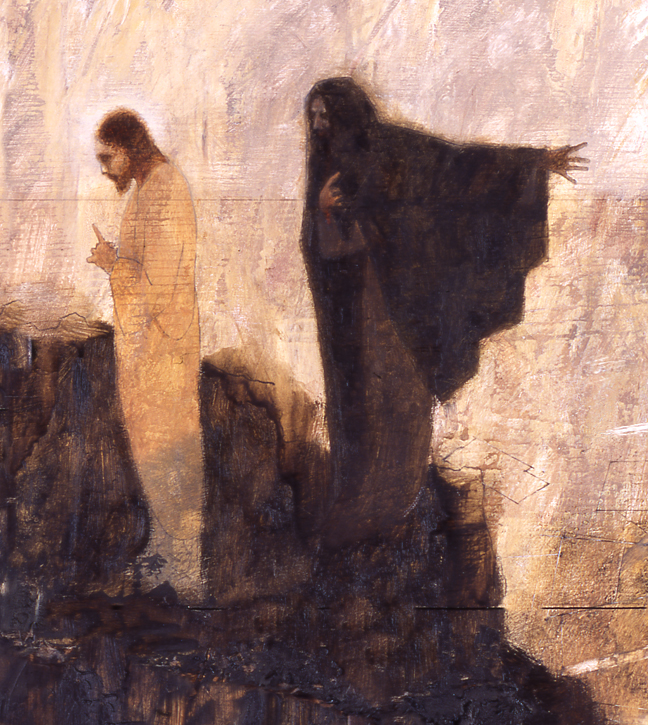
Ilya Repin “Follow Me!”
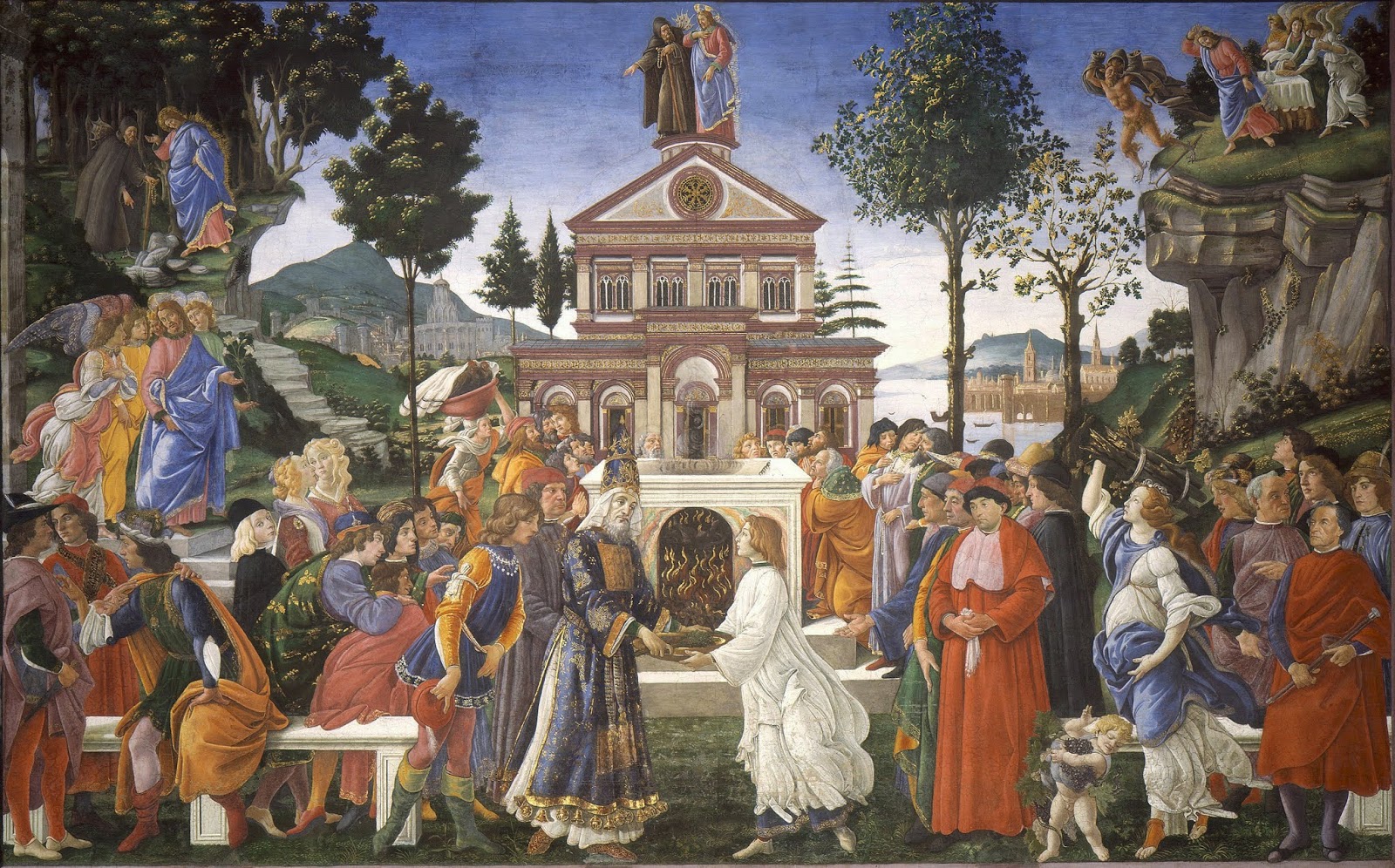
One of the most famous stories in the Gospels is Satan’s testing of Christ in the wilderness (Luke 4.1–13).

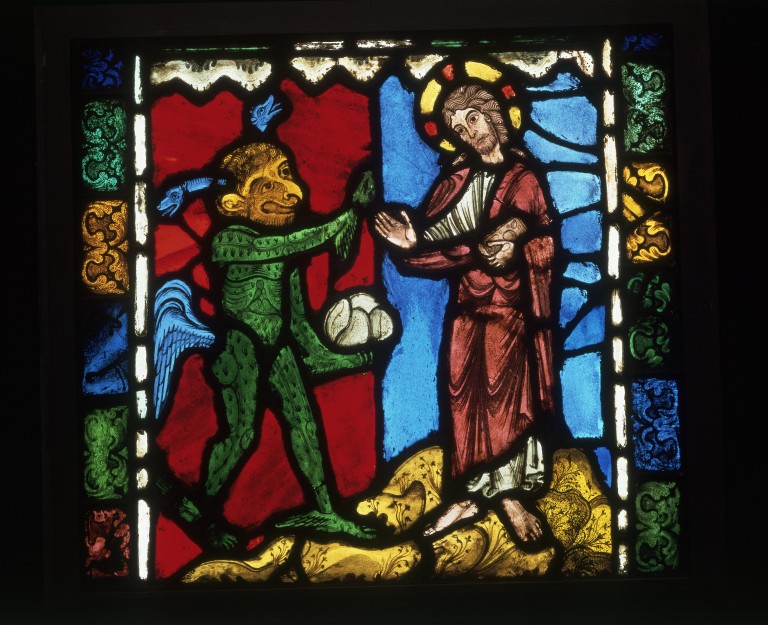
Jesus, full of the Holy Spirit, returned from his baptism at the Jordan and was led by the Spirit through the wilderness for forty days, tempted by the devil. He ate nothing during those days, so when they were ended, he was hungry. The devil said to him, “If you are the Son of God, command this stone to become bread.” And Jesus answered him, “It is written, Man shall not live by bread alone.”

So the devil took him up and showed him all the kingdoms of the world in a moment of time, and said to him, “To you I will give all this authority and their glory, for it has been delivered to me, and I give it to whom I will. If you, then, will worship me, this will all be yours.” And Jesus answered him, “It is written, You shall worship the Lord your God, and him only shall you serve.”
So the devil took him to Jerusalem and set him on the pinnacle of the temple and said to him, “If you are the Son of God, throw yourself down from here, for it is written, He will command his angels concerning you, to guard you, and On their hands they will bear you up, lest you strike your foot against a stone.” And Jesus answered him, “It is said, You shall not put the Lord your God to the test.” And when the devil had ended every temptation, he departed from him until an opportune time (Luke 4.1–13).
The story sticks in our minds because it reminds us of other stories that we know almost as well. Even if we can’t verbalize the exact story or passage, we probably recognize the wilderness is a place for testing. It’s the wilderness that is the abode of demons and demoniacs, a place for the dead and the dying, a place far away from the comforts of home, family and protection (e.g., Lev 16; Isa 34.10–14; Luke 8.27ff). So it does not surprise us that Jesus would go here, first, to face Satan’s power and invade his own realm.
It probably doesn’t surprise us, either, to read that he is there for forty days, because we recognize that forty is the number of testing. It rains for forty days in the flood (Gen 8.6); the Israelites are tested for forty days while Moses is on Sinai (Exd 24.18) and then when their spies enter Canaan (Num 13.25) and while they spend the years in the wilderness (Num 14.33–34). Goliath tested Saul for forty days before David answered his challenge (1 Sam 17.16) like Nineveh who repented, prolonging her forty days (Jon 3.4), and Elijah—another Moses—spent forty days being tested by God on Horeb (1 Kgs 19.8).
And we expect that it is Satan—or, in Luke, “the devil”—who does the testing. For it was the Serpent who tested the First Adam in the Garden (Gen 3), who made a case against the innocent Job in the Heavenly court (Job 1–2), and who tempted King David at the census (1 Chr 21.1). The list is long of those he had defeated and he has faint reason to believe that he will not prevail here, as well.
But something that we might not expect are the comments we read that this happened at a “moment in time” (4.5) and that, after, Satan retreats until “an opportune time” (4.13). This minor note invites us to read the passage a little differently than we probably are used to. It invites us to read this specific temptation in a broader sense, as representative of all of Jesus’ temptations and demands that we  read Satan into all of Jesus\’ temptations throughout the Gospel. So, what I want to consider is how the three temptations of Christ in Luke 4 echo and are echoed in how Luke portrays temptation throughout, starting with the first. This is a sort of Midrashic Exegesis, a type of reading that was very popular in and around the first century and that considers individual stories as mere chapters in a broader, unified story (I’m planning on having a few posts on this phenomenon later, but for now you can just see it in action!). When we read stories this way, it can help highlight details and make connections that we might not otherwise make.
Jesus is concluding his fasting and he is hungry and Satan comes and first tempts him with that hunger. “Why should the Son of God be hungry? Turn the stone into bread!” This temptation is not really about hunger, although hunger is what it plays on, but on his status as the Son of God. Why should the Son hunger? It might not be right to take the children’s bread and throw it to the dogs (Mat 15.26), but certainly the children could turn stones into bread! And if God could raise up children of Abraham from these very stones (Luke 3), surely a little bread would be ok? Turning stone to bread would be no issue for the Son of God who multiplied the fish and the loaves (Luke 9.13). Jesus is tempted to act as more than just the Son of Man, tempted in every way as we are, he is tempted to act differently because he is someone special. Here, he would not have to follow the command he provides to the limited commission when he tells them to “take nothing with you on your journey, neither staff nor bag nor bread nor money” (Luke 9.3). Instead, he answers by looking at a different mindset:
“Nah, bro. I’m good.” -Jesus (probably)
And you shall remember the whole way that the LORD your God has led you these forty years in the wilderness, that he might humble you, testing you to know what was in your heart, whether you would keep his commandments or not. And he humbled you and let you hunger but fed you with manna, which you did not know, nor did your fathers know, that he might make you know that man does not live by bread alone, but man lives by every word that comes from the mouth of the LORD (Dtr 8.2–3).
And by this quotation we understand the type of Savior, the type of man, and the type of Son of God Jesus not only is but will be. A Son who abuses his power to remove the temptations of his earthly existence is not the Son who could later be able to teach his disciples to pray “give us this day only enough bread for today” (Luke 11.3). And, more importantly, not the type of Son who could take a loaf of bread and—after giving thanks—break it and give it to his disciples and say “This is my body, which is given for you.” Jesus does this not because he must—the son does not have to pay tax to the king (Mat 17.25)—but because he did nothing from selfish ambition or conceit, but in humility counted others as more significant than himself, who—even though he was in the form of God—did not count equality with God as something to be grasped, but made himself nothing, taking on the form of a slave, being born in the likeness of man, humbling himself by becoming obedient to the point of death, even death on the cross (Phil 2). And it is the cross that should always be in view when we read about the temptations of Jesus.
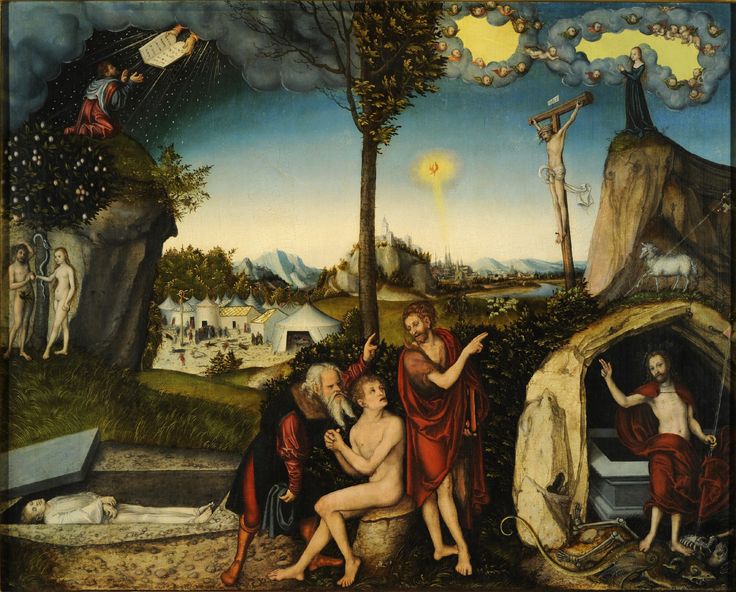
When we read the text this way, it brings up several points: Jesus is the Better Adam, the Son of God who resists the temptations of the Serpent when put to the test and refuses to set himself against God through the gifts of the serpent. Jesus is the better Israel, who trusts in God to provide his daily manna rather than complaining in the wilderness. Jesus is the better Moses, who does not strike the rock nor turn it to bread and thus does not have to gaze on the promised land from afar.  Jesus is the better Elijah, who—while being sustained by God—does not ask to be removed from the power of earthly tyrants, but says thy will be done. Jesus is the better David, a king who dies for his followers rather than sacrificing his own Uriahs to his whims.Satan’s influence may have cursed man to eat bread by the sweat of his face (Gen 3.19), but now the Son of Man comes to be our curse (Gal 3.13), refusing to break bread made from stone (Luke 4.3), but instead to be broken as bread in our place (Luke 22.19).

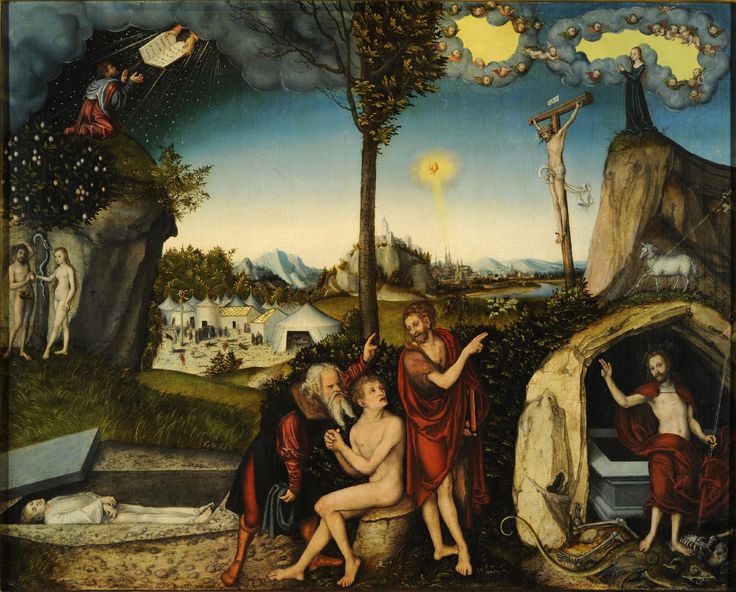
“Law and Gospel” (note the comparisons to Adam and the Serpent)

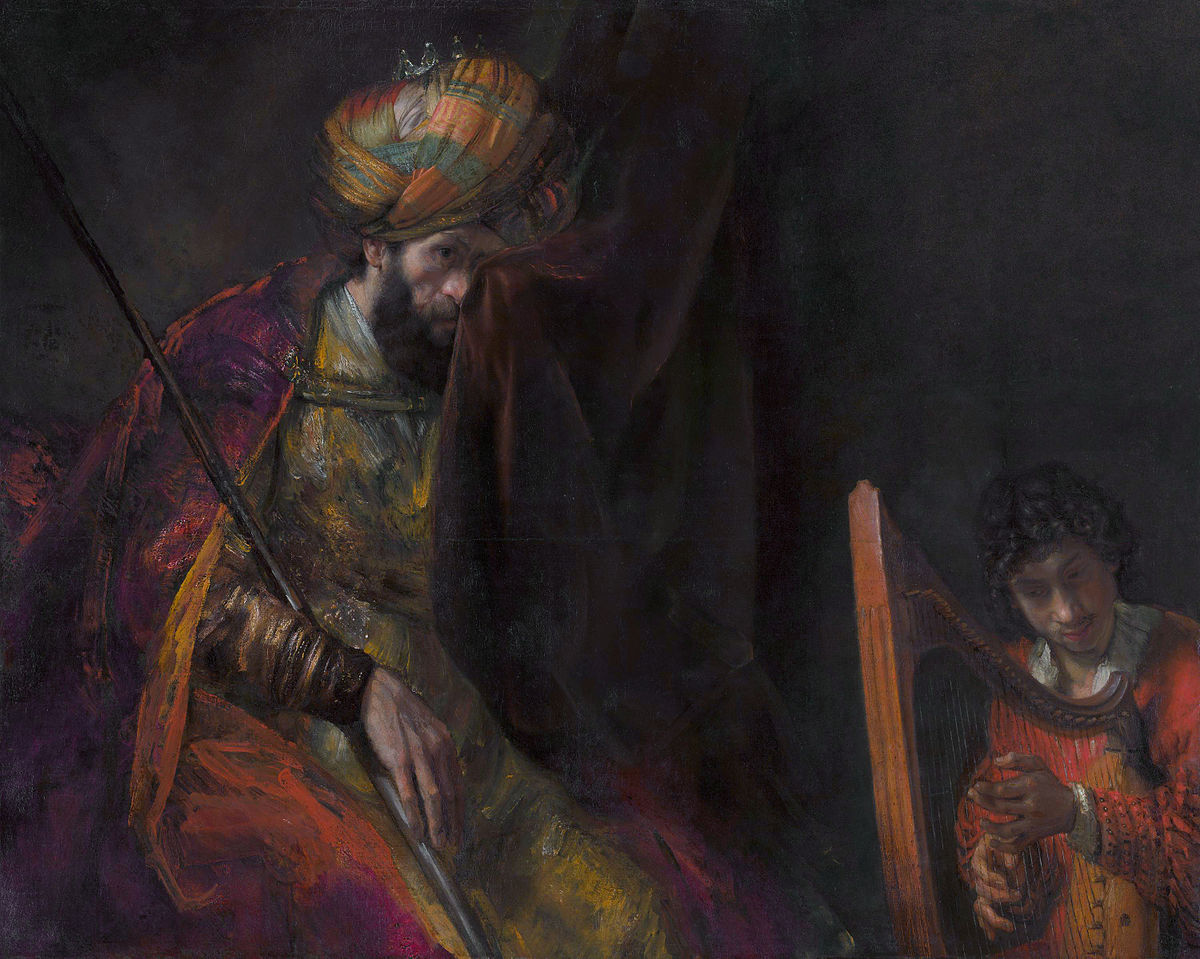
Dress Code Violations: Saul and David in the Cave

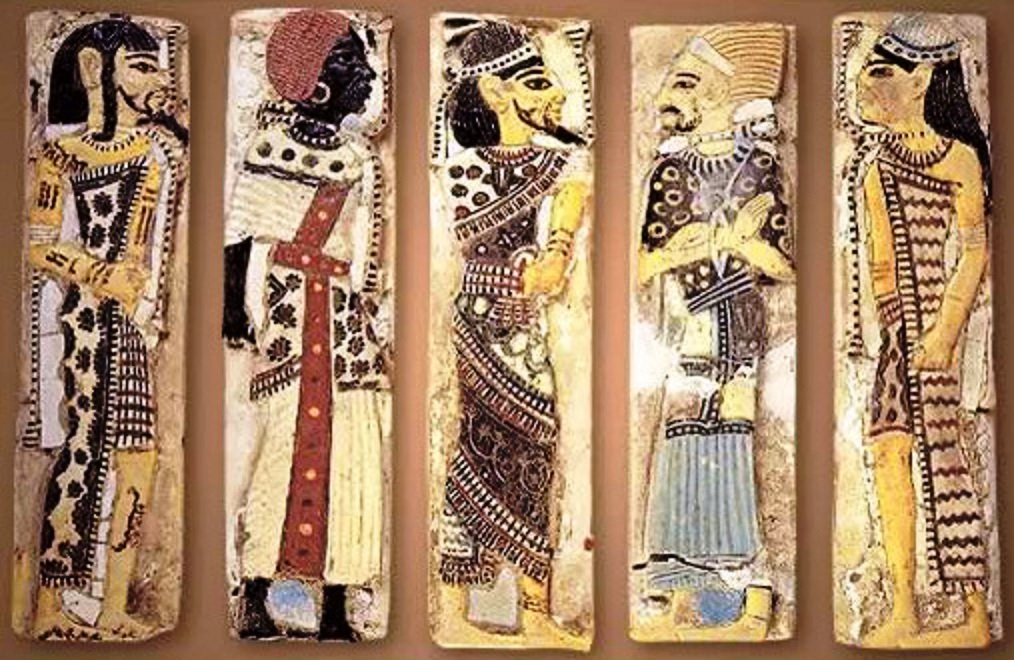
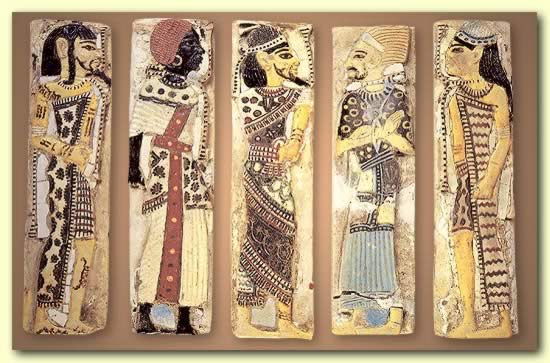
Egyptian Tomb Paintings Showing Captured Peoples

One of the classes I teach at Florida College is an entry-level freshman survey called Old Testament History and Geography. Right now, we’re blitzing through David’s story and working our way toward the divided kingdom, where I spend more of my time. There are a lot of really fascinating, and occasionally bizarre, episodes in David’s life, but one of the most puzzling for folks–once they slow down enough to read what it says–comes from the well-known story of David in the Cave with Saul.

When Saul returned from following the Philistines, he was told, “David is in the wilderness of Engedi.” Then Saul took three thousand of his troops and went to seek David and his men in front of the Wildgoats’ Rocks. When he came to the sheepfolds by the way, where there was a cave, Saul went in to use the toilet. But David and his men were already hiding in the innermost parts of the cave. David’s men reported, “This is the day of which the LORD said to you, ‘Behold, I will give your enemy into your hand, and you shall do to him as it shall seem good to you!’” So David arose and stealthily cut off a corner of Saul’s robe. But afterward David’s heart struck him, because he had cut off a corner of Saul’s robe. He said to his men, “The LORD forbid that I should do this thing to my lord, the LORD’s anointed, to put out my hand against him, seeing he is the LORD’s anointed.” So David persuaded his men with these words and did not permit them to attack Saul, who got up, left the cave, and went on his way (1 Sam 24.1–7).

Although the freshmen always titter about the fact that Saul is using the bathroom when this happens (one student yelled out, “How did that happen?! I’m always super aware when I’m that vulnerable!), the bigger question is what is going on with Saul’s robe?

When Saul is exposed before David, his men see SaulBa’s vulnerability as the fulfillment of a (made up? otherwise unknown?) prophecy where God would give Saul into David’s hand and David could kill him (24.4). But, instead of killing Saul, David “merely” cuts off the hem of his garment. But why? And–if the standard explanation that I’ve seen and heard is right, that he cut it off as proof to show Saul that he had him in his power but let him go–why does David’s heart strike him as though he has done something truly terrible? That answer lies in the ancient concept of clothing.

Clothing is a Big Deal ™ in the ancient world.

  • Clothing is expensive: Joseph gives his brothers changes of clothes as part of their royal gifts, equivalent to about 50 shekels of silver, or two slaves (Gen 45.22). Samson makes his bet for the obscene number of thirty changes of clothes (Jgs 14.12–13). Samuel’s mother, whom the story indicates is part of the upper class, brings him one change of clothes each year (1 Sam 2.19). Jesus’ clothing is one of the main pieces of loot for the soldiers at his crucifixion (John 19.24). Clothing was not the disposable, off-the-rack sort of thing we generally consider it, today.
  • Clothing is a marker of status: Joseph’s favored position with his father is marked by his special coat (Gen 37.3–4). Joseph shows favor to Benjamin by giving him more clothes than his brothers (Gen 45.22). Jonathan recognizes David as a brother when he gives him his cloak and weapons (1 Sam 18.1–4). The Romans had a number of laws which forbade the clothing of higher classes being worn by lower classes. Clothing was important because it allowed people to know–at an instant–whether they were higher or lower than you in the social ladder.
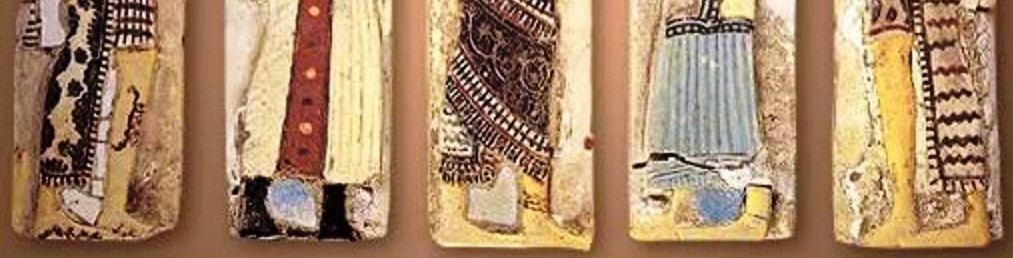
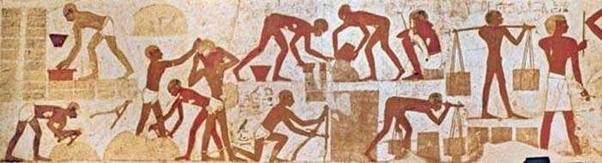
  • Clothing is a marker of identity. When the Egyptians take prisoners, they make sure to get the clothing right to indicate the nationalities of the conquered. In ANE art, the only people who are portrayed as naked are slaves–those who are without identity or personhood. This same concept of identity is the major factor at play in most of the laws about clothing in the Law of Moses (for example, the question of “cross-dressing” in Dtr 22.5 isn’t really about women not being able to wear pants, but not pretending to be men and vice-versa).
Lybian, Nubian, Syrian, Shasu, Hittite

One of the most famous laws about clothing and dress (as well as why all Orthodox and some Conservative Jews wear tassels!) appears in two different versions:

You shall not wear cloth of wool and linen mixed together. You shall make yourself tassels (fringe?) on the four corners of the garment with which you cover yourself (Dtr 22.11–12).

Speak to the people of Israel, and tell them to make tassels on the corners of their garments throughout their generations, and to put a cord of blue on the tassel of each corner. And it shall be a tassel (fringe?) for you to look at and remember all the commandments of the LORD, to do them, not to follow after your own heart and your own eyes, which you are inclined to whore after. So you shall remember and do all my commandments, and be holy to your God. I am the LORD your God, who brought you out of the land of Egypt to be your God: I am the LORD your God (Num 15.38–41).

The fringe, or tassels, of the garment were required by the Law because they differentiated the wearers from the surrounding Canaanites; they were meant to remind the Israelites that they followed the LORD and did his will because he had saved them from Egypt. It reminded them of their special identity. The identity-marking nature of the fringe or tassels of garments is still present throughout the ANE and used for a number of different cultural rituals: since most people were illiterate, contracts were often “signed” by pressing the tassel or fringe into the clay tablet. Obviously, no one would be able to tell one tassel-imprint from another, but it worked because people thought that some of their essence, or soul, or identity was contained therein! To provide another example, when divorce was initiated, the fringe of the divorced wife’s robe was cut off or her robe stripped (Ezk 23.25–26; Hos 2.3; cf., CAD S 233). When Samuel tells Saul that God no longer allows him to be king, this announcement is punctuated by Saul ripping off the fringe of Samuel’s garment as he walks away (1 Sam 15.27–28). In the opposite, a claim of commonality or protection can be made by extending the fringe of one’s garment over someone else (e.g., Ruth 3.9). In other words, the fringe of one’s garment was one’s identity, and the removal or addition of that fringe was tantamount to the person. So, now let us return to David\’s actions.

When David was hiding the the cave, his men are urging David to kill Saul. David doesn’t kill Saul, but he does cut off the fringe of Saul’s garment. But, after the heat of the moment, David realizes that he has done something truly terrible and repents. David didn’t repent because he had messed up Saul’s nice robe; he wasn’t terribly upset because he had gained proof–as he would, later (cf. 1 Sam 26.12)–that he had let Saul live when he had the chance to kill him; he repented because he had raised his hand against the LORD’s anointed (24.7). He had attempted to steal Saul’s identity, to make himself king of Israel by taking the fringe of his garment! This, in his mind, was the same as attempting to kill him. And it is for that reason that he asks for repentance.

If you’re paying attention, you’ll notice that there are a lot more passages and stories in the Bible about clothing than you originally thought; nearly every one has to do with identity and status. List some of your favorites in the comments.

Mosaic Mixtures and Pesky Parables

The center of the Gospel of Matthew includes a collection of seven stories having to do with the Kingdom of God and its implications for this world and the world to come. We often refer to all of these episodes as parables (as, indeed, the gospel calls them!), but some of the longer ones are more developed than most parables. We also, unlike most of the parables, have the explanation provide to us through the ears of the disciples, and Jesus interprets the parables allegorically. They\’re all fascinating, but the one I want to look at today is the Parable of the Wheat and the Tares. Jesus sets it up like this (this is a slightly expanded translation to help reveal what I think is going on):

“The kingdom of heaven is like a man who sowed proper seed in his field, but while his men were sleeping, his enemy came and sowed weeds among the wheat and went away. So when the plants came up and bore grain, then the weeds appeared as well. The master’s slaves came and said to him, ‘Master, didn’t you sow proper seed in your field? Why does it have weeds?’ He said to them, ‘An enemy has done this.’ So the slaves responded, ‘You want us to go and uproot them, right?’ But he said, ‘No, because then you would have to uproot the wheat along with the weeds. Instead, let both grow together until the harvest, and at harvest time I will tell the reapers, “Uproot the weeds first and bind them in bundles to be burned, but gather the wheat into my barn”’” (Mat 13.24–30)

It’s only later, after leaving the crowds (who don’t get an explanation!), and discussing the purpose of teaching in parables to begin with, that he provides the explanation to his followers:

“The one who sows the good seed is the Son of Man. The field is the world, and the good seed is the sons of the kingdom. The weeds are the sons of the evil one, and the enemy who sowed them is the devil. The harvest is the end of the age, and the reapers are angels. Just as the weeds are gathered and burned with fire, so will it be at the end of the age. The Son of Man will send his angels, and they will gather out of his kingdom all causes of sin and all law-breakers, and throw them into the fiery furnace. In that place there will be weeping and gnashing of teeth. Then the righteous will shine like the sun in the kingdom of their Father. He who has ears, let him hear (Mat 13.36–43)

The allegorical reading is fascinating and it’s clear that the purpose of this story is to answer a question that has plagued Christians since the first century: “Why hasn’t the judgment happened yet? Why hasn’t the kingdom come?” The answer is clear, but because we have so many of the answers provided in the text, we–as do most of the commentators I consulted–stop there. We don\’t ask some of the pressing questions that the text provides:

  1. Why would the enemy sow tares in the field in the first place?
  2. Why do the servants ask to uproot and what do they suggest that they uproot?
  3. What does the master do?

Let’s look at the relevant laws and see if that might help make sense of our questions.

There are two laws that clearly deal with this situation. In the first, the Deuteronomic Code records:

You shall not sow your vineyard with two kinds of seed, lest the whole yield be forfeited, the crop that you have sown and the yield of the vineyard.  You shall not plow with an ox and a donkey together.  You shall not wear cloth of wool and linen mixed together (Dtr 22.9–11).

The Priestly Code is the second, and it records:

You shall keep my statutes. You shall not let your cattle breed with a different kind. You shall not sow your field with two kinds of seed, nor shall you wear a garment of cloth made of two kinds of material (Lev 19.19).

Both laws record the same three “areas” where mixtures are forbidden: animals, land, and clothing. But they are subtly different: for example, Deuteronomy discusses animal use; Leviticus discusses animal breeding. Both address wearing mixed clothing but that is more about identity than about clothing manufacture (but that’s a post for another time!). But the topic we’re interested in today is it discusses what to do if your field has two different kinds of seed.

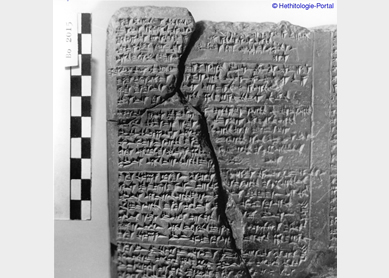
Deuteronomy and Leviticus are both (typically) laconic when it comes to what happens. Leviticus doesn’t provide any information other than the prohibition: there’s not information about punishment, judicial proceedings, or recompense. Deuteronomy provides a little more information, noting that–if the field is corrupted–“the whole yield will be forfeited.” But what does forfeit mean? In Hebrew, this comes from the shoresh קדשׁ, which means we often translate as “make holy,” but often means “removed for common use,” “dedicated to God,” or “destroyed” (cf. Lev 27.28–29; Num 21.2–3). Although there are no perfect parallels to this situation from ancient Near Eastern law collections, there is a Hittite law which might shed a little light on the meaning of “dedicated.”

https://www.bibleodyssey.org/en/tools/image-gallery/h/hittite-cuneiform-script

If anyone sows his own seed on top of another man’s, they shall place the perpetrator’s neck on a plow, hook up two teams of oxen, turn the face of one ox in one direction and the other ox in the other direction, and thus the man will be put to death. Then the oxen will be put to death as well… (HL $$166–67). 

In both instances, this is clearly a serious crime. But why? And how does looking at these legal passages help us answer the meta-questions about the Wheat and the Tares?

In Deuteronomy and Leviticus, most people read the sowing of multiple types of seed as being done by a single individual. Most explanations focus on the practice mixed- or inter-cropping, where different types of crops are sown in the same land in order to benefit from different nutrients in the ground. This is less efficient in general, but in bad land and subsistence-level farming (which fits the Israelites!) in can be the best way to eek out every iota of productivity from bad land. But this makes not sense for why it would be forbidden. Other explanations (especially of the Leviticus passage) have seen in this forbidden a reflection of the holiness concepts which are described as part of the priestly principles coming from the Created Order (Gen 1.24–25). But, at least in the Hittite law (as well as in the Roman Digest of Justinian  9.2.27.14), a very different perspective is being offered: someone else–other than the owner–comes in and sows a different type of seed! In fact, this is the exact same situation as we see in the parable, and brings us back to one of the original questions.

The enemy (who we know is the devil) sowed tares in the field for malicious reasons. Not just because darnel may be infected by a poison which can harm those who ingest it. But because the the devil is attempting to force the master to destroy the entire crop. Certainly, this is what the slaves expect to be the answer when they ask, “Don’t you want us to go and uproot the entire crop?” They are not asking if they should go and try to uproot just the weeds because it might result in some casualties among the wheat; that would not follow the law which required the entirety of the field to be dedicated or destroyed. A dedicated crop, one that cannot be sold or harvested or used is of no use. Better to uproot the whole thing and start over with the land than let it grow for no purpose, sucking up the nutrients of the soil and wasting the entire growing season for no benefit. Indeed, the law itself demands that such be done. But what is truly surprising is the master’s response: “No, do not uproot anything. Let everything grow. I will still take the wheat into my barn after the harvest.”

And it’s only then that the depth of the allegory is revealed. Satan, as he often does in Scripture, has attempted to turn the God’s law against his people (e.g., Zcr 3). But God is not a respecter of persons; he is not willing for the righteous to perish along with the unrighteous; and he will not allow accusers tell him whom he may or may not save. In fact, as we look at more examples from how God interacts with the law, it becomes clearer and clearer that it was enduring, but not eternal. The law is meant to point to something better, and it was always meant to be the beginning and not the end.

A Case Against Making a (Priestly) Case Against Shorts

I wanted to take a short break from making posts about the Law and its cultural context to talk about how, sometimes, those cultural contexts and knowing something about how language works in ancient texts can help keep us away from bad arguments about our current culture. This post probably won’t be of much interest to most, but it’s something that has come up a few times in my religious tradition and–for lack of a better place to put it together!–I figured I’d post it, here! So, if you’re interested in some of this, feel free to read on!

Despite its relative rarity as a specific topic of concern in the Bible, today’s growing awareness of the dangers of pornography, the #MeToo movement, and other social concerns have understandably emphasized modesty and its accompanying virtues in the Bible. Today, I just want to address a specific sub-section of this conversation that involves language.

If a first-page google search for “nakedness modesty thigh” reveals anything (ha!), it’s that using Exd 28.42 to teach a standard of modesty is very, very, very popular in the American South, particularly among preachers in Churches of Christ. Although there are variations from this argument, the simplified argument generally goes something like this:

  • Nakedness is Sinful
  • The Bible defines Nakedness to include the thigh (from knee to groin)
  • Therefore, it is sinful to show any part of the thigh

The difficulty of this argument lies in the second point, where they try to strictly define exactly what nakedness is. There are no passages that define–with any exactitude or specification–what nakedness is in the New Testament, so folks who take this approach have to turn to the Old Testament. The most popular passage that is used to define what nakedness is (and, thus, what marks the line for sin) is Exodus 28.40–43:

For Aaron’s sons you shall make coats and sashes and caps. You shall make them for glory and beauty. And you shall put them on Aaron your brother, and on his sons with him, and shall anoint them and ordain them and consecrate them, that they may serve me as priests. You shall make for them linen undergarments to cover their naked flesh. They shall reach from the hips to the thighs; and they shall be on Aaron and on his sons when they go into the tent of meeting or when they come near the altar to minister in the Holy Place, lest they bear guilt and die. This shall be a statute forever for him and for his offspring after him (Exd 28.40–43).

The key part of the argument is verse 42, which notes that “You shall make for them linen undergarments to cover their naked flesh. They shall reach from the hips to the thighs.” It is understandable why! You have nakedness defined as not just the genitals, but also including–seemingly–the leg from hip to knee). Thus, the upper leg from hip-joint to knee-joint must be covered. And if it is good enough for God’s priests, it is good enough for us!

There are two primary areas where this argument wears thin, however.

The first has to do with how we read and understand the text. Why must Christians follow a Law that was given solely for Levitical priests? If Christians must follow this law, what about all of the rest of the laws that applied to the priests (even in this same chapter)? Must we also all wear turbans (28.4)? Must we only wear shorts of linen (28.42)? What about other clothing regulations (e.g., Dtr 22.11)? The first question is generally answered by noting that although we are not Levitical priests, all Christians are still priests (1 Pet 2.9), or that God was setting a universal standard for modesty in Exd 28.42, meant to be followed by all, including Christians.

But a larger issue with this argument is why–if this was God’s universal standard–was this specification given only for the priests, and not for all of the Israelites? If God does not want any of his people to be naked (because of its sinful connotation), why is this directive not given to all of the Israelites?

Additionally, if this is meant to be a universal standard for modesty and the definition of nakedness, why do we only have a description of the priests undergarments, considering they were worn under full-length robes? In other words, this doesn’t tell us how much skin would be shown, regardless, because it was underneath other clothes!

The more involved problem with this argument, however, comes with the certainty that Exd 28.42 is talking about the English thigh at all. The entire argument that shorts are sinful is that they will expose the thigh, which would be nakedness. However, that is not necessarily what the text is saying.

There is sometimes a distinction between thigh (yarek = יָרֵךְ) and hips (shoq = שׁוֹק), you can see it most clearly when they\’re juxtaposed (Jgs 15.8). However, that is not always the case. Words frequently mean different things in different contexts or when used by different people at different times. So, before we decide that “thigh” in Exodus must mean “from the hip socket to the knee joint” and bind that on others, we ought to be careful to see what the Bible actually says.

  • Genesis uses yarek is both a euphemism for genitals (Gen 24.2,9; or, if you don\’t buy the euphemism here, cf. Gen 46.26 for an even clearer version) AND speaks of a specific part of the “leg” (the hip, Gen 32.22, 31, 32).
  • Exodus shows an even broader semantic range. We see the typical euphemistic use (Exd 1.5), but in contexts of non-animate objects, it is best to translate it as “base” or “foundation” or just “leg” (e.g., 25.31). Of course, this can get you into trouble because we see multiple distinctions–sometimes–for the same part of the body, as you’ve probably seen when you get to places like Exd 28.42 and you introduce “hips” (מָתְנַיִם mat’nayim =) into the mix.
  • Leviticus has two distinct usages for shoq — in sacrificial contexts, it ALWAYS refers to the shoulder (the equivalent of the “hip” specifically) of an animal, either front or rear. And when referring to inanimate objects it ALWAYS refers to a base / leg / side / foundation.

But, after its frequent use in the Torah, we see hardly any usages of either of these terms in the historical books except for a very few usages in Judges (mostly in the Ehud incident, where it could mean hip, thigh, or leg, all interchangeably except for when it is juxtaposed in the passage noted above) and a smattering of places where it refers to the sacrificial portion of an animal and to the base of cultic stands.

The prophets use these words differently, however.

  • Isaiah uses shoq, but it could refer to just about anything: shin, because that is how the LXX translate it (being otherwise consistent to translate it thigh) and because that is the part that would get wet when crossing a river during the milling season, OR it could refer to “leg” or “thigh” or “genitals,” because of its context with the following verses (specifically, 47.2). This isn’t super helpful for us, because its breadth only gives us the most generic translation of “leg.”
  • Jeremiah is similarly unhelpful, using it only once (31.19) and using it as part of a bodily motion metaphor… I mean, it is obvious that “striking my leg” is to indicate frustration (we still do this today!), and when we do it today we mean “thigh,” but we (and we!) certainly don’t mean something so specific as “I hit every square inch of my leg from knee to hip.” In other words, we recognize that the usage doesn’t demand something so specific (Ezekiel uses the same metaphor for frustration, Ezk 21.12).
In poetry, we see the same sort of semantic range: shoq refers to “leg” generically (e.g., Psa 147.10; Prv 26.7), and yarek refers to “hip or thigh or waist” (e.g., Psa 45.3).So, what does this all mean? Well, obviously shoq can refer to “hip socket” specifically, or it may refer to the “shoulder” of an animal, the equivalent to the buttocks or shoulder muscles, or it can be used to signify the entire leg. Similarly, yarek may designate the genitals euphemistically, it can refer to the hip, where one puts on a belt, it may refer to the thigh (particularly in cultic contexts of meat offerings where it was part of the “hind quarter” and represented good meat), which would align well with the human thigh, it can refer to “leg” generically, it can refer to “the things something stands on” (base / foundation / etc), and it may even refer to the shin!

That is not helpful.

But let us use what we’ve learned about these words to return to Exd 28.42: “You should make [the priests] X-clothes out of Y-material to cover their nakedness. These garments should reach from the shoq to the yarek.”

First off, there are lots of other questions we need to ask, like, do we know anything more about what, specifically, the ancients meant by “undergarments”? (We don’t.) But let us try out a few different solutions with what we know from shoq and yarek above:

  • 1) Shoq = hip / Yarek = thigh: Make boxers for the priests to wear
  • 2) Shoq = hip / Yarek = shin / leg: Make pantaloons for the priests to wear
  • 3) Shoq = genitals / Yarek = upper leg: Make briefs for the priests to wear
  • 4) Shoq = buttocks / Yarek = genitals: Make briefs for the priests to wear

It is impossible to know if there is a distinction between these terms (although I think the evidence is the best for #4). Neither can we know with much clarity what each of these terms refers to in this or any specific passage.

The short version is this: there is no definitive basis for translating the Hebrew word yarek with the English word “thigh.” It may mean genitals; it may mean thigh; it may mean the entire leg. Any attempts to bind practices on others based on only part of the evidence for the Bible’s language fails to take the Bible or its authority seriously. By all means, wear long shorts or long pants if you want. Teach modesty by other means. But recognize the limitations of the use of this passage in your discussion since–although it is obvious that the priests knew what it meant–its meaning is veiled to us.

Justice: Kings and Case Laws


Janet Shafner, ‘The Wise Woman of Tekoa’
In 2 Samuel 14, we read about the Wise Woman of Tekoa coming to King David to seek justice for her unusual situation. There, were read:
When the woman of Tekoa came to the king, she fell on her face to the ground and paid homage and said, “Save me, O king.” And the king said to her, “What is your trouble?” She answered, “Alas, I am a widow; my husband is dead. And your servant had two sons, and they quarreled with one another in the field. There was no one to separate them, and one struck the other and killed him. And now the whole clan has risen against your servant, and they say, ‘Give up the man who struck his brother, that we may put him to death for the life of his brother whom he killed.’ And so they would destroy the heir also. Thus they would quench my coal that is left and leave to my husband neither name nor remnant on the face of the earth” (2 Sam 14.4–7)
 
This situation is a tragedy for a number of reasons, and it is no surprise that it might come before the king, who answers: 
 
Then the king said to the woman, “Go to your house, and I will give orders concerning you.” And the woman of Tekoa said to the king, “On me be the guilt, my lord the king, and on my father’s house; let the king and his throne be guiltless.” The king said, “If anyone says anything to you, bring him to me, and he shall never touch you again.” Then she said, “Please let the king invoke the LORD your God, that the avenger of blood kill no more, and my son be not destroyed.” He said, “As the LORD lives, not one hair of your son shall fall to the ground” (2 Sam 14.8–11),
 
Perceptive readers will have already noted incredible similarities to an earlier tale of fratricide. Indeed, a close analysis reveals the considerable intertextuality of these two narratives as in both cases:
  • There are two sons (Gen 4.1; 2 Sam 14.6)
  • The incident occurs when they were alone in the field (Gen 4.8; 2 Sam 14.6)
  • One brother killed the other (Gen 4.8; 2 Sam 14.6)
  • There is concern that the murderous brother will be killed (Gen 4.14; 2 Sam 14.7)
  • A higher power intervenes (Gen 4.15; 2 Sam 14.8)
  • A preventative curse is placed to protect the living brother (Gen 4.15; 2 Sam 14.10)
There is a lot to unpack in this seemingly simple narrative. Regardless of what you think about the historicity of this episode (although I see no reason to doubt it), its presence illustrates that people could and did approach the king seeking special compensation of justice under certain occasions. The provision of justice was a key component in the portrayal of “the righteous king” throughout the ancient Near East, and the hearing of such cases was a time-honored tradition, although probably not common to every day life!

There are a lot of questions that this short pericope raises, and it’ll be in focus for the next few blog posts where we delve a bit into the topic of ancient Israel’s legal system (how it / its laws developed, who could change them, how was it enforced, etc!). But, for now, I just wanted to raise a few questions for everyone to think about and showcase a piece of incredible modern art on this passage.

First, do we think David is right to commute the sentence of the murderous brother? The cultural background to this text is focused on the understanding that this woman’s (and her husband’s) “inheritance/name” would be cut off if the brother did not survive. This is an incredibly important issue in the Hebrew Bible and provides the key area of stress for numerous texts as diverse as the story of Judah and Tamar (Gen 38) or the book of Ruth, let alone numerous New Testament echoes (e.g., Heb 3–4). Are there any laws which might influence our thoughts on this?
 
Second, if David can change the law, who else can change the law? And, a follow up, how were changes to the law recorded? 
 
Third, what influences David to commute the sentence on this brother? What, exactly, does the woman ask for David to do? Are there any laws that might help make sense of the background to this narrative?
 
But, lastly, I want to return to the passage itself, because we know that this whole situation is a farce. Joab had hired this woman to (like Nathan had, before her) convict David of a mistake he had made and to reconcile David and his exiled son, Absalom. So, when David said “not one hair of his head would strike the ground,” we are to understand that David is providing his kingly protection to Absalom. This is the same Absalom who would, just a few years later, revolt against his father in open rebellion and–going to war with him–die struck in a tree, suspended between heaven and earth and not touching the ground (2 Sam 18.9) by his mane of magnificent hair (2 Sam 14.26). The point, it seems, of the author in this text is that David is that–regardless of what everyone thinks–David is not “like an angel of God,” who can provide protection or punishment to whomever he will. This is a complex and subtle intertext, and one that can be difficult to portray, And yet, good art is excellent exegesis.

  • The incident occurs when they were alone in the field (Gen 4.8; 2 Sam 14.6)

  • One brother killed the other (Gen 4.8; 2 Sam 14.6)
  • There is concern that the murderous brother will be killed (Gen 4.14; 2 Sam 14.7)
  • A higher power intervenes (Gen 4.15; 2 Sam 14.8)
  • A preventative curse is placed to protect the living brother (Gen 4.15; 2 Sam 14.10)

There is a lot to unpack in this seemingly simple narrative. Regardless of what you think about the historicity of this episode (although I see no reason to doubt it), its presence illustrates that people could and did approach the king seeking special compensation of justice under certain occasions. The provision of justice was a key component in the portrayal of “the righteous king” throughout the ancient Near East, and the hearing of such cases was a time-honored tradition, although probably not common to every day life!

There are a lot of questions that this short pericope raises, and it’ll be in focus for the next few blog posts where we delve a bit into the topic of ancient Israel’s legal system (how it / its laws developed, who could change them, how was it enforced, etc!). But, for now, I just wanted to raise a few questions for everyone to think about and showcase a piece of incredible modern art on this passage.

First, do we think David is right to commute the sentence of the murderous brother? The cultural background to this text is focused on the understanding that this woman’s (and her husband’s) “inheritance/name” would be cut off if the brother did not survive. This is an incredibly important issue in the Hebrew Bible and provides the key area of stress for numerous texts as diverse as the story of Judah and Tamar (Gen 38) or the book of Ruth, let alone numerous New Testament echoes (e.g., Heb 3–4). Are there any laws which might influence our thoughts on this?
 Second, if David can change the law, who else can change the law? And, a follow up, how were changes to the law recorded? 
Third, what influences David to commute the sentence on this brother? What, exactly, does the woman ask for David to do? Are there any laws that might help make sense of the background to this narrative?
But, lastly, I want to return to the passage itself, because we know that this whole situation is a farce. Joab had hired this woman to (like Nathan had, before her) convict David of a mistake he had made and to reconcile David and his exiled son, Absalom. So, when David said “not one hair of his head would strike the ground,” we are to understand that David is providing his kingly protection to Absalom. This is the same Absalom who would, just a few years later, revolt against his father in open rebellion and–going to war with him–die struck in a tree, suspended between heaven and earth and not touching the ground (2 Sam 18.9) by his mane of magnificent hair (2 Sam 14.26). The point, it seems, of the author in this text is that David is that–regardless of what everyone thinks–David is not “like an angel of God,” who can provide protection or punishment to whomever he will. This is a complex and subtle intertext, and one that can be difficult to portray, And yet, good art is excellent exegesis.

Rape in the Ancient World (Slaves)

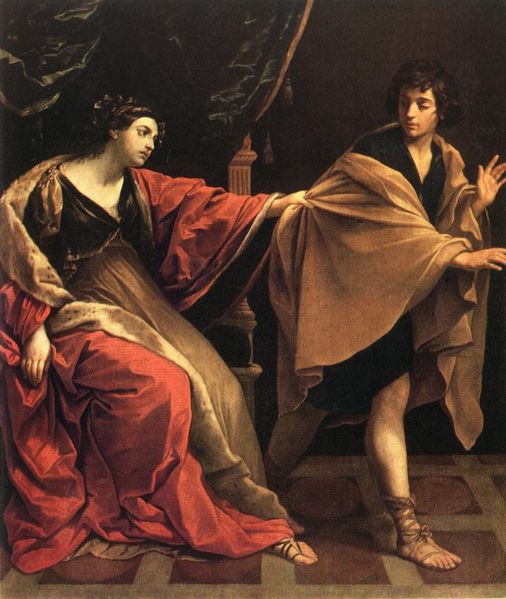
Genesis 37 is one of the most famous texts in the Hebrew Bible. In this narrative we read that Joseph—having been sold as a slave to the Egyptians due to jealousy by his brothers—is very beautiful. Beautiful enough that his master’s wife lusted after him and wanted to sate his lust. Repeatedly she commands, “Lie with me!” But he does not, until at last she forms a scheme to where she could isolate and rape Joseph: she waits until a time when there was no one in the house to bear witness or interfere with what would happen and again she commands him to lie with her. As has become famous in some circles, Joseph fled from her commands and advances, leaving his cloak in her hands. Hell hath no fury like a woman scorned: Mrs. Potipher turns the blame on Joseph, convicts him of attempted rape, and Joseph is thrown in prison. 
This text begs to be read alongside the text in our previous two posts. Consider the following:

In the only two occurrences of this term in the Hebrew Bible, Joseph and Tamar are described as wearing “multi-colored, long-sleeved coats” (“כְּתֹ֥נֶת פַּסִּֽים” Gen 37.3; 2 Sam 13.18).

Both Joseph and Tamar are first introduced in these specific narratives for their “beauty” (“יָפָ֖ה” Gen 39.6b; 2 Sam 13.1).

Both Joseph and Tamar are objects of fixation by their (attempted) rapists (Joseph has to “repeatedly refuse” “וַיְמָאֵ֓ן” Gen 39.8; Amnon was tormented for long enough to make himself ill, 2 Sam 13.2)

Both Joseph and Tamar are isolated in the house of their superior (Gen 39.11; 2 Sam 13.9).

Tamar reports the rape by “crying out” and Mrs. Potipher also makes a report by “crying out” (“וַתִּקְרָ֞א Gen 39.14; “וְזָעָֽקָה\” 2 Sam 13.19).

Of course, there are two major points of contrast made by most exegetes of this passage. First, and most obvious, is that the innocent party in Genesis is a male, whereas the innocent party in Samuel is female. Second, Joseph is unfairly accused but punished, whereas Amnon is accused but not punished.
 
But before commenting on these conclusions, let us consider a few matters about slavery and rape in the ancient world.
It will surprise no one to hear that, within the broader context of the ancient world, slaves were property and not people. The penalties for murder, injury, theft, and rape were all severe in the ANE, these did not apply (or, at least, in the same way, consider Ur-Namma $8, which states that raping a virgin slave results in a 5 shekel fine payable to the owner, whereas raping a virgin freewoman was a death penalty in Ur-Namma $6; cf. Lipit Ishtar $d and $f for the varying penalties for striking a slave vs. a freewoman and causing her to abort her fetus).

 
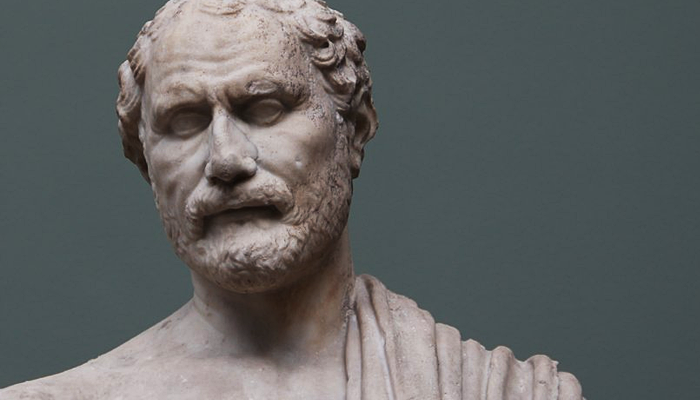
Demosthenes
What might be more surprising, however, is that slaves present in the house or home were not just property, but sexual property. It was expected that slaves would be at the sexual beck and call of their masters, whether male or female.  In fact, all of the laws dealing with slaves in the context of intimate relations are worried only about protecting the status of the master or mistress, rather than the slave. It is expected that the slaves will be raped, and thus most of the laws deal with the status of the children of these unions:
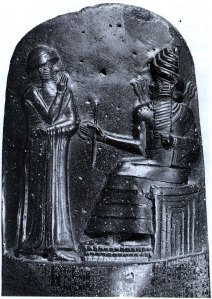
The Stele of Hammurabi

“If a man marries a free woman and the free woman gives a slave girl to her husband, and thus provides children, but then that man decides to married the slave woman, they will not permit him to marry her (Hammurapi $144).

“If a man marries a free woman and she does not provide him with children, and that man then decides to mate with a slave woman, that man may mate with the slave and bring her into his house as a concubine, but the concubine will not aspire to equal status with the free woman” (Hammurapi $145)

“If a palace slave boy or house slave boy mates with a woman of the upper-class and she conceives, the owner of the slaves will have no claims against the children” (Hammurapi $175)

This expectation is even more clearly indicated in the Greek and Roman descriptions of slaves.

We have mistresses for pleasure, slaves for daily service to our bodies, but wives for the procreation of legitimate children and to be faithful guardians of the household (Demosthenes, De Neaera,59.122).

You are her master, with full power over her, so she must do your will whether she likes it or not (Chariton, Chaereas and Callirhoe).

Unchastity is a crime in the freeborn, but a necessity for a slave (Seneca, Controversies 4, Praef. 10).

Now really, when your throat is parched with thirst, you don\’t require golden goblets, do you? When you\’re hungry, you don\’t turn your nose up at everything but peacock and turbot, do you? When you’re experiencing a hunger of a different kind and there is a slave girl or slave-boy ready at hand, whom you could use right away, you don’t require something better, do you? I certainly don\’t. I like sex that is easy and obtainable (Horace, Sat. 1.2.114–19).[1]

Even the Roman moral giant—and slave himself—admits this will likely be the case.

In your intimate-life preserve purity, as far as you can, before marriage, and, if you indulge, take only those privileges which are lawful (i.e., with slaves), and make sure not to make yourself offensive or censorious to those who do indulge, and do not make frequent mention of the fact that you do not yourself indulge (Epictetus, Ench. 33.8).

The understanding that masters were likely, or even expected, to rape their slaves in the ancient world (because the slaves were not considered people at all) is recognized in the Hebrew Bible, as well, both in Law and in Narrative. We certainly see echoes of the situation discussed in Hammurabi $$144–45 in the discussion of Sarah and Hagar, or—although with less direct confrontation—the stories of Jacob, his wives, and their concubines. As we’ll talk about more in-depth in a future series of posts, there were two different sorts of slaves in the Old Testament with very different sorts of laws governing their use (debt slaves, which were Hebrews, and war slaves, which were foreigners). Foreign slaves were most commonly taken in war and were particularly subject to predation. It is for this reason that we read:

If after going to war . . . you see among the captives a beautiful woman, and you desire to take her to be your wife, and you bring her home to your house, you must first shave her head and pare her nails. She will take off the clothes in which she was captured and shall remain in your house and lament her father and her mother a full month. Only after that that you may go in to her as a man, and she must become your concubine. But if you no longer delight in her, you shall let her go where she wants; you may not sell nor may you treat her as a slave, since you have degraded her (Dtr 21.11–14).
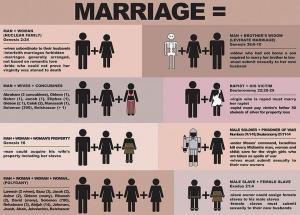
As with the rape laws, this law has been appealed to frequently as an example of the horrible, immoral, patriarchy-driven, woman-hating nature of the Hebrew Bible. However—as with the rape laws—once we better understand the contextual framework for these laws, we find something quite the opposite.  In the ancient world as we can see from some of the above laws (especially Hammurabi $175), and could see from many more, slaves were not only subject to the predation of their masters, but could—and would!—often be “loaned” to other guests for use as well. In fact, most brothels in the Roman world were filled with slaves. The Hebrew Bible does not deal with an ideal world, but the awful realities of the world. It does not forbid masters from taking their female captives as sexual partners (although, certainly, it could have); maybe because the authors knew this would never be followed. Instead, it attempted to channel the inclinations of the powerful to a lesser evil: masters could take their female (foreign) slaves as sexual partners, but not as slaves; they would become concubines (second-class wives) with the full rights thereof. They could not be given as sexual partners to anyone else; they were provided food, clothing, shelter, and legitimacy; their children would inherit as other children would; and if they were divorced—for any reason—they could not be reverted to slaves, but would instead be made free indeed.
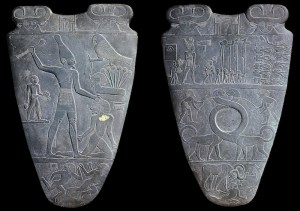
 
Narmer
One more thing ought to be noted. In ancient Egypt, slaves were not only socially-inferior property, but were also considered genderless. In the relief depicting Narmer’s military victory, the Egyptians are careful to show the taking of war slaves which are portrayed as genderless (see the bottom of the left side), because they have been disgendered (and dismembered) upon captivity in both life and in death (see the right side). Even the captives’ clothing (which is always carefully portrayed in Egyptian reliefs and is a representation of identity) is carefully depicted to emphasize this emasculation process.
 
Egyptian depiction of Foreigners; note the careful attention to detail


With these things in mind, let’s look again at the case of Joseph and Mrs. Potipher.

As a foreign-born slave, Joseph was property and neither male nor female. He was at the service of his master and mistress, whether for managing the household or as a sex object. According to the laws and mores of the ANE and GR worlds, what Mrs. Potipher demands of Joseph is typical and lawful; it is Joseph’s refusal which would have been truly shocking and unruly (perhaps why she emphasizes the “laughing at us”?). Indeed, it appears as though Potipher himself must have insulated Joseph from punishment from Mrs. Potipher’s accusations of unlawfulness, and was only put in prison for the accusation of attempted rape of a free woman.  More importantly, however, we understand that the balance of power is completely opposite of how we often view this situation. The stories of Amnon and Tamar and Joseph and Mrs. Potipher are not opposite texts about false witness, but are rather mirrored accounts of the powerful abusing their power to get away and trample on the truth of the powerless.
 
Let those with ears to hear, hear.
[1] This has actually been toned down in the level of its innuendo. The Latin is quite a bit more crass. num esuriens fastidis omnia praeter pavonem rhombumque? tument tibi cum inguina, num, si ancilla aut verna est praesto puer, impetus in quem continuo fiat. malis tentigine rumpi? non ego; namque parabilem amo Venerem facilemque.

Rape in the Ancient World

In 2 Samuel 13, we read about the horrible situation of Amnon and Tamar, which we talked about last time. However, one aspect of the story bears a closer look. As Amnon begins to force his sister, she cries out:

No, my brother, do not degrade me, for such a thing is not done in Israel; do not do this outrageous thing. As for me, where could I carry my shame? And as for you, you would be as one of the outrageous fools in Israel. Now therefore, please speak to the king, for he will not withhold me from you (2 Sam 13.12–13).

Even after Amnon had raped Tamar, is disgusted with her, and attempts to throw her out of his house, we read she tries, once again, to convince him to marry her: Tamar said, “Please do not commit this sin: sending me away would be even worse for me than the first wrong you committed against me!” But he would not listen to her (2 Sam 13.16).
Although the story is undoubtedly horrific, this point is particularly confusing to most readers of the modern West. Why on earth would Tamar want to be married to Amnon, her rapist? This request and solution seems absurd. 
If we look deeper, past this narrative and into the laws of the Hebrew Bible and its surrounding world, we see that this has a solid background. Although the solutions for rape of a betrothed woman were treated as a capital crime, there were other solutions for the rape of a free woman. This solution is attested in the Bible as well as in law collections throughout the ancient Near East (ANE):

If a man rapes a free woman who is not betrothed and they are discovered, the man who lay with her should pay the girl’s father her bride price of 50 shekels of silver and become his wife because he degraded her: he loses the right of divorce forever (Dtr 22.28–29).

If a man rapes a young woman—one who was unmarried and unbetrothed and still a virgin and has no other claim on her for marriage—whether that man acted inside the city or in the field, whether at day or at night, in a street or a barn, or during a harvest or festival. . . . he must pay the girl’s father the full bride price and he must marry her, and he cannot divorce her. If the father is unwilling to accept the marriage, the man must pay triple the bride price instead (MAL $A 55).

If a man rapes a daughter in the street and her father and mother did not know him, but he comes forward and admits to the father and mother that he raped her and said “I would have her as a wife” then her father and mother should give her to him in marriage” (YOS 1 28 v 3–25).

The practice of forcing a woman to marry her rapist is barbaric enough that it has become typical ammunition in the arsenal of  “But what about…”s  for those attempting to attack the Bible (see the graphic to the right). There is some truth to this objection. The solution is awful. But a closer look at the context of the ancient world should at least enlighten the practice, even if does not—to our minds—excuse it.
 
It should surprise no one to learn that the ancient world was heavily skewed towards men. Although there were some distinctions between societies, the overwhelming majority of Mediterranean cultures in the ancient world devalued women and treated them as little more than slaves (if they were free) and worse than property if they were slaves. They had few legal rights that were not attached to their status as wife or daughter and, therefore, dependent on a man. A survey of the laws of Mediterranean societies are filled with situations where women could not own property, could not initiate divorce, could not find reputable work outside of the clan, and were viewed as objects. In each of the above cases, we see that the woman’s valuec ame from her sexual status. It is no surprise that we read Tamar’s plea to Amnon was for him not to “degrade her” (2 Sam 13.12), or the ANE laws themselves are viewed from this angle of degradation (e.g., Dtr 22.29). In the Middle Assyrian Laws, we read that even though this woman—who is no longer a virgin—is valued at less, he must pay full value for her ($A 55), a clear indication that the issue is viewed through this lens. The Assyrian law understood that, now that she was no longer a virgin, that she was no longer worth the amount that the rapist would have to pay, but he must still pay it because he had made her that way.  We see an echo of an attempt to leverage this law by Dinah and Shechem in their attempt to force Jacob, who would not have offered his daughter in marriage to a Canaanite, to allow their marriage (i.e., by introducing a legal fiction of rape, when in fact it was consensual).

Shechem said to his father and to Dinah’s brothers: “Let me find favor in your eyes, and whatever you say to me I will give. Set high the amount of bride price and marriage gift, and I will give whatever you ask! Just let me have her as a wife! (Gen 34.11–12).

In other words, the society of the ancient world did not value women as individuals. The Bible—and ancient literature, as a whole—is filled with stories that hinge upon the social, political, and economic frailty of women cut off from her male relatives (simply look at a search for “widows,” or consider the famous story of Naomi and Ruth). And—although this should go without saying—marriages were not contracted for love. The goal of marriage was to provide continuity for the family line which was considered (at least by the Hebrews) a way to ensure an afterlife. Love had nothing to do with it. In this exchange-oriented society, men received sexual exclusivity, the work provided by the wife for the clan, and a reputable mother to give legitimate children. As the Greek orator, Demosthenes, noted, “We have mistresses for pleasure, slaves for daily service to our bodies, but wives for the procreation of legitimate children and to be faithful guardians of the household” (Demosthenes, De Neaera, 59.122). Women received legitimacy, status, protection, and provision after the death of their fathers. Marriage, even if the woman was later divorced, would provide her with a bride price that she could use to support herself and keep from selling herself as a slave (who would be at the pleasure of her master) or a prostitute (see Mat 5.32; 19.9 for the expected requirement for a divorced woman to have to turn to prostitution in order to support herself).

In this horrific world, where the options for women were limited to marriage, slavery, or prostitution and the options for a “degraded” woman were slavery or prostitution, the mandate to force the rapist to marry his victim was actually meant as a protection for the woman.
 
Thankfully—as horrific as our current society still is to women—we no longer live in a society where this is the still the case. Women can work outside the home, they can provide for themselves and their families, and they are no longer (entirely) at the power of their abusers and forced to choose between marrying a rapist or living a destitute and short life of famine, whoredom, and death. Even before we get on our high horse to condemn the ancients for being so unenlightened, let us remember that even those of today who should know better (including women and feminists, themselves!) often engage in this same sort of devaluation. More importantly, we should remember that we should not  import our (supposed) modern, enlightened sensibilities onto the situations of the distant and cultural past. Instead, let us direct our attention to the much-needed requirement to continue to upend the predatory imbalance of power between men and women in our world, today, recognizing that we are all—male and female—created in the image of God.

Most importantly, let us remember that the culture of the Bible is not the culture of 7th century Israel, 1stcentury Rome, or even 1950s America (whatever some would have us believe!). The Bible does not deal with ideal situations, where there would be no rape at all or where people would provide for a woman regardless of her sexual status, but with the awful realities present in the world. It recognized the “hardness of people’s hearts” and sought to limit the damage to the victim to the greatest extent possible. It was not a perfect world, but it attempted to create the “Die beste aller möglichen Welten.”Next time, we’ll look at the case of the rape of a slave.

The Bible and Rape

2 Samuel 13 is one of the most disturbing and tragic texts in the Bible. In this text we read that King David’s daughter, Tamar, was very beautiful. Beautiful enough that her half-brother Amnon lusted after her and wanted to sate his lust, but he couldn’t because it wasn’t lawful. After fixating on it for some time, he and his cousin devised a plot where Amnon could isolate and rape Tamar: he pretended to be sick, and when his father—King David—came to ask his son if there was anything he could do for him, Amon requested that David send his sister Tamar to his room to cook for him. And so David sent his own daughter into the center of power of his crown prince and son, Amnon. And, when Tamar was isolated and totally within his power, he raped her and, after his lust had been slaked, he then threw her out of his house in disgust.
In the Hebrew Bible, the Law is very clear that rape is a capital offense (e.g., Dtr 22.25). Normally, the Bible required a number of witnesses and the “innocent until proven guilty,” and—in one accuser vs. one defender scenarios of “he said; she said”—it threw out the accusations of just one person. So we see numerous accounts in both Old and New Testaments about how to handle the question of “evidence” and “witnesses” in the Bible:

 On the evidence of two witnesses or of three witnesses the one who is to die shall be put to death; a person shall not be put to death on the evidence of one witness (Dtr 17.6)

 A single witness shall not suffice against a person for any crime or for any wrong in connection with any offense that he has committed. Only on the evidence of two witnesses or of three witnesses shall a charge be established (Dtr 19.15).

 But if he does not listen, take one or two others along with you, that every charge may be established by the evidence of two or three witnesses (Mat 18.16)

 This is the third time I am coming to you. Every charge must be established by the evidence of two or three witnesses (2 Cor 13.1)

 Do not admit a charge against an elder except on the evidence of two or three witnesses (1Tim. 5.19)

 Anyone who has set aside the law of Moses dies without mercy on the evidence of two or three witnesses (Heb 10.28).

But sexual sins were tricky. Most often, these sins occurred when there were no other witnesses. How, then, could such be handled? Deuteronomy lays out the procedure:

But if in the open country–where there are no witnesses–a man meets a young woman who is betrothed, and the man rapes her, then only the man who lay with her shall die. But you shall do nothing to the young woman; she has committed no offense punishable by death. For this case is like that of a man attacking and murdering his neighbor, because he met her in the open country—where there are no witnesses—and though the betrothed young woman cried for help there was no one to rescue her (Dtr 22.25–27).

The case, here, is what the procedure should be. Imagine the circumstances: a woman who wasn’t a virgin and portrayed herself as a virgin to her husband to be, was in peril if he suspects her (e.g., Dtr 22.13–21). Furthermore, if she is found to be complicit (i.e., that this is seduction rather than rape and she is already engaged), then she’s to be killed along with her seductor (Dtr 22.23–24).
There’s actually a lot of evidence that the “cried out” is a legal term for “make a report.” This is, of course, exactly what Tamar does after Amnon raped her: “Tamar was wearing a multicolored robe with long sleeves, for thus were the virgin daughters of the king dressed. So when Amnon’s servant put her out and bolted the door after her, Tamar put ashes on her head and tore the long robe that she wore, and she laid her hand on her head and went away, crying aloud as she went. (2 Sam 13.18–19).
In one of the many failures David makes following his decision to lust after Bathsheba, David did nothing to Amnon. The Law was clear: if Tamar had been betrothed (which, as a royal daughter she would have been), the punishment was death (Dtr 22.25–27). Even if she hadn’t been engaged (which was almost certainly not the case), he had violated his sister, a capital crime (e.g., Lev 18.9, 11; 20.19; etc). But David refused even to provide even the lesser penalties that would have been required in other situations that were less clear. He refused to do anything at all.
Why, we might ask, would David ignore justice? Why would he not follow the Law? Why would he not do as the Bible required and heed the testimony of his daughter? The answer is as tragic as the story itself is: because it wasn’t politically expedient to do so.  As the Bible records, “David did nothing because Amnon was the crown prince” (2 Sam 13.21 LXX and DSS).
I understand why David wouldn’t want to believe Tamar in the same way I understand why we don’t want to believe some more modern examples: it’s not politically convenient. Certainly, in the case of Tamar, Amnon’s supporters would say the same thing as some others’ supporters (whether Roy Moore or Al Franken, or any of numerous others) have been saying: “Hey, don’t you know Tamar is Absalom’s sister? Don’t you know that Absalom is just trying to become the new crown prince! He’s just trying to get Amnon out of the way so that he can take his power! See? Isn’t that convenient? Notice it’s only coming out now?”
Of course, their responses and David’s responses were not based on desires for justice, but rather in political expediency. Heaven help us if we sacrifice God’s Word for the sake of political gain. Of course, this did not work out well for David, either spiritually or politically. Absalom would kill Amnon for what he did to his sister and, a few years later, would attempt to seize the power from the throne citing—among other things—David’s inability or unwillingness to provide justice to the weak and oppressed.

Jerusalem II: The Tour Guide Strikes Back

After a relatively easy first few days, day three is really when we got started.  Our day started outside of the Jaffa Gate to the old city and we proceeded to tour the outside of the walls with David Illan.

Looking at the Jaffa Gate from the inside of the Old City.  The Jaffa gate is a typical 90° angled gate, but when Kaiser Wilhelm II visited the occupiers of the city, they took out a section of the wall so that Wilhelm could enter the city in his chariot. 

We looked at a number of early tombs (mostly 2nd temple period), and the walls (you can see the remains of the tombs in the picture below on the bottom left).

Our group looking at the western walls of the Old City. 

We worked our way around the walls, stopping to comment on various episodes and features of the sites as we passed along, whether that be about the ancient aspects of the walls and gates (such as pointing out and commenting on the strata of the walls) or the more modern aspects (such as when the Zion Gate below was stormed by Israeli troops; see the bullet holes marring the gate?)

We continued around the walls and moved into עיר דוד , the City of David–i.e., the area of Iron Age I occupation.

Once there, we viewed excavation points of both K. Kenyon and E. Mazar, including the Persian house of the silver hoard (where, among other things, a number of seal impressions were found with names and positions corresponding almost exactly to ones found in Jeremiah), the Stepped Structure (which some thing was a retaining wall for David\’s Palace, but others vehemently disagree), and other finds.

The day culminated in my favorite thing we\’ve done thus far: Hezekiah\’s Tunnel.  Sadly, I didn\’t get any good pictures of the tunnel because I was in ankle- to thigh-deep water (so I didn\’t want to lose my camera / phone / posting device) and it was quite dark.

Here\’s Pratimah showing how deep the water is. 

However, lots of other people have made some excellent shots of the tunnel that you should check out.  You may also want to a gander at some more of the information found elsewhere (BAR has a number of easy-to-read articles on it, and even the wikipedia entry is decent). I\’ll probably write a post just about Hezekiah\’s Tunnel (and its corresponding aspects) later, but there\’s just too much to talk about here.

After going through the tunnel (which was amazing) we had a grueling hike back up from the city, through a very meandering route back through the old city, and then back to our apartment.  Let me say this about our Israeli Archaeologist–his stamina shamed us. By the time we got back, we were weak, doughy, and groaning.  It was 100% worth it.

Jerusalem: The Beginning

As part of the PhD Program at HUC-JIR, all of the students are given the opportunity to take a trip to Israel every-other-year.  The trip is most expenses paid, and is a truly amazing opportunity for those who\’ve never visited Israel and even for those who already have.  The trip centers itself around a 2-week stint at an archaeological dig (most years the dig occurs at at Dan, the HUC Site most famous for the Tel Dan Inscription) with another 3-5 weeks given to touring important sites around Israel, visiting notable museums, and soaking in the culture of Modern Israel. The trip is preceded by a pseudo-Ulpan (something necessary for those of us who specialize in Classical Hebrew) that provides the first step towards proficiency and fluency in Modern Hebrew. All together, the experience has been fantastic.

Most of the students had various starting points — Alabama, Cincinnati, Indianapolis, etc. — but a few of us met up in Philadelphia for the long flight to Tel Aviv.  We were pretty exhausted by the time we arrived, since none of us slept well in the 16.4 cubic centemeters we had on the plane.

From Left to Right: Guy Ridge (ANE), Matt Boersma (Rabinnics and Early Interpretation), Jared Saltz (Hebrew Bible and Greco Roman World)

After waiting for the rest of the group, we all grabbed a sharut (a small bus), and headed to Jerusalem to go to sleep before our long day the next time around.

From Left to Right: Matt Boersma, Jared Saltz, Andrew Higganbotham (Rabbinics), Baily Romano (Rabinnical Student), Guy Ridge, Ari Ballaban (5th Year Rabbinical Student)

Our first day in Jerusalem, we had an excellent overview / refresher by the illustrious David Ilan (the professor and chief archaeologist of HUC Jerusalem) on the history and especially geography of Syria-Palestine / Biblical Israel, grabbed a quick lunch, and took a tour of Skirball Archaeological Museum and went to the Haas Promenade Overlook.

The view was spectacular, and David Ilan was able to use the panorama to talk about various aspects of the city, particularly to get a view of the \”forest\” before we started digging into the \”trees\” the next day.  Thus far the trip has been a truly spectacular experience, and one that should not be missed.

In the meantime, I certainly recommend you go and check out the excellent work (both photos and blogging) of my fellow Matt Boersma, who\’s far more up-to-date on his blogging than I am (I\’ve linked his first entry, you can find the rest following that).