Masoretic Text vs. Septuagint: Minor Theological Changes

Now that we’ve briefly covered what the Masoretic Text (MT) and Septuagint (LXX) are, we can go back and explain some of the differences that arose from purposeful emendation rather than from scribal accident. Now, don’t get me wrong, scribal errors are cool too, but lots of folks have talked about such things already. What I think may be less obvious to us are these purposeful changes that arise in translation and transmission. 
One of the difficulties in talking about the differences between the MT and the LXX is that there are so many it sometimes gets tough to figure out a good one, especially if—like me—you’re not an expert. Luckily, my friend John Johnson (who’s almost finished writing his dissertation on the theological differences in the LXX text of Exodus and a fellow HUC-JIRer) is. So I reached out to him to ask what he thought a good, bite-sized example would be. The below is heavily based on his reply to me: the ideas and good stuff are his; any incomprehensibility is all mine.
 
Even if we restrict ourselves to the Greek translation of Exodus (GrEx), there are dozens of theologically-significant differences when compared to the Masoretic Text (MT). Many of these differences can be grouped into general theological categories; one of those categories is the “approachability” of God, those places where people and God interact or meet. Sometimes, the changes are made in order to emphasize that God was incorporeal (an important and growing distinction present in Platonism of the time, but not present in Stoicism or ancient Near Eastern thought) or transcendent(not on this plane of existence). For example, let’s look at Exd 19.3
ומשׁה עלה אל־האלהים ויקרא אליו יהוה מן־ההר לאמר כה תאמר לבית יעקב ותגיד לבני ישׂראל                  

When Moses went up to God, Yahweh called to him from the mountain, saying, ‘Thus you shall say to the house of Jacob and declare to the children of Israel…’
καὶ Μωυσῆς ἀνέβη εἰς τὸ ὄρος τοῦ θεοῦ καὶ ἐκάλεσεν αὐτὸν θεὸς ἐκ τοῦ ὄρους λέγων τάδε ἐρεῖς τῷ οἴκῳ Ιακωβ καὶ ἀναγγελεῖς τοῖς υἱοῖς Ισραηλ

And Moses went up into the mountain of God and God called him from the mountain, saying ‘These things you shall say to the house of Jacob and report to the children of Israel.
 
 
At first, these passages seem incredibly similar! There are only two changes which seem pretty slight: the Greek passage includes that Moses went into the mountain and removes that God called to Moses. But what changes is that Moses no longer has unmediated access to God in GrEx like he does in the MT! Taken alone, this wouldn’t be a big deal: maybe the scribe(s) just made a mistake; maybe it’s just a quirk of translation; but it isn’t. These sorts of changes accumulate into a consistent theologically-driven decision.
 
Even cooler, is this same uneasiness with God’s imminence and corporeality also show up in some other ancient translations which are under the same sorts of Platonic influences (Targum Onkelos softens slightly with קדם יוי  “before God,” while Pseudo-Jonathan completely bypasses the issue with “Moses went up on the second day to the top of the mountain.” Targum Neofiti takes a different approach, stating that Moses went up למתבוע אולפן מן־קדם ייי  “to seek instruction from before God”).
 
These sorts of minor theological changes can be glossed over if you’re not paying attention, but they’re critically important for reconstructing the sorts of changes that occurred and how those sorts of things were read in antiquity. But, most of the time, we only notice them when something big occurs. Next time, we’ll talk about one of those “big” theological changes (this time, one which is lead by the MT!) that we’d be more likely to notice.

What is the MT?

“One thing is clear: it should not be postulated that the Masoretic text better or more frequently reflects the original text of the biblical books than any other text. Furthermore, even were we to surmise that the Masoretic Text reflects the ‘original’ form of Scripture, we would still have to decide which form of the Masoretic Text reflects this ‘original text,’ since the Masoretic Text itself is represented by many witnesses that differ” (E. Tov, Textual Criticism of the Hebrew Bible, 11–12).
 
It will surprise exactly no one that the Hebrew Bible (or, Protestant Old Testament) was written—and this is crazy—in Hebrew (Ok, ok, some of it was written in Aramaic but leading with the exception doesn’t sound as cool).  But there is a difference between the language in which a collection of texts is written in and the version of a text. That’s one of the confusing things for folks just getting into Text Criticism for the Hebrew Bible—what is in your English Bibles, and even in your Hebrew Bibles, isn’t the same text versionthat was originally written and, sometimes, isn’t even close.
 
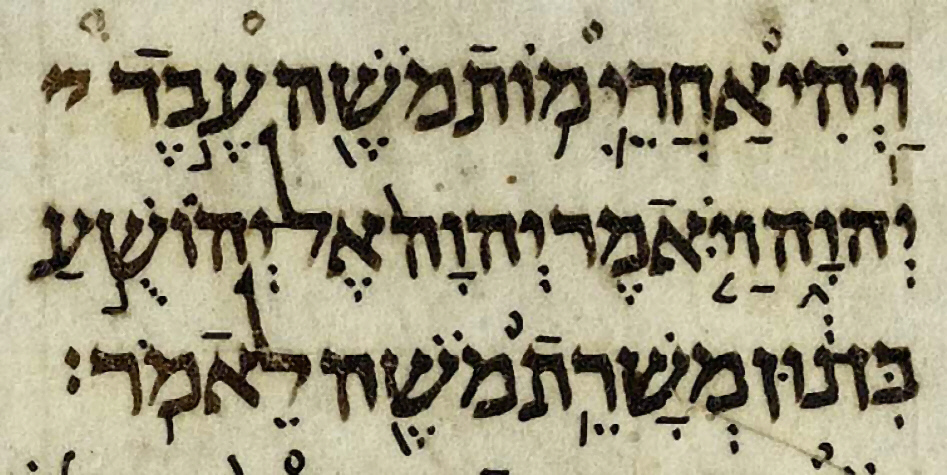
Dtr of Aleppo Codex
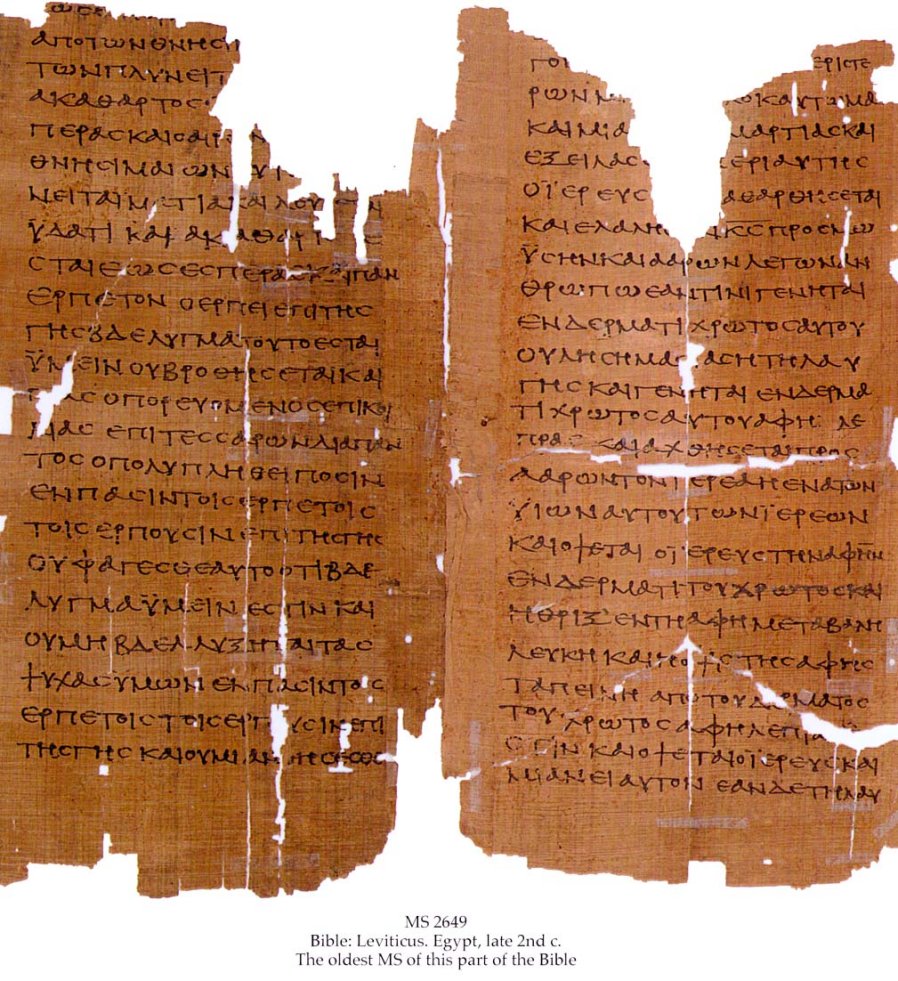
Prior to the discovery of the Judean Desert Scrolls (commonly known as the Dead Sea Scrolls, or DSS) the oldest Hebrew version of the Bible was the Aleppo Codex, a beautiful, full manuscript of the Hebrew Bible written about AD 930. Yep, that’s not a typo: AD 930; now compare that to the Greek version of the Bible, Codex Siniaticus which is dated back to AD 350! Regardless of what dating your use for Moses or the rest of the Hebrew Bible books, that is a long time after these texts were written down.
 
“But,” defenders of the MT Bible would object, “the Masoretes—the Jewish Scribes who preserved the text of the Bible—were incredible careful, and included all sorts of safeguards in their copying (such as counting letters, middle of the book, etc). So, even though the Aleppo Codex is a 10thcentury text, it actually reaches back far further.” And that is absolute true! Thanks to discoveries of the DSS we can say for certain that the Masoretes did a truly remarkable job preserving the Hebrew text which under-girds their textual versions (i.e., the MT). But this only occurred after the text had stabilized.
 
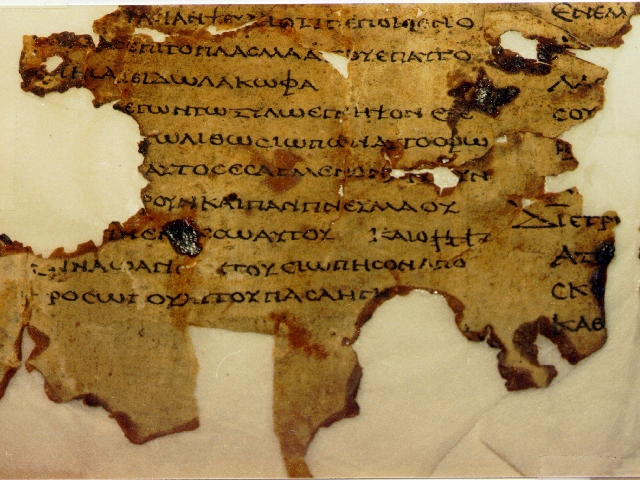
You see, when the DSS were discovered and analyzed they found that the text of the Hebrew Bible preserved by the Masoretes (thus, the Masoretic Text or MT) was only one version out of a plurality that existed in the first century. For example, Emanuel Tov analyzes the 75 extant Hebrew-Aramaic texts of the Prophets and Writings that are sufficient to make meaningful remarks about and found the following:
Total
Masoretic-Like
SamP-Like
OG/LXX
Pentateuch
46
22 (48%)*
5 (11%)
1 (2%)
18 (39%)
Rest of HB
75
33 (44%)*
5 (7%)
37 (49%)
Thus, most of the texts are based on versions or text families that are not the same as the Hebrew Test in our Bible! Even though Tov (for this analysis) only looked at Hebrew-Aramaic documents, he still found 7 documents which show the Hebrew Text that is behind the Greek translation colloquially referred to as the Septuagint! Even if we just look at the manuscripts of the Torah we find that only 48% of the texts are Masoretic-Like (or midway between MT and Samaritan Pentateuch)!
So, if there’s so much textual plurality in the 1stcentury, when and how did the Masoretic text come to be such a dominant text type for the Hebrew Bible? And why do we use it, today? Well that’s a big question that we’ll talk about in a different blog post, but the short version for today is this: we’re not exactly sure, but definitely by the 4thcentury CE and probably by the 3rd century, the MT had stabilized and represents overwhelmingly what we have i

n our Hebrew Bibles. And it probablyoccurred because the Proto-MT text was the preferred version of the rabbis who survived after the Bar Kochva Revolt (AD 135) and they copied versions like their own, and suppressed / allowed to die out versions which were “wrong” from the perspective of their text.

Just like when we talked about the LXX, this is a complex topic and I won’t pretend to cover anything more than the most basic of outlines. But, if you’re interested in learning more about the topic, I’d recommend the very short Textual Criticism, by P. Kyle McCarter, or the very good (but decidedly not short, not cheap, and quite dense!) Textual Criticism of the Hebrew Bible by Emanuel Tov. Tov is a standard of the field.
But what’s the tl;dnr version?
  • The Masoretic Text (MT) should not be confused with the “original” Hebrew Bible
  • The MT is newer than other textual traditions
  • The MT is very similar in most passages of the HB; very different in others 
  • The MT is just one of several different text types present in the 1st century
  • We should not automatically assume that the MT is “better” than the LXX/OG texts
Next time, we’ll talk a bit about some of the differences between the MT and LXX.

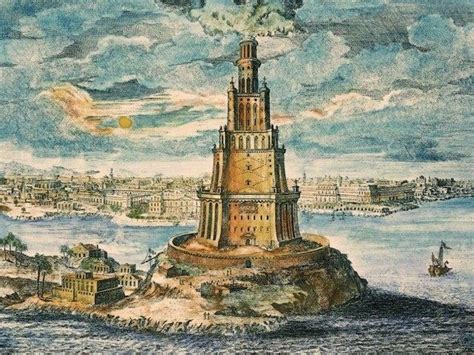
“As if by some Plan”: Alexandria, Aristeas, Philo, and the LXX


Resting in the cloistered place, and with no one present, that is except the elements of the region—earth, water, air, heaven—concerning the creation of which they were about to give a sacred account–for the beginning of the law is the account of creation—the others, just as though they were being inspired, other people were not interpreting other things, but all were translating the same nouns and verbs, as if a Suggester gave were instructing each of them invisibly (Philo, Life of Moses 2.37).
I’ve spent a number of my last few posts discussing the differences between the Greek and the Hebrew texts which lay behind our modern, English Bibles. These differences, although mostly influencing the Hebrew Bible / Old Testament, can and do influence how we read the New Testament as well. But, before we go any further, we really need to discuss what these terms mean. So, let’s get started with the Septuagint! 
 
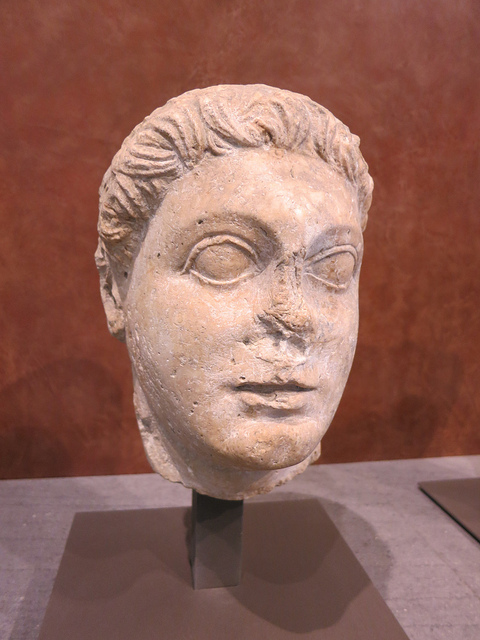
Philadelphus r. 285–246 BCE
According to the legendary account found in the Letter of Aristeas (2nd cent BCE), Demetrius of Phaleron was given huge sums of money by Ptolemy II Philadelphus to make the Library of Alexandria the greatest library of the entire world. In the midst of his extravagant purchases, he learns of the Pentateuch and is convinced that “it is necessary for these books to be in your library in an accurate and careful form, since the subject is very philosophical and in nature and pure, perhaps even divine!” (Aristeas, 31).
 
The problem, of course, is that their content requires as much expertise to translate as does the language. Demetrius convinces the king to write a letter to the high priest in Jerusalem to send down translators:

Send us six men from each of your tribes, those who have proven their character by their way of life, men who are Elders, experienced in the things of their own law, so that after examining the translation and taking the agreement from the majority, which is accurate with reference to the translation, we might set it elegantly in a manner worth of the regime and your choice! (32).

After arriving in Alexandria and proving their worth to the King and Court, they retreat to a special facility—all provided at the king’s considerable expense!—and get to work translating. It takes them exactly 72 days:

And it happened in such a way, that the work of the translation was finished in seventy two days, something like this having happened as though according to some Plan (Aristeas, 307).

Aristeas, then, doesn’t explicitly state that the translation was inspired, but he certainly opens up the way. After all, there were 72 translators, and it took them exactly 72 days to translate the Pentateuch.
 
Philo, a Jewish exegete living in Alexandria and a rough contemporary of the apostle Paul, shows that—after the passage of time—this hint of inspiration had developed. We also see a shift. Philo describes the translation process thus:

Resting in the cloistered place, and with no one present, that is except the elements of the region—earth, water, air, heaven—concerning the creation of which they were about to give a sacred account—for the beginning of the law is the account of creation!—the others, just as though they were being inspired, other people were not interpreting other things, but all were translating the same nouns and verbs, as if a Suggester gave were instructing each of them invisibly (Philo, Life of Moses 2.37).

Although Philo doesn’t know Hebrew, he is aware enough about various problems in translation that he discusses this a bit more to show exactly how special the Greek translation of the Pentateuch was:

And yet, who does not know that all dialects (especially the Greek dialect!) have a large number of words, and so it’s quite possible for someone to translate differently while metaphrasing and paraphrasing, or adapting other words?  But they say this did not occur with this translation, but the words in their original etymological meaning corresponded to the words in their original etymological meaning and to the same sense, the Greek with the Chaldean, well suited to the realities indicated! (2.38).  


Now, it should be said that Philo here is wrong: the Greek translation of the Pentateuch he’s talking about isn’t exactly like the Hebrew text. But what this does show is the immense valuation among the Jews—in the diaspora, but also in Palestine!—that this translation held. Philo describes that every year there is a feast to commemorate the translation in order to \”thank God for the services done for the good of the public\” through the translation! (2.41).
 
 
So what can we learn about the Septuagint, here? What’s the tl;dnr version?
  • The Septuagint only includes the Greek translation of the Pentateuch undertaken by scholars and Ptolemaic authority and provision, not the entire Greek Bible (although, it should be noted that what most people mean when they reference the Septuagint is this broader, metonymic usage and most folks aren’t always exact).
  • It’s called the Septuagint or LXX because of the 72 (in Aristaeus) or 70 (in Philo) scholars who translated the Pentateuch under the Ptolemaic aegis (LXX is the Latin enumeration of 70)
  • The LXX was (most likely) translated in the 3rd-2nd century BCE but definitely in Alexandria, Egypt
  • The LXX translation was disseminated and used by Jews throughout the Diaspora and even in Palestine, where—if the gospels can be believed—it was even read in Jewish synagogues, used by Jesus and by Paul.

This is a pretty complex topic. You can read through some of the primary sources yourself, but I’d also highly recommend reading through Timothy Michael Law’s When God Spoke Greek if you want more information. There are a lot of good introductions to this topic (Jobes, Marcos, and Swete are always excellent!), but TML writes for a general audience and in such a way as to make the reading enjoyable and stimulating. I disagree with TML in any number of ways, but none of those ways alter my recommendation (Disclaimer: TML is a friend/acquaintance of mine, but I\’ve been recommending his work since before I knew him personally.)

Next time, we’ll talk about the Masoretic Text.


When David met Saul: Contradictions, the OG, and the MT

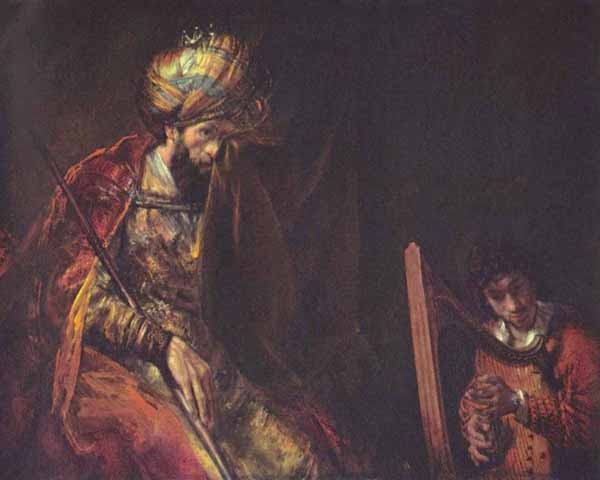
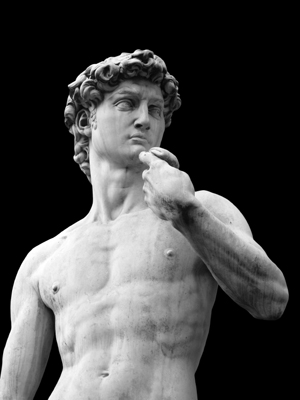
The text of our Protestant English Bibles include two different “meetings” for King Saul and Future-King David. The first “meeting” comes about when God’s spirit torments Saul so that he needs the soothing power of music. Saul’s courtiers find David, the son of Jesse, a mighty warrior, well spoken, and generally the type of person who fits in a royal court. So, Saul sends messengers to Jesse to draft his son into his service where he does well and finds favor in Saul’s eyes (1 Sam 16.14–23).
 
(We’ll start talking in my next post about the origins of the different text [OG, LXX, MT, etc], but I wanted to take a moment and show why it matters in this post using a well-known example and then [briefly!] commenting on a few others. If you’re interested to see a New Testament example of why some of this matters, you can check out my last post on this topic here.)
 
This narrative makes a lot of sense. We read about the soothing power of music with response to divine agents in a few different stories, and a powerful warrior who is also well-spoken, skilled, and somewhat attractive seems like a just the person to include in the king’s court. The problem is the very next story.

You see, the next story is one of David and Goliath, where—after David volunteers to fight the giant—we learn that neither Saul nor Abner has any clue about David’s identity or the identity of his father! Indeed, rather than having been sent to stay with Saul (as 1 Sam 16 relates), David has been staying with his father’s sheep while his brothers serve in the army and has never been seen by anyone in the army or around the king until now (1 Sam 17.55–58)! He is not known as a warrior, not as a harp player, not as part of Saul\’s court, and not even as the son of his father, but merely a brave lad.

This doublet has caused all sorts of hoopla. It’s frequently features in “contradictions of the Bible” sorts of posts and equally frequently “defended” in “there are no contradictions in the Bible” sorts of posts. Neither of these kinds of posts does a terribly good job handling the data, but that’s not the point of this post. Instead, I want to use this well-known problem to illustrate something much larger: the Greek Bible and Masoretic texts are not the same. In some books of the Bible, they aren’t even particularly close; Samuel is one of those. 
 

Now, you’ve probably noticed in the footnotes of your Bibles a few places where they say “The Hebrew is unclear” or “the Greek reads…” (e.g., 1Sam 1.5; 6.19; 13.1; 27.5–7; 2 Sam 13.22, 28; 21; 24.12–14; et al!). Depending on the situation, the implications range from minor (three vs. seven years of famine) to major (God killing 75 or 50,075 people), to theological (whether David is sacrificing Michal’s or Rizpah’s sons!). In this case, however, the differences are much larger in scope.

For example, the Old Greek text of Samuel is significantly shorter. The Greek text is missing 1 Sam 17.12–31 (which tells the story of David staying to shepherd the flock while his older brothers go to fight for Saul, Jesse’s commission to David to take his brothers food [taxes?], David’s inquiry about what will be done for the man who fights Goliath, and his interaction with his brothers). That is a lot that is different. Beyond that, just in this same narrative, the Greek text is also missing 17.55–58 (the aforementioned “second meeting” where Saul and Abner find out who David is).
You can read the straight through text here in the ESV (I’ve removed the verses in question) or here in the NETS (which is a funky translation but follows the Greek Bible rather than the Hebrew, so you can see more of the character of difference. You’ll have to scroll down the free pdf to 1 Sam 17). Notice all of the changes and oddities that are now missing?
  • David stays at Saul’s court after being made his armor-bearer rather than returning home
  • Saul knows who David throughout the story (this explains why he would let him fight; there is no second meeting; it explains why David is with Saul / gets an audience with him)
  • It heightens the armor bearer vs. armor bearer and other narrative aspects of Samuel\’s situation
  • (And, although not a focus of this, you’ll also note that the Greek Text changes Goliath’s height significantly!) 
The difference in this story is hefty: the Greek text is missing about 25 verses from what is in our ~50-verse Hebrew text—and that’s just from one chapter! Indeed, if we look through the rest of Samuel we find lots more situations where events are out of order, where things are added, and where small sections / questions of specifics are different. But it’s not just Samuel: there are enormous differences in length (and sometimes theological developments) in lots of other books of the Hebrew Bible, especially Job (1/6 shorter in the OG) or Jeremiah (15% shorter in the OG) that are at least equal to Samuel. And that isn’t counting all of the different, smaller but still important, areas of change!
 
At this point, though, you might be wondering “Ok, but which one is right! Which one is original? What is the difference? Where did these differences come from?” Obviously, we don\’t have enough time left to address all of those questions, but I don’t want to leave you hanging entirely. So let’s end with a suggestion:

Our English Bible give undue preference to the Hebrew Text of the Hebrew Bible / Old Testament (HBOT). These reasons are understandable, but severely outdated. Although it’s true that the Hebrew version of the HBOT is older than the Greek, it is not true that the Hebrew text which underlies our Bibles is older than the Greek text we have in the Old Greek and Septuagint versions. In fact, quite the opposite. This recognition–and there is overwhelming proof for much of this, ever since the dissemination of the Dead Sea Scrolls (DSS)–should drive us to place the Greek texts on (at least!) equal footing with the Hebrew. We should take these questions more seriously, and we should start looking more closely at those footnotes in our Bible or reading the NETS. It’s amazing what you’ll pick up, if you do.

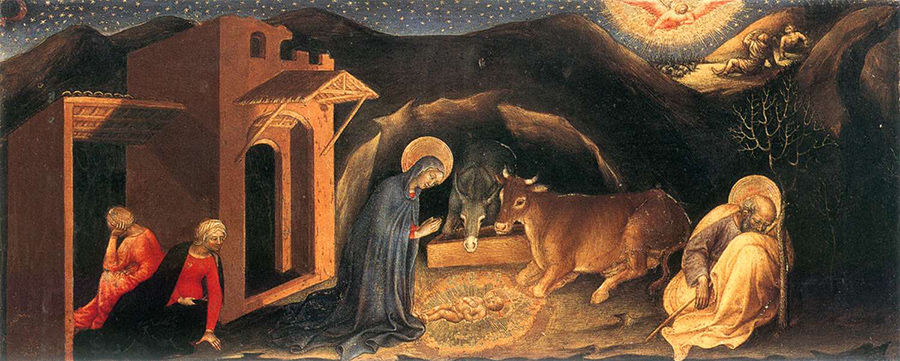
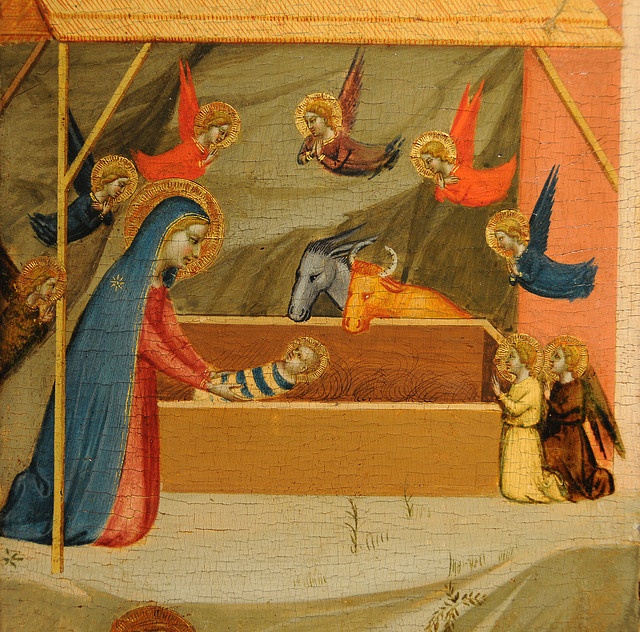
Animals and Babies, Homes and Barns: Why Modern Perceptions Conceal the Point of the Nativity

 
When Luke sets out to tell the story of Jesus’s life in his gospel, he includes a well-known description of his birth. The ESV (which I normally like!), reads:

In those days a decree went out from Caesar Augustus that all the world should be registered. This was the first registration when Quirinius was governor of Syria. And all went to be registered, each to his own town. And Joseph also went up from Galilee, from the town of Nazareth, to Judea, to the city of David, which is called Bethlehem, because he was of the house and lineage of David, to be registered with Mary, his betrothed, who was with child. And while they were there, the time came for her to give birth. And she gave birth to her firstborn son and wrapped him in swaddling cloths and laid him in a manger, because there was no place for them in the inn.

(Luke 2.1–7).

This picture is well known to us: we have all seen any number of “nativity” or “manger” scenes! and they all focus on the same sorts of things: Jesus’ parents were unable to find room in a hotel and thus Mary gave birth in a barn. After all, that’s what it says. Except, that it doesn’t quite say that.
The “inn” in which there is no room isn’t a hotel, but someone’s (probably one of Joseph’s relative’s) home whose spare-room is already filled with guests! There are two main pieces of evidence which drive us to this conclusion. The first is lexical; the second is contextual.


Let’s look at the lexical argument, first. The word used for “inn” (κατάλυμα) did, and in some places, does refer to a hotel-like structure built for strangers to stay the night. This is the more common usage in classical Greek, for example. However, even in this period it tends to refer to a single room that may or may not be used for visiting family or else renting out for specific usage (we might think of a spare room for an Air BnB?). But in Luke, and in the gospels more generally, a κατάλυμα doesn’t refer to a hotel at all, but a “spare room” just like the one that Jesus rents to take the Passover with his disciples (Mark 14.14; Luke 22.11). Luke is consistent with his usage: when the Pharisees and other religious types are angry that Jesus has gone to the house of Zacchaeus the tax collector to stay and the people say, “He has gone to be the guest (to be given hospitality in the house) of a sinner!” (Luke 19.7) the word for “be a guest” is the verbal form of κατάλυμα (καταλύω). And, lastly, Luke knows and uses a different word for “hotel” (πανδοχεῖον) in the way we think about it, which he uses to describe the place that the Good Samaritan takes his charge on a well-known road and pays the innkeeper to care for the stranger (Luke 10.34).


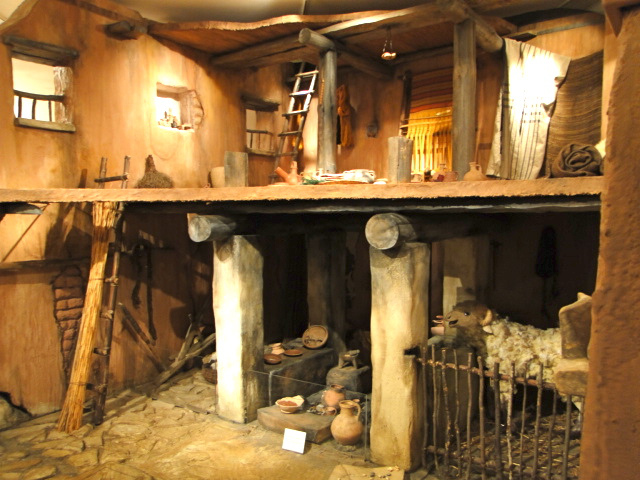
4-Room House at Harvard Semitics Museum
But the stronger argument is the contextual (or, perhaps, archaeological). I grew up around horses and cattle and we had several different barns. Our barns were—like most living in the US today—free-standing structures kept away from our house in order to keep the stench far away from the house. But, in ancient Israel, they didn’t have these sorts of structures. Instead, animals stayed in the downstairs of the house. This is what Jephthah was expecting when he vowed, “Whatever comes out of the doors of my house… I will sacrifice to the LORD” (Jgs 11.31). Although the houses present in the 1st century had evolved from the better-known “four room house” of Iron Age Israel, the most important aspects (from our perspective, here) remained: there was a larger central courtyard on the first floor which was used for animal and work space.
There is no inn, no innkeeper, and no stable. What we find instead is a place to stay that is cramped and surrounded by family.  I like helping us better locate the stories of the Bible in what actually happened, and I’m not the first to make some of these connections. But I bring this up because I think it helps change some of our interpretations and understanding about what is going on in Luke’s gospel. First, Luke doesn’t portray Jesus’ birth as out in the cold, alone and friendless among the animals with none but shepherds to celebrate his birth. Instead, at his birth we see an image of what could have been, and what should have been for the rest of his life: he is surrounded by his own people, encompassed by his joyous relatives, celebrated and marveled at by all of those in the area (much like what we see with Ruth).  Indeed, this picture of joy and acceptance fits with the rest of what Luke tells us about Jesus’ birth. Luke tells us that at the same time as Jesus’ birth an angel appears to a group of shepherds who, after hearing the angelic pronouncement of “Glory to God in the highest, peace on earth among those with whom God is pleased!” (Luke 2.14), accompanied by the heavenly host rush to join the throne around Jesus (Luke 2.15–17). When they arrive, they related “the saying that had been told to them by an angel concerning the child and all who heard the pronouncement wondered” (Luke 2.18). The “all who heard” was not just Joseph and Mary stuffed in a cold, lonely bar, but a household full of relatives who are celebrating the birth of a child. Albeit, a child they did not fully appreciate.
But this situation at Jesus at his birth—beloved by his relatives, supported by family, and celebrated and cheered—does not last. As John begins, thinking of Jesus’ end, “Jesus came to his own people, but his own people did not receive him” (John 1.11). We read that, before his death and resurrection “not even his brothers believed him” (John 7.5). Stephen, recounting Jesus’ life, compares him to Joseph, whose brothers sold him as a slave to Egypt (Acts 7.9–16). Indeed, it was Jesus’ own people who reject him, proclaiming “give us Barabbas!” Jesus’ birth is a reflection of his death because it begins in celebration, but only until the people understand who Jesus really is.
When Jesus entered Jerusalem the last time, it is to great tumult, joy, and celebration. As he draws near, on the way down from the Mount of Olives, we read that the people surround him and “began to rejoice and praise God with a loud voice for all the mighty works that they had seen, showing ‘Blessed is the King who comes in the name of the LORD! Peace in heaven and glory in the highest!” (Luke 19.37–38), which should remind us of what the angels shouted as Jesus’ birth, “Glory to God in the highest, peace on earth among those with whom God is pleased!” (Luke 2.14). And yet, in spite of this glorification, they do not understand what it means at this last week of his life any more than they understood it at his birth. The people rejected the stone that God wanted to become the chief cornerstone (Luke 20.17), they sought to land hands on him and put him to death (Luke 20.19–20), and eventually accomplished what Herod attempted at his birth—put him to death. Now, some of that is easier to understand if you believe Jesus’ parents couldn’t get a room at a hotel and were stuck out in the barn without anyone around, but it’s unlikely.
Realia matters; words matter; and context matters.


Recovery of Sight to the Blind: Luke, the MT, and the LXX

“The Spirit of the Lord is upon me, because he has anointed me to proclaim good news to the poor. He has sent me to proclaim liberty to the captives and recovering of sight to the blind, to set at liberty those who are oppressed, to proclaim the year of the Lord’s favor” (Luke 4.18–19).
The only New Testament class that I have the opportunity to teach at Florida College is the freshman course “New Testament History and Geography,” which focuses on the narratives in Luke-Acts. As I teach through Luke, I emphasize how important scripture citation is to Luke: he does it (compared to Mark and Matthew) rarely, and each time he does is notable. One of the most important for Luke’s Jesus comes from his first sermon (Luke 4.16–30). There is a lot we can talk about, here, but what I want to focus on is Jesus’ citation. As many of you probably already know (or can check with a quick glimpse down at your cross references!) this passage comes from Isa 61 and is used by Luke to highlight Jesus’ earthly ministry. Jesus was anointed to do a few things: to proclaim good news to the poor, to proclaim liberty to the captives, recovering of sight to the blind, set at liberty those who are oppressed, and to proclaim the year of the Lord’s favor. Each of these items are seen in Jesus ministry and form a sort of “thesis statement” for what Jesus sets out to do here on earth.
One of the things a lot of folks learn to do when they see a quotation from the Hebrew Bible is to flip back and check it. So, if we flip in our English Bible back to Isaiah we find:

The Spirit of the Lord GOD is upon me because the LORD has anointed me to bring good news to the poor; he has sent me to bind up the brokenhearted, to proclaim liberty to the captives, and the opening of the prison to those who are bound; to proclaim the year of the LORD’s favor (Isa 61.1–2)

But that citation… doesn’t match! Among the differences, where is the “recovering the sight of the blind!?” This is one of the key aspects of Jesus’ identity: it’s what he convinces John with (Luke 7.21–22), it’s who is supposed to be invited to the Messianic feast (Luke 14.13, 21), and it’s who he heals as he is on his way to Jerusalem (Luke18.35). This miracle is just as important outside of Luke (cf. John 9–11!). But where did it come from, for Jesus to cite it? Did he just get it wrong? Make it up? The answer to both is “no.”
 
This phrase actually comes not from the Masoretic Text which underlies our modern, English Bibles, but rather the Old Greek. Notice what is present in the Greek version of Isaiah:
The Spirit of the Lord is upon me, because he has anointed me to proclaim good news to the poor, he has sent me to heal the brokenhearted, to proclaim liberty to the captives and recovering of sight to the blind, to proclaim the year of the Lord’s favor (Isa 61.1–2 OG). 
In fact, if you’re careful about checking your references while reading through your New Testaments you will find frequent examples of where the text you look at in your Old Testament doesn’t match what you’re reading in your New Testament? You may have asked “Why is that?” before quickly dismissing it as a mere translation difference or something weird with your version and—sometimes—that is right! But, far more often, it’s because the New Testament writers were using a different textual tradition than what our modern English Bible’s use for their Old Testaments.
 
Oddly enough, over the past two weeks I’ve received several, independent questions asking me about these issues, so over the next few posts I’m going to dive a little more into that: what is the Septuagint? What is the Masoretic Text? Why does it matter? And What does it change?  In the meantime, keep an eye out for those quotations that don’t match. Which ones have you noticed, lately?

Justice: Texts, Tensions, Textures

Perhaps the greatest dangers we have when we approach the Bible as a single, unified story brought about by a single, divine mind is that we may read it as a flat, textureless narrative where we suppress and “fix” any differences because we–understandably but mistakenly–think that differences are the same as contradictions. And, since most Evangelicals (or others from a similar vein) grow up hearing that there are no contradictions in Scripture, we often read that to mean that there are no differences, either. But appreciating the narrative’s texture can inoculate us against these dangers because it allows the text to have four dimensions instead of two. In my last post I used the stories of Zelophehad’s Daughters to show that laws were meant to change over time in response to certain situations. But—most of the time—we don’t get the “backstory” to those changes.
When we read those stories closely we saw a progression and I left off with some points that I want to clarify, for today.
Laws can and are meant to change based on case law. The simplest but most overlooked point that we can take from the situation with Zelophehad’s daughters is that laws were meant to change. Just because the laws that were given to Moses on Sinai (particularly the “Covenant Code” Exd 20.22–23.33) were inspired, doesn’t mean that they were all-inclusive. Look, even if we look at every law in the Hebrew Bible, these laws are sparse. There are enormous swathes of law, entire situations and occasions, and even categories of law that are non-existent in the Hebrew Bible. And I’m not just talking about modern law, I’m talking about things which were important to people of this time and place but aren’t included in the Pentateuch at all. The Pentateuch’s laws were not comprehensive, and they were never going to be. That means that laws had to be able to adapt and they did.
These changes were intended by God. If God never meant his laws to be comprehensive, then he wanted them to be able to change in response to situations. Indeed, that’s exactly what we see played out in our reading! Both times when a situation arises and is brought to God he says, “You’re right!” (Num 27.5; 36.5). That makes it pretty clear that God intended these changes. We can, and should, extrapolate that he feels the same way about other changes.
These changes follow a procedure. But we also see that there is a sort of procedure to these changes: in both cases the leaders of the congregation are gathered together (we have priests, elders, prophets, and political leaders involved, although we’re not sure—just from these episodes—which institutions must be involved to change laws!). We often see other gatherings of similar types of leaders in other situations: it seems likely that one or more of these offices were required to change the law.
Laws were meant to serve a community. Often, we have a wrong idea about how these laws functioned. We may think that, since they’re all inspired, they must all be the same and they must all be perfect. But that would be crazy because that’s not how anything else works. The laws are meant to serve a community and as that community’s needs change and shift based on their context, so too must the laws. God recognizes that. Those socio-demographic changes normally happen in building, major shifts (e.g., landless wanderers in the wilderness to landed people in Canaan; judges to kings; rural focus to urban; tabernacle to temple to exile, etc), but sometimes it’s much faster, like what we see with the daughters of Zelophehad. Imagine the (ad absurdum) alternative reading!

God at Sinai: Here’s my perfect inspired law for inheritance that will never change!
Moses and the People: Sweet! This will never change because it’s perfect!
Daughters of Zelophehad (a few years later): Umm, but is it really?
God: Oops. My bad. Now it’s perfect and inspired and will never change!
The People (approx. 5 minutes later): Umm, but is it really?
God: Ok, ok. My bad. Foiled again! I just never realized these situations could be so complicated. I could never have foreseen these foreseeable events!
Such a reading is clearly ridiculous, and yet, if we do not allow the motivating factor of legal change to lie with the community, then we force some version (although, probably, a more “holy” sounding one!) of the above on the text. Once we allow the law to evolve as the people grew in their socio-economic situation and learned more about God’s character, this all makes sense.
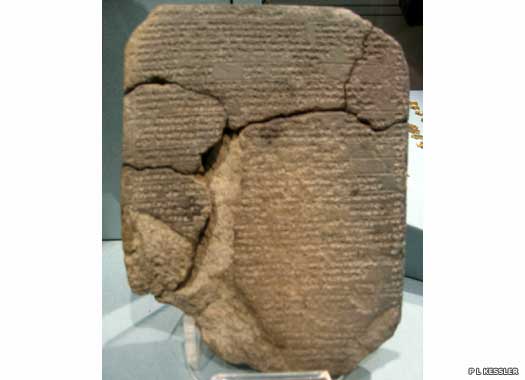
Older, out of date laws coexist with the updated laws. The last point that you may have picked up on is what we could call the “Law of Preservation of Text.” Just like matter doesn’t like to (is unable to?) be destroyed, no one in antiquity wanted to destroy holy writings. No one in the ancient world valued consistency and simplicity in quite the same way as we do. We might think that—if we were going to update a law—that we would replace the old, out of date one. But no. There’s an understanding that such texts are holy and should be preserved, even if they are preserved alongside things that contradict them. In fact, this is present in all forms of ancient literature. There are a few different ways to do this, but some of the clearest examples comes from the Hittite Law Collection. Just look at a few of the many examples:
HL $ 7 – If anyone blinds a free person or knocks out his tooth he shall pay 20 shekels of silver (they used to pay 40 shekels of silver) and he shall look to his house for it.
HL $ 9 – If anyone injures a person’s head, they used to pay 6 shekels of silver: the injured party took 3 shekels of silver, and they used to take 3 shekels of silver for the palace. But now the king has waived the palace share, so that only the injured party takes 3 shekels of silver.
HL $ 19b – If a Hittite abducts a Luwian man in the land of Hatti itself and leads him away to the land of Luwiya, formerly they gave 12 persons, but now he shall give 6 persons. He shall look to his house for it.
One of the cool things about how this is done in ancient texts is that seeing the progression allows us to understand a law collection’s (and, therefore, the community’s!) trajectory. We’ll talk a bit about that trajectory and how that helps us read biblical narratives next time.

Justice: Daughters, Inheritances, and Changing Laws

When we treat a text as two-dimensional we read it as a flat text. One of the greatest dangers in studying the Scriptures, but perhaps especially the Law of Moses, is that we tend to read it like a flat text. (I think we’ll understand better what this means by the end of the blog, but for the time being, reading something “flatly” means that we repress and eliminate any differences, forcing everything to say the exact same thing, normally because we mistakenly think that differences are the same thing as contradictions.) So, if we want to study a certain topic we gather all of the texts related to that topic together (which is good!), we may even include some stories from other genres such as narrative or prophecy or poetry (which is excellent!), but once it’s time for us to start sifting, sorting, and studying, we take all of this variegated information which is full of texture and tension and smoosh it flat. This makes the topic into something that’s more digestible. I certainly understand the compulsion to do that: if we think that all Scripture is inspired and comes from the mind of God, then it should all say the exact same thing. Is it possible for someone accept the first two premises and still reject the third? Well, let’s look at a case study to find out!

The Daughters of Zelophehad–Mahlah, Noah, Hoglah, Milcah, and Tirzah, if anyone has quintuplet girls and needs some naming ideas!–appear before Moses and Eleazar and present a serious case before Moses (we’ve talked before about case law, here and I plan on talking more about names and land as afterlife in the future):

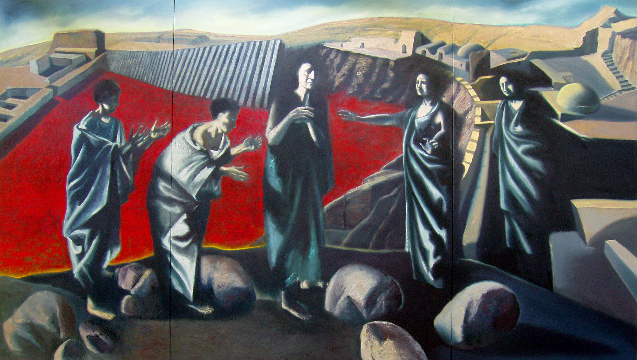
Daughters of Zelophehad by Yoram Raanan

Zelophehad’s daughters stood before Moses and before Eleazar the priest and before the chiefs and all the congregation, at the entrance of the tent of meeting, and presented their case: “Our father died in the wilderness. He was not among the company of those who rebelled against the LORD in the company of Korah, but died for his own sin. But he had no sons. Why should the name of our father be taken away from his clan because he had no son? Give to us a possession among our father’s brothers!” (Num 27.2–4).

This situation immediately follows the division of the land, the new census (verifying that all of those who were above the “cut off” age when they rejected the land the first time were dead), and Moses’ dictation of which tribes get which land. But Zelophehad had died without any sons. Where, then, goes his inheritance? Deuteronomy 21.15–17 reads:

If a man has two wives, one loved and the other hated, and both loved and hated wives have borne him sons, and the first-born is the son of the hated wife, when he apportions his property to his sons, he may not rank as first-born the son of the loved wife over the son of the hated wife who was the firstborn. Because he must acknowledge the first-born, the son of the hated wife, given him a double portion of all he possesses; since he is the product of his vigor, the right of the firstborn belongs to him (Dtr 21.15–17).

This law has a lot of different implications, but what’s important for us today is that this law limits inheritance to sons. This is the issue that Mahlah et al. bring up! Their father left no sons to inherit the land and–for a people that associated blood descendants living on family land with the afterlife–this is a big deal. So, even though the law in Deuteronomy is inspired, the Daughters of Zelophehad have brought their case before the leaders of the people and Moses brings the case to God:

When Moses brought their case before the LORD, the LORD responded, “The daughters of Zelophehad are right. You should give them possession of an inheritance among their clan and transfer the inheritance of their father to them. Furthermore, make a rule for the people of Israel, as follows, \’If a man dies sonless, then transfer his inheritance to his daughter. If he has no daughter, give his inheritance to his brothers. If he has no brothers, give his inheritance to his father’s brothers. If his father has no brothers, give his inheritance to the nearest kinsman of his clan, and he shall possess it.'” This is the rule for all of the people of Israel, just as the LORD commanded Moses (Num 27.5–11).

This is fascinating text that helps us understand how laws were changed! But before we talk about this more, let’s look at another shift in how all of this works. Because the story of inheritance has one  more development. In Number 36, the heads of the clans of Israel come before Moses and present their cases. They raise an issue because, although God had indeed commanded that daughters could inherit land and not just sons, God’s new mandate had negative implications for the clan which violated other legislation and promises which had been made:

If daughters are married to the sons of the other Israelite tribes, then their inheritance will be taken from our tribal allotment and added to the allotment of the tribe into which they marry. So it will be taken away from the lot of our inheritance! And when the jubilee of the people of Israel comes, then their inheritance will be added to the inheritance of the tribe into which they marry, and their inheritance will be taken from the inheritance of the tribe of our fathers (Num 36.3–4).

Again, we see that Moses changes the law because–as he says–“The people are right” (Num 36.5). Rather than roll back the previous changes however, he provides a further restriction to these case laws. If daughters inherit, they must marry within the clan of their father so that the land does not shift to other tribes (Num 36.6–9).

When we put all of this together, we see that–for inheritance law–there is a progression:

  • Dtr 21.15–17 — Partible Inheritance for Sons
  • Num 27 — Partible Inheritance for all Children
  • Num 36 — Partible Inheritance for all Children with Marriage Restrictions
Clearly, these laws are different and–just as clearly–there is a progression that explains why they’re different. I use the case for Inheritance Laws and the Daughters because this is one of the few legal changes we have preserved in the text where we’re privy to the details of the case that caused the change. So, let’s see what things we get out of this and what this helps us understand about reading texts with texture, all coming from just this episode:

  1. Laws can and are meant to change based on case law
  2. These changes were intended by God
  3. These changes follow a procedure
  4. Laws were meant to serve a community
  5. Older, out of date laws coexist with the updated laws
The implications for these five points and how we read Scripture is important enough that I’m going to save it for the next blog post. What implications do you see for this law and how we read other laws?
Janet Shafner, Daughters of Zelophehad (her art is awesome. Check it out.)

Midrashic Reading and the Temptation of Christ in Luke (Angels, Wings, Stones, and Bones)

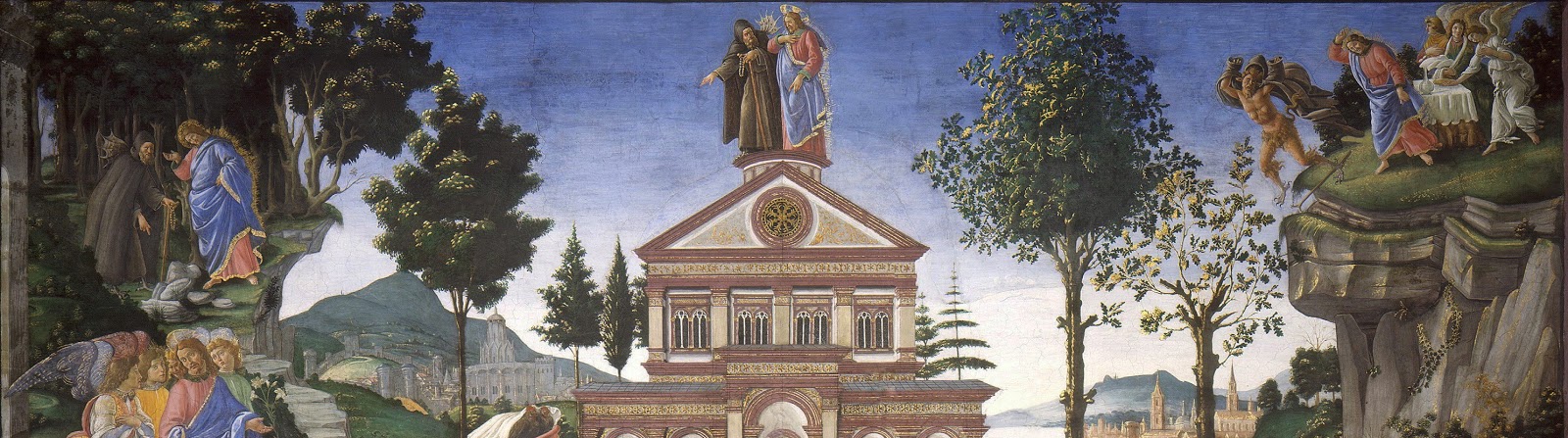
Bottacelli’s Temptation of Christ
One of the most famous stories in the Gospels is Satan’s testing of Christ in the wilderness:
Jesus, full of the Holy Spirit, returned from his baptism at the Jordan and was led by the Spirit through the wilderness for forty days, tempted all the while by the devil. He ate nothing during those days, so when they were ended, he was hungry. The devil said to him, “If you are the Son of God, command this stone to become bread.” And Jesus answered him, “It is written, Man shall not live by bread alone.”
So the devil took him up and showed him all the kingdoms of the world in a moment of time, and said to him, “To you I will give all this authority and their glory, for it has been delivered to me, and I give it to whom I will. If you, then, will worship me, this will all be yours.” And Jesus answered him, “It is written, You shall worship the Lord your God, and him alone shall you serve.”
So the devil took him to Jerusalem and set him on the winged-pinnacle of the temple and said to him, “If you are the Son of God, throw yourself down from here, for it is written, He will command his angels concerning you, to guard you, and On their hands they will bear you up, lest you strike your foot against a stone.” And Jesus answered him, “It is said, You shall not put the Lord your God to the test.” And when the devil had ended every temptation, he departed from him until an opportune time (Luke 4.1–13).
This temptation is symbolic of all temptations because all temptations come from Satan. But Satan had failed twice already. First (as we discussed earlier), for Jesus take advantage of his status as the Son of God and remove temptation by breaking bread from stone, which would keep Jesus from becoming bread broken in our place. Second (which we also surveyed), he had failed to force Jesus to receive his power and authority from that old serpent, Satan, thus rendering him unable to crush the serpent’s head and allow his disciples to tread upon serpents as well. But there was one last great temptation with which Satan could tempt Jesus, the Son of God.
But what is the temptation? We know Satan takes Jesus to the winged-pinnacle of the temple and tells him to jump, but we don’t know much of anything else. Is the temptation for Jesus to perform a miracle in the eyes of the Jerusalemites, thus saving himself from death? Jesus performed many miracles, even in Jerusalem; none stopped the crowds from hating him or killing him once they understood what he was actually saying. Instead, I think it is better to understand that Satan was tempting Jesus with proof: proof that God would indeed save him, proof that God would save and protect him from death now, rather than hoping that God would save him at the end. He would force God’s hand, put him to the test, like the Israelites who—at Massah and Meribah—put God to the test when they were thirsty by asking “Is the LORD among us or not?” (Exd 17.7). “We are his children! We are thirsty! Prove, God, that you love us and will protect us! Give us water now.” Jesus here is tempted to walk by sight and not by faith (2 Cor 5.7). Satan asks, “Will God save you, or not?”
Chagall’s Moses and the Rock
Satan took him to Jerusalem because Jerusalem is and has always been the goal. At the transfiguration, Elijah and Moses appear in glory and spoke about his departure, which he was to accomplish at Jerusalem (9.31). A bit later, we see that Jesus embraces his death and begins to speak more clearly about the kingdom because it was time for him to turn his face to Jerusalem (9.51). Jesus says that he must go on his way because it cannot be that a prophet should perish away from Jerusalem, that city that kills the prophets and stones them who are sent to her (13.33–34). When they are near, he takes the twelve aside and said “See, we are going to Jerusalem where everything that is written about the Son of Man by the prophets will be accomplished” (18.31). If Jesus had leapt from the winged-pinnacle (πτερύγιον, which comes from πτέρυξ) of the temple in Jerusalem (Luke 4.9), he would no longer be the Jesus who longed to gather Jerusalem under his wings (πτέρυξ), like a hen gathers her chicks (13.33–34). If Jesus had not trusted in God, walking by faith to Jerusalem to die, no longer would repentance for the forgiveness of sins be proclaimed to all nations, beginning with Jerusalem (24.47) because the winged-veil (καταπέτασμα) of the temple would not have been torn in two (23.45). 
Satan tempts him not just with sight, but with Scripture. Quoting from Psalm 91, he tells Jesus that he should tell God to prove that he will do what he is promised, that he will command his angels to guard you in their hands lest you strike against stone (91.11–12). But if he had put God to the test, he would not—as the next verse of the Psalm says—have been able to tread upon the lion and the adder, the young lion and the serpent (91.12). Because rather than sheltering under the shadow of his wings (91.4), he would have leaped from them (Luke 4.9). Had Satan succeeded in getting Jesus to have angels rescue him now, he would have had the angel rescue—rather than strengthen—him in the Garden (22.43). Should Jesus force God to protect him in the hands of angels now, he would never have the faith to be delivered into the hands of sinful men, be crucified, and only after—on the third day—rise (24.7).
As shocking as it may seem, this temptation to walk by sight and not by faith is something that Jesus struggled with throughout his time on earth. He was identified with our condition in the flesh; he too was plagued by these difficulties. He is tempted in every way as we were and here—when tempted—he does not appeal to his status, which Satan is so kind to remind him of, as Son of God, but instead acts as the Son of Man: he prays, he considers Scripture, he considers God. Jesus went to the Cross based on faith, not on sight.
Jesus had faith and obedience in the Wilderness where no one else obeyed and so he had faith and obedience in the Garden where no one else obeyed. Luke does not mention Adam in this narrative, but he clearly has him in mind. Luke has moved Christ’s genealogy from the beginning of the story (as it is in Matthew), to just before the temptation. And rather than beginning with Abraham and moving forward to Jesus, he begins with Jesus and moves back to Adam. The last verse of chapter three, immediately before the temptation begins, reads “Adam, the son of God” (Luke 3.38). Through the first Son of God, sin entered the world. But through the Better Son of God, might Better Life (1 Cor 15.22; 15.45; Rom 5.18–19) in the Better Garden (Rev 22.1–2).
All of this is possible only because Jesus refused to force God to keep his foot from striking against stone, so that he could become the stone that the builders rejected, the chief cornerstone (Luke 24.17) who—after death and resurrection—would roll away the stone of the tomb, of sin, and of death (24.2).
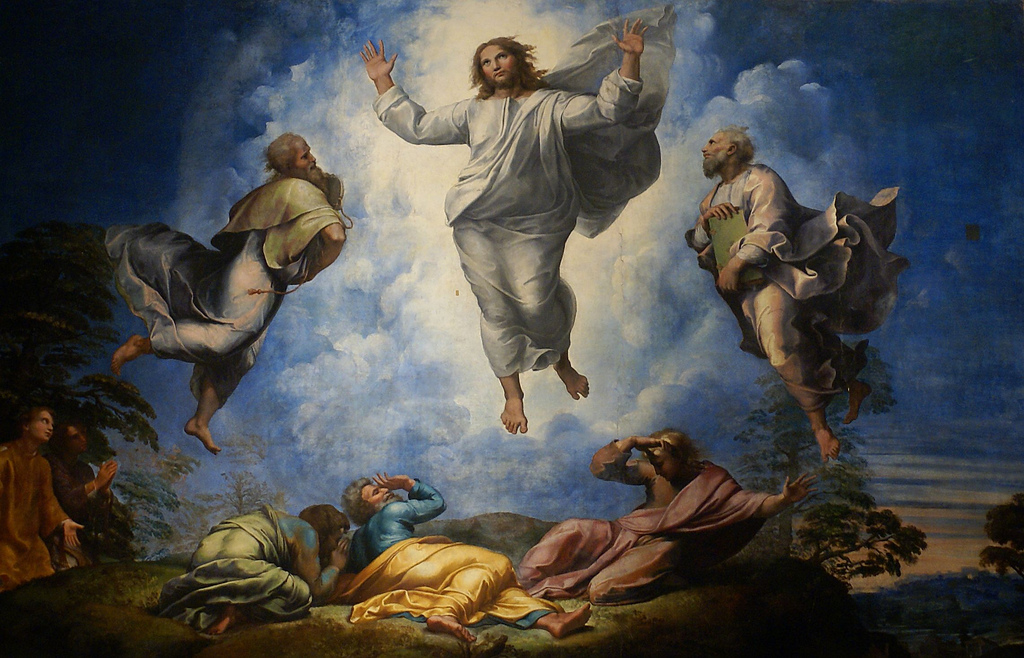
The Transfiguration displays the glory of the son, he is not one of three great men, but the Son of Man. Thus, the gospels informs us, the apostles need not build three tabernacles, nor even one, because Jesus came and tabernacled among us. Jesus is the better Elijah, who did not require a sign of God’s protection prior to doing his will at the end of 40 days in the wilderness (1 Kgs 19). Jesus is  the better Moses, who after 40 years in the wilderness neither struck the stone nor demanded that God keep his foot from striking the stone (Luke 4.11).

Midrashic Reading and the Temptation of Christ in Luke (Power and Authority)

One of the most famous stories in the Gospels is Satan’s testing of Christ in the wilderness (Luke 4.1–13).
Jesus, full of the Holy Spirit, returned from his baptism at the Jordan and was led by the Spirit through the wilderness for forty days, tempted by the devil. He ate nothing during those days, so when they were ended, he was hungry. The devil said to him, “If you are the Son of God, command this stone to become bread.” And Jesus answered him, “It is written, Man shall not live by bread alone.”
So the devil took him up and showed him all the kingdoms of the world in a moment of time, and said to him, “To you I will give all this authority and their glory, for it has been delivered to me, and I give it to whom I will. If you, then, will worship me, this will all be yours.” And Jesus answered him, “It is written, You shall worship the Lord your God, and him only shall you serve.”
So the devil took him to Jerusalem and set him on the pinnacle of the temple and said to him, “If you are the Son of God, throw yourself down from here, for it is written, He will command his angels concerning you, to guard you, and On their hands they will bear you up, lest you strike your foot against a stone.” And Jesus answered him, “It is said, You shall not put the Lord your God to the test.” And when the devil had ended every temptation, he departed from him until an opportune time (Luke 4.1–13).

In my last post, I noted that this story sticks in our minds because it reminds us of other stories that we know almost as well. Even if we can’t verbalize the exact story or passage, we probably recognize the elements. We hear their echoes in other biblical stories, and we know the concepts because they occur throughout the gospel of Luke. And that, as we said yesterday, is exactly the point: this temptation is symbolic of all temptations because all temptations come from Satan.
“Yeah, I know I don’t really look like a dragon.
I’m quilted into a tapestry. Do you want the stupid staff or not?”
-Satan (probably)

Satan had failed to entice Jesus the first time and not many had refused his offers before. But he was not done. Satan takes Jesus high up, in a moment in time, and shows all of his realms. And while there, surveying the world that Jesus had come to save, Satan offers to give it up, by his own free will, without contest or battle. Jesus would take Satan’s position as ruler of the kingdoms of the world. And make no mistake, although God had given dominion over the world to the first Adam (Gen1.26–30) when sin entered the world it and its kingdoms fell under Satan’s sway. Jesus himself recognizes’ Satan’s position and authority, calling him twice the “ruler of this world” (John 12.3114.30). And as the ruler of this world, we feel the devil’s touch through its worldly rulers—the Pharaohs and Herods; the Senacheribs and Nebuchadnezzars; the Antiochuses and Neros—all of whom stand opposed to the people of God, bent on working the will of the Enemy. Let us not forget that Revelation 13’s “Beast of the Sea” represents earthly power opposed to God’s people (Rev 13.1), but it received its “power and authority” from the Dragon (13.2); the same Dragon that is the “ancient serpent, called the devil and Satan” (12.9).

Here, at last, Christ, the Second Adam, can recover the dominion lost to Satan by the First Adam when he took of the forbidden fruit. And these kingdoms are the Messiah’s right:


Why do the nations rage? 
Why do the peoples plot in vain? The kings of the earth set themselves,
the rulers take counsel together? 
All against the LORD
And against his Christ! (Psa 2.1–2)

It is as though Satan says, “And what, really does it cost? A quick nod of the head? A bend of the knee? What is a little obeisance in comparison to what can be gained. Your own Father had asked more of Abraham and had promised less! Worship me, and all of this will be yours for free.”
What was at stake, of course, was not just a nod of the head or a bend of the knee, but a deal with the devil. What Satan wanted was Jesus to give up his mission. Because although all of the kingdoms of the world belonged to the Devil, Jesus had not truly come to create a worldly kingdom. His mission was the preach the kingdom of God. For, as he says at the end of this chapter, “I was sent for this purpose” (4.43). The good news—the gospel—that he comes to preach is that of the kingdom, offering its riches and its citizenship to those whom the kingdoms of the world had abandoned: the poor, the weak, the humble (6.20). Had Jesus accepted Satan’s offer, he would have been the one who put his hand to the plow, but looked back, no longer fit for the kingdom he preached (9.62). Just as if he had turned the stone to bread he could not have taught his disciples to pray “give us this day enough bread for today,” if he had accepted the kingdoms of Satan he could not have taught them to say “your kingdom come, your will be done, on earth as it is in heaven” (11.2), because he would not have waited for the appropriate time for the kingdom to come, but grasped it here and now and without suffering.
Because this authority would not have been given by Father but grasped from him. The authority that, at the end of this chapter, had astounded those who heard his teaching (4.32) would have come from Satan. And later, when he had authority to cast out unclean spirits (4.36), his accusers would have been right to say that it had come from Beelzebub (11.17–20). And he may have had authority over the princes of this world, but he would no longer have had the authority to forgive sins, and to tell the paralyzed man to “pick up your bed and go” (5.24). Just as a Jesus who had turned the stones to bread could not have sent out his disciples without staff nor bag nor money nor bread (9.3).
And what Satan offered Jesus wasn’t just authority, but glory. Christ had been with God in glory before he came to the world (Phil 2), and it was to glory that longed to return, the glory that was his due as the Son of Man, coming on the clouds (Luke 21.27). What if it was not necessary that the Christ should suffer these things before entering into his glory? (24.26)? What if he could return to the Father, but without the dangers of the Cross? As Phil Roberts said, Satan “offered Jesus the spoils without the war” (Leaving a Mark, 110). And this temptation is not present only here. It is this temptation that plagues Jesus throughout his ministry. It is why he tells Peter to “get behind me Satan,” and it is this temptation that he asks in the Garden for God to remove from him. But, as in Gethsemane, here he responds: “Not my will, but God’s will be done.”
You shall worship the Lord your God, and him only shall you serve (Dtr 6.13).
“The temptation is one that we ourselves should readily recognize: the belief that we somehow can receive the glory of the kingdom of Christ without sharing in his sufferings” (Roberts, 111).