He Neither Sleeps nor Slumbers (Psalm 121)

I lift my eyes toward the mountains
From where will my help come?
My help comes from the LORD,
the Maker of heaven and earth.

He will not allow your foot to slip;
your Protector will not slumber.
Indeed, the Protector of Israel
does not slumber or sleep.

The LORD protects you;
the LORD is a shelter right by your side.
The sun will not strike you by day
or the moon by night.

The LORD will protect you from all harm;
he will protect your life.
The LORD will protect your coming and going
both now and forever (Psa 121).

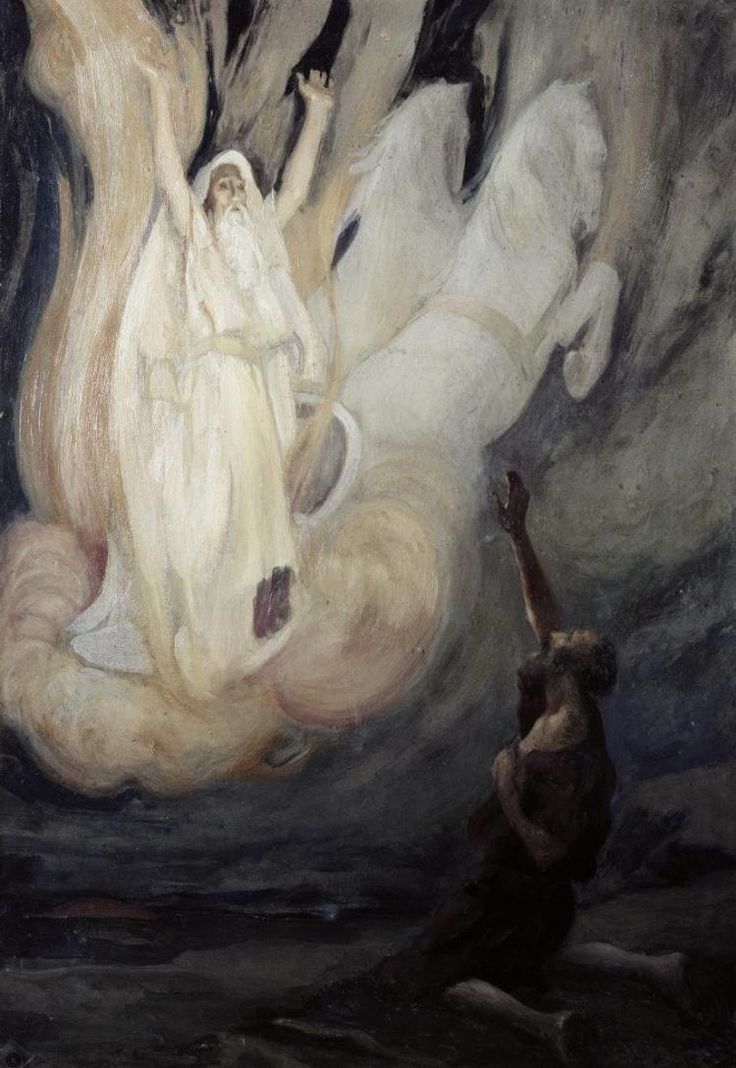
“He will not allow your foot to slip; your Protector will not slumber. Indeed, the Protector of Israel does not sleep or slumber.” Psalm 121 comforts us because our God on whom we rely does not sleep even though we must. Indeed, this is the very point that Elijah the Prophet makes when he is insulting Baal and his prophets on top of Mt. Carmel—“Cry louder, isn’t he a god? Is he still thinking it over? Is he stuck in the bathroom? Is he on a journey? Maybe he’s asleep and must be awakened!” (1 Kgs 18.27). Baal may sleep and thus be unable to hear or answer the call of his worshippers, but the Protector of Israel does not sleep or slumber.

The priests of Baal thrash and flail,
Shedding blood and weeping,
Whatever they try, they cannot prevail
Because their god is sleeping.

A Reflection on 1 kgs 18

Elijah, on the other hand, knows that the LORD does not sleep nor slumber. So, while the prophets of Baal wear themselves out, he rests until his time comes to serve. Elijah knows this. But it’s easy to remember when things go well; it’s harder to remember when things go poorly. This is true for us just as it was for Elijah, for when things do not turn out as they should, Elijah forgets: after Elijah defeats these prophets, he and Ahab deliver the message of God’s victory to the Baal-worshipping Jezebel. Jezebel, far from being impressed at the LORD’s greatness and power, promises to kill Elijah; and Ahab, far from remaining faithful to the LORD whose power he has just witness, allows this edict to stand. There is no revival; there is no purge of Baalism; there is no victory.

Elijah, depressed and deflated, tired and worn—having spent years alone or in exile, and now thinking that this was all for nothing—forgets what he knows: that the God of Israel neither sleeps nor slumbers; he thinks that he must save his own life. He runs as far away from this threat as he can, first as far south as Beer-sheba, and then even further south into the Wilderness where his ancestors died for their lack of faith—he sits under a broom tree and prays to the LORD:

“I have had enough! LORD, take my life, for I’m no better than my ancestors!

1 Kings 19.4

And, there, exhausted and worn, having run as far as he can, having prayed to die, he lays down and goes to sleep after praying he would not wake. The image that we have is that he—like the priests of Baal on Mt. Carmel before him—has exhausted himself trying to make something happen because he thinks his God is asleep and cannot hear his cry or will not save him. But this sleep does not provide him hope; it does not provide him comfort; it does not provide him rest.

You see, it’s hard to remember that our God neither sleeps nor slumbers, that—as David says as he too flees south from his enemies—we can lie down and sleep, waking safely because the LORD sustains us (Psa 3.5), because he is a shield about us, our glory, and the lifter of our head (Psa 3.3). It’s hard to remember this and to have faith when we are held by fear, terror, and sleeplessness. When you are terrified, it is impossible to go to sleep! Sometimes when you’re overwhelmed, you’re too tired to even sleep. When you don’t feel safe, don’t feel loved, don’t feel protected… That’s why—as we talked about last time—so often we turn to worldly things to gain sleep, because we must drown out these fears and these regrets first.

This is how Elijah feels. But when God comes to this exhausted Elijah under a broom tree, he sends his angel to feed him and tell him to sleep (1 Kgs 19.6–7). But when Elijah awakes this time, having been sustained by the LORD so that the journey God has planned is no longer “too much for you,” something has begun to change. Elijah goes to the Mountain of God, where God speaks to Elijah in wind and earthquake and fire and whisper. And that change has continued to grow. Having been—like Israel before him—sustained by God’s bread in the Wilderness, and (like Moses) spending time on Sinai with God and (like David before him) provided rest and reassurance by God, Elijah once again takes hold of faith. Elijah is about to do this not just because of knowledge that 7,000 knees haven’t kissed the Baals; and not just for having seen God’s miraculous abilities. It’s because, after being fed in the wilderness, and seeing God, and being provided sleep and rest, he has learned something about God in a way he had not known before.

Elijah learned on that Mountain what we all have to learn. We’re all weak. We all need sleep. We all may—like my children still do—pretend we’re not tired; that we don’t need a nap or quiet time or whatever (the Venn diagram of times where my children will making a big deal out of everything, where everything either makes them rage (Hadassah) or wail (Abigail), and when they need sleep is very nearly a perfect circle…). Still, each time they insist “I’m not tired!” And I respond, “Honey, if you weren’t tired, you wouldn’t be acting this way.” But here’s the thing, even as we grow out of childhood and into adulthood… we don’t change that much. Why do we have to go to bed? We have things to do! Things we want to do; things we need to do; things that we

Why do we sleep? Have you ever wondered that (and have talked about it before)? I don’t of course pretend know any of the psychological or neurological reasons behind it—but I think about it from a biblical perspective a lot. Because, as some of y’all know…. I don’t sleep a lot. Back when I was a professor there was always more things to do—emails to answer; course content to upload; make-up assignments to grade; student questions to answer; hospital visits to make; classes to build; lectures to write… And even now that I’m not, and I’m “just a preacher,” there’s still the same sorts of lists: classes to prep, social media posts to make, sermons to plan, visitors to follow up with, folks to pray for, personal study to pursue, emails and texts to answer, folks to check up on…. I sometimes wish I didn’t have to sleep. Sometimes, I pretend I don’t need to sleep. You realize we spend about a third of our lives asleep? Why? Why does God make us sleep? What is it’s purpose?

I think the answer is in what we have seen. It’s because we’re not God and we need to recognize that. God doesn’t sleep or slumber, but we must. And the longer we try and grasp that forbidden fruit—plying ourselves with coffee and tea, Monsters and Nitrosurge—the more our ability to function degrades. We are forced to realize what the Psalmist has already told us:

Unless the LORD builds a house,
its builders labor over it in vain;
unless the LORD watches over a city,
the watchman stays alert in vain.
In vain you get up early and stay up late;
working hard to have enough food—
yes, he gives sleep to the one he loves (Psa 127.1–2)

Sleep then, especially when life is toiling around us and life is calling out to us to serve ourselves and protect ourselves and do more for ourselves, demonstrates dependence on, surrender and submission to God. Because when we sleep we are utterly and entirely helpless. We cannot write papers while we sleep; we cannot worry while we sleep; we cannot work while we sleep; we cannot watch out for ourselves or protect ourselves or trust in ourselves while we sleep. Instead, it forces us to entrust ourselves completely to the care of the LORD, losing control of everything.

Why do we sleep? Because one day, we will die. One day we will all sleep. So if we will trust in God to wake us, we must trust in him to sleep.

Fred Sanders says it this way, “Sleep is good practice for death. It’s good preparation for life with that same God who you’re going to have to trust eventually. And it’s worth asking for sweet dreams, because he gives sleep to his beloved, and he gives to his beloved in their sleep.”

And, as St. Paul might add, for those of us who do entrust ourselves to Christ, then death becomes just like sleep, from which we will all awake. God creates Eden after banishing the darkness and creating light but that night grew long as the curse took hold. But when this world is over and God creates the New Heavens and the New Earth, he will not just banish the darkness during the day, but forever. As Revelation says,

There will no longer be any curse. The throne of God and of the Lamb will be in the city, and his servants will worship him. They will see his face, and his name will be on their foreheads. Night will be no more; people will not need the light of a lamp or the light of the sun, because the Lord God will give them light, and they will reign forever and ever (Rev 21.3–5)

When I lay me down to sleep
I pray the Lord my soul to keep
If I should die before I wake
I pray the Lord my soul to take.

When I lay me down to sleep
I pray the Lord my soul to keep,
Watch and guard me through long night
and wake me with eternal light.

A Prayer

Don’t You Care that We’re Dying? (Matthew 26)

Then Jesus came with them to a place called Gethsemane, and he told the disciples, “Sit here while I go over there and pray.” Taking along Peter and the two sons of Zebedee, he began to be sorrowful and troubled. He said to them, “I am deeply grieved to the point of death. Remain here and stay awake with me.” Going a little farther, he fell facedown and prayed, “My Father, if it is possible, let this cup pass from me. Yet not as I will, but as you will.” Then he came to the disciples and found them sleeping. He asked Peter, “So, couldn’t you stay awake with me one hour? Stay awake and pray, so that you won’t enter into temptation. The spirit is willing, but the flesh is weak.” Again, a second time, he went away and prayed, “My Father, if this cannot pass unless I drink it, your will be done.” And he came again and found them sleeping, because they could not keep their eyes open. After leaving them, he went away again and prayed a third time, saying the same thing once more. Then he came to the disciples and said to them, “Are you still sleeping and resting? See, the time is near. The Son of Man is betrayed into the hands of sinners. Get up; let’s go. See, my betrayer is near” (Mat 26.36–46).

“Stay awake and pray, so that you won’t enter into temptation. The spirit is willing, but the flesh is weak.” In my last post, I talked about how God provides sleep to bridge the darkness of night and its evils. More than that though, that sleep when done correctly, can heal us and provide us true rest with God. And how, many times, the best thing that you can do when you are tired and worn is to sleep. Matthew 26, however, reveals another, darker side of sleep.

You see, we’re all weak. We all need to sleep. But sometimes, sleep won’t come because we’re scared of what it might bring. Sleep is scary because we know—deep in our hearts—that sleep prefigures death. We see this throughout the Bible, for both good and ill:

  • When Lazarus has died, Jesus says he has “fallen asleep” (John 11.11).
  • Paul talks about Jesus appearing to over 500 Christians, “most of whom are still alive, but some have fallen asleep” (1 Cor 15.6).
  • This is why many are sick and ill among you, and many have fallen asleep (1 Cor 11.30).

Sleep is—as Homer would say—“death’s little brother,” or Edgar Allen Poe called “little slices of death;” sleep is terrifying for those who are scared to die.

To die, to sleep—
To sleep—perchance to dream. Ay, there’s the rub!
For in that sleep of death what dreams may come,
When we have shuffled off this mortal coil,
Must give us pause…

Hamlet, Shakespeare, Act III, Scene 1.

Or to quote that great modern philosopher—mid-2000s emo band Brand New’s singer-songwriter—Jesse Lacey in his excellent album, “The Devil and God are Raging Inside Me”:

I not scared to die, I’m a little bit scared of what comes after.

Brand New, Jesus Christ

Those who are scared to die, are often scared to sleep. At least, without worldly assistance. When we are not at peace spiritually, it can be hard to gain peace in sleep. When we know something is wrong with our lives, when there’s something missing, we trade in God’s mission and reward for something else. This is why Proverbs pleads,

My son, do not lose sight of this—keep wisdom and discretion and they will be life for your soul and an adornment for your neck… if you lie down you will not be afraid, when you lie down your sleep will be sweet (Prv 3.21–24).

Or, to look at the contrast by quoting a different song from the same modern philosopher:

I used to sleep without a single stir, cause I was about my father’s work… I used to know the name of every person I kissed, now I made this bed and I can’t fall asleep in it.

Brand New, Millstone

We need sleep; too often we want sleep on our own terms. When our sleep is not ordered and life giving, it no longer acts as that God-given bridge to escape the darkness of night, but becomes instead a destructive spiral into deeper darkness.

Our sleep is not restful, it does not revive, it does not provide rest—it remains something that passes the time, but we still long for its true nature. It becomes—like all other perversions of the Devil—a twisted facsimile of what should be. We turn to drink; we turn to sex; we turn to pornography. This self-medication to cover up the fear of sleep and its induced reliance on it rather than on God, eventually ends in death, is shown throughout the Scriptures:

  • I will make them drunk so that they celebrate. Then they will fall asleep forever and never wake up (Jer 51.39).
  • I will make her princes and sages drunk, along with her governors, officials, and warriors. Then they will fall asleep forever and never wake up (Jer 51.57).
  • Wake up, you drunkards, and weep; wail, all you wine drinkers, because of the sweet wine, for it has been taken from your mouth (Joel 1.5).

These all have turned to drink to gain sleep rather than to God. And sleep they will. Forever. Sleep prefigures the death that it ends in. For those who seek sleep by these means, and do so in direct rejection of God, will receive no rest. Revelation reflects:

And the smoke of their torment goes up forever and ever, and they have no rest, day or night, these worshipers of the beast and its image, and whoever receives the mark of its name.

Revelation 14.11

This sort of sleep provides no rest because it is not anchored in the God who rested on the Seventh Day after creating the Garden. And in the Garden, the disciples slept, but it is Jesus—who spent the night in prayer—who is rested when he leaves Gethsemane.

So, why do we sleep? And what do we turn to gain sleep? And are we finding rest when we do sleep? Now, let me clear: I’m not providing medical advice; I’m not talking about people with real sleep disorders or sleep apnea or anything like that—if that’s you then get thee to a physician—but for everyone else: why? With what do you end your day and what do you turn to in order to find sleep? Is it something positive like prayer or mediation, or going for a walk or a run? Or is it something that is aimed to merely distract you: binging just one more show until you’re so exhausted that you finally fall into restless sleep? Doomscrolling Twitter or Reddit or Tiktok? Or is it something more sinister still: alcohol, or drugs, or lust? Because I can promise you this: these may provide sleep, but they will not provide rest. And sometimes our restlessness is nagging reminder and a call from God to turn from our sins and self-reliance and self-medication, to submit and turn to him:

O my God, I cry by day, but you do not answer, and by night, but I find no rest (Psa 22.2).

When we pursue self-sufficient, self-made, self-sufficient sleep, we are doomed to failure and will find no rest. We have taken the image of sleep and turned it into an idol that we seek to control. But that isn’t what God wants from any of us.

Next time, we’ll talk about why we need to sleep in the first place, how God does want us to sleep so that we might find true rest, and why it is good for us to sleep in him.

When I lay me down to sleep
I pray the Lord my soul to keep
If I should die before I wake
I pray the Lord my soul to take.

Prayer

Joy Comes in the Morning (Psalm 30)

I will exalt you, LORD,
because you have lifted me up
and have not allowed my enemies
to triumph over me.
LORD my God,
I cried to you for help, and you healed me.
LORD, you brought me up from Sheol;
you spared me from among those
going down to the Pit.

Sing to the LORD, you his faithful ones,
and praise his holy name.
For his anger lasts only a moment,
but his favor, a lifetime.
Weeping may last all night long
but joy comes in the morning.

When I was secure, I said:
“I will never be shaken.”
LORD, when you showed your favor,
you made me stand like a strong mountain;
when you hid your face, I was terrified.
LORD, I called to you;
I sought favor from my Lord:
“What gain is there in my death,
if I go down to the Pit?
Will the dust praise you?
Will it proclaim your truth?
LORD, listen and be gracious to me;
LORD, be my helper.”

You turned my lament into dancing;
you removed my sackcloth
and clothed me with gladness,
so that I can sing to you and not be silent.
LORD my God, I will praise you forever.
(Psalm 30).

Weeping may last all night long, but joy comes in the morning. Psalm 30 talks about the power of sleep, particularly when we’re in the midst of sorrow, anger, pain, and suffering. This, indeed, is part of a broader narrative that we can find throughout the Bible–a theology of sleep. At first, that might sound strange to us, but if you look through the Bible (as I’ll survey over this and two more posts), you’ll see that it really does have a consistent teaching about the power and value and nature of sleep.

Sleep provides a new beginning, a new chance to make things right, something that refreshes and provides hope: “Weeping may last all night long, but joy comes in the morning.” And it is God who provides sleep when we are overwhelmed by sorrow, by pain, by suffering… sleep can be a gift of God because it is what puts to end that dark night and reveals the light of a new day filled with hope. This is the story of the Bible:

In Genesis 1, the earth was formless and void but God spoke reality into existence, declaring “let there be light” and there was light. There was nothing at night, but joy came with the morning.

In Genesis 22, God came to Abraham at night, telling him that he must take his son, his only son, Isaac, whom he loved, and to go to the land of Moriah and sacrifice him there as a burnt offering, but Abraham arose early in the morning filled with faith and the knowledge that God would even raise his son from the dead. Weeping lasted all night long, but joy came in the morning.

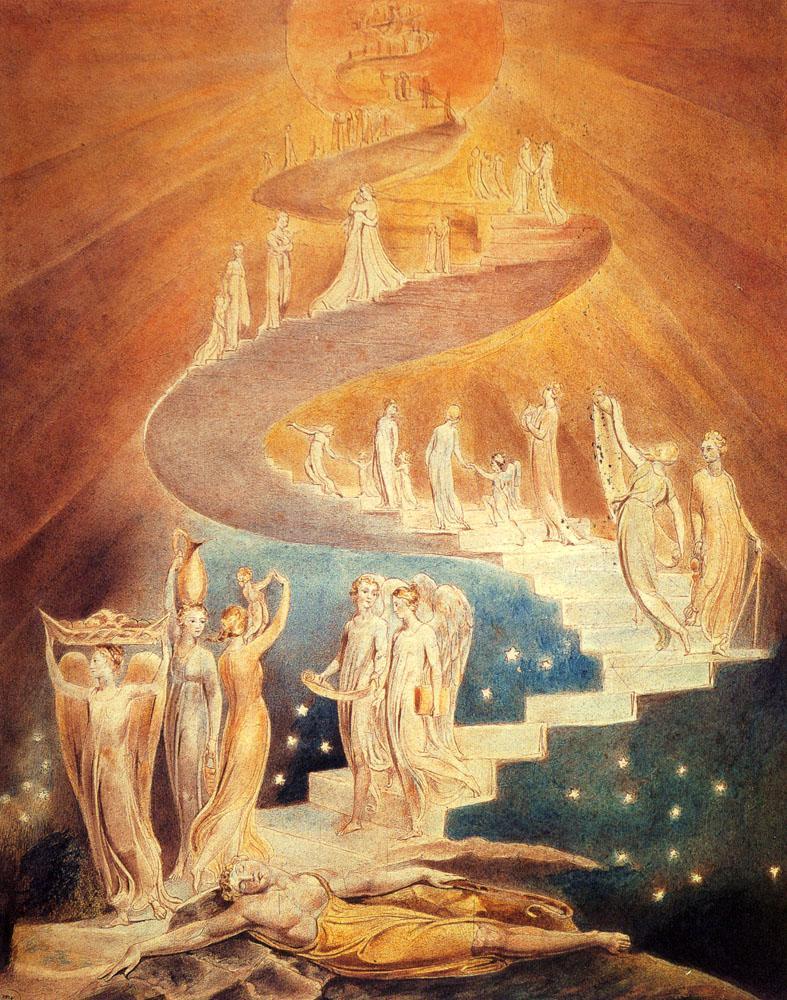
After stealing his blessing and his birthright, Jacob fled his brother Esau in the night and laid his head on a stone. But in Genesis 28, God sent the terrified Jacob a dream, of angels descending and ascending on a ladder, showing his faithfulness. And in the morning, Jacob took that stone and set up an altar to God. Weeping lasted all night long, but joy came in the morning.

Pharaoh had awful dreams at night, dreams of famine and drought, of cows and corn. But in the morning he summoned his wise men and—eventually Joseph, in Genesis 41. From this, Joseph was taken out of prison where he was unfairly placed for a crime he did not commit. His weeping lasted all night long, but joy came in the morning.

In 1 Samuel 17, the Philistine Goliath threatened Israel for forty days and nights, insulting them, and cursing the God of heaven. Goliath was enormous and he terrified Israel, for none was brave enough to fight him. But we read that in the morning, the Shepherd David went down to Saul’s camp where he—along with his sling and his stones—would defeat this enemy champion. Israel may have wept all night long, but joy came in the morning.

When king Hezekiah was surrounded by an enormous army of Assyrians, he went to the temple, he wept and he prayed all night long. And we read, in Isaiah 37, that an angel of the LORD went out and struck down 185,000 of the Assyrians, and when the people arose early in the morning, they were there, safe. Weeping may last all night long, but joy comes in the morning.

Jesus died on a Cross as evening fell, and we see the disciples—like sheep scattered when the shepherd is struck—run, terrified, weeping, mourning, lost, confused, alone. We read that Peter, when he betrayed Jesus for that third time, went out and “wept bitterly” (Luke 22.62). Jesus’ body was placed in the dark, in a rich man’s tomb, while he descended below the earth. But he was sinless and death could not bind him. So—on the third day—when some women went to the tomb, early in the morning, with spices to anoint his dead body, his dead body they did not find, but an angel who told them “Why do you seek the living among the dead? He is not here, he is risen.” Weeping may have lasted all night long, but joy came in the morning.

You see, you don’t have to know the Bible particularly well to know these things are true. We learn as children, even if in a world where we have electric lights and flashlights and street lights and headlights, that the night is scary. There is something wrong with it. God after all, does banish its unending power by creating light. But as we grow up, we “grow out” of our fear of the night; we remove our nightlights and make fun of those who keep them. But as we grow older still, as we experience loss and pain, sickness and sorrow, and yes, even the death of loved ones, we are reminded again the terrors of night. We learn the feeling of weeping the night long, bereft even of tears. And we know that—if we are lucky, if we are blessed—we might find some sleep and the solace it can bring.

As we see with the disciples, sometimes one night of such weeping is not enough to return our joy. It took them until the third day to find joy in the resurrected Lord. And we often must wait far longer than that until darkness’ grip on us is broken.

Sleep then, is odd. On the one hand, as we’ll see tomorrow and the next day, sleep—since it is done at night—can represent death and darkness, failure and succumbing to Satan’s grasp. But, on the other hand, sleep is that which brings us through the night and the sorrows that it brings; it is a bridge from darkness to light, and a bridge that can allow this to pass it over and return us to joy and hope, refreshed and awaken to hope. How then and when should we sleep, and how may we do so in faith? In other words, what is our theology of sleep?

We’ll talk more about that next time, but for now let me just say this: when you are tired, worn, and overwhelmed; when you have banged your head as much as you can against the problems that you have; when you find yourself stressed, struggling, and strung out—go and take a nap or go to sleep. Because weeping may tarry all night long, but joy comes in the morning.

Now I lay me down to sleep,
I pray the Lord my soul to keep,
Watch and guard me through the night,
and wake me with the morning light.

A Prayer

In Defense of Boring Truths

We all know that truth matters. Jesus is the truth; the truth will set us free; and Satan has no truth in him at all (John 1.14, 17; 8.32, 44). But, sometimes, we might be tempted to throw up our hand and ask along with Pilate “What is the truth?” (John 18.37). There’s a lot out there and we can’t know everything. A lot of the time we’re left to depend on other folks to determine if something is true (I may know what Bernoulli’s principle is, but I trust a whole lot of other people when I get on a plane). We have to be careful, though, because there’s a temptation when we don’t know a lot to default to the conclusion that fits our understanding, regardless of whether it’s right.

This tendency is true in a lot of areas, but I’m not really worried about those! I am, however, more concerned when it has to do with biblical things. I think that we have to be careful in what we say, share, and repeat, because we want to be known as trustworthy witnesses in all things so that folks will listen to us about the Gospel. However, there are a lot of times I’ll see folks say, share, or repeat something about the Bible that sounds really cool, but is actually untrue. I think that harms our witness. Nowhere does this happen more than with archaeology and word studies. I’ll talk about the first today, and the second later.

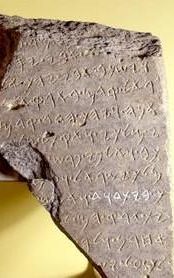
Tel Dan Inscription

Archaeology is super cool, and there’s a lot of amazing things out there that help fill in the color of the biblical stories, help enlighten our readings of various historical episodes, and even prove the possibilities of specific persons or events. But archaeology can’t “prove” the Bible, and any story that starts out saying that it will should be a warning that you’ll want to employ caution! Archaeology has a long history of using sensationalism to raise money and get free publicity, and Bible believers are often viewed as “easy marks.”

Past Examples where caution was warranted:

  • The Gospel of Jesus’ Wife (an incredible story how even people who are really smart about the Bible but don’t have specialized training in even more specialized studies like epigraphy can be fooled or roped into forgeries!)
  • Museum of the Bible’s Fake Dead Sea Scroll Collection (the MOB wanted to build an exhibit of DSS quickly, and cut corners to do so by buying from private collections even against warnings… after displaying these fragments in a special exhibit hoping to help prove the Bible and increase faith in the text… they were discovered to all be forgeries. Which is less than ideal as a faith-building exhibit. You know, in addition to funding terrorism and opening conservative Christian to scorn from the world…)
  • The Darius Ostracon (This never got rolling too quickly because it was identified as a good-faith forgery quickly, but it still demonstrates the problems that come when news stories get ahead of scholarship and processes)

Current Examples for where we should be careful:

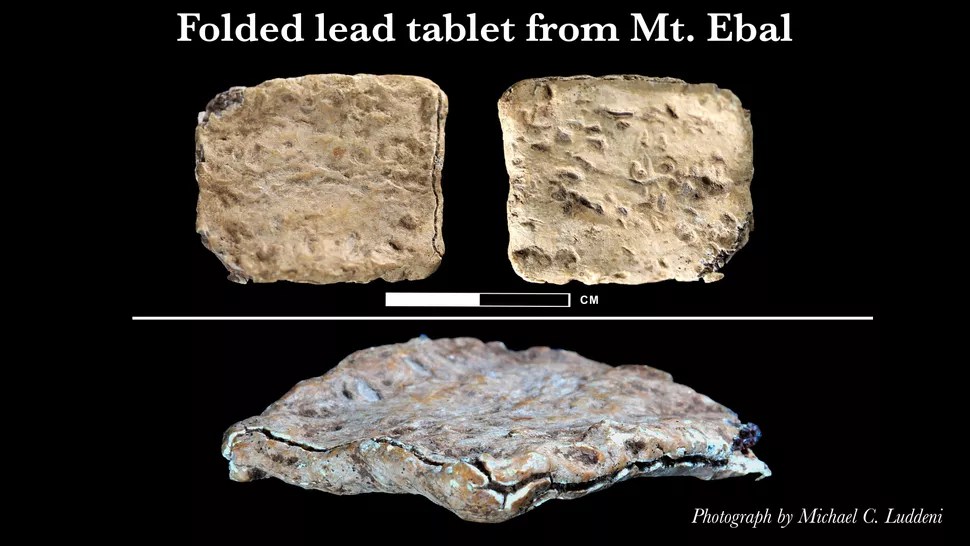
  • Mount Ebal Curse Tablets (one of the biggest stories to come out in archaeology lately, this got a lot of press… but the process hasn’t been standard. This one is a big enough deal I might make an entire post on it, but for now I think we need to be very cautious.
  • Sodom and Gomorrah Identifications (this started getting press late last year, but more and more information just keeps lining up to suggest that we this doesn’t seem likely to pan out).

Suggestions for when to be cautious:

  • Is the story being written by or published on a site that deals with archaeology a lot (BAR/S, for example) or someone with a positive track record when dealing with archaeology (Todd Bolen for general archaeology; Christopher Rollston for epigraphy; my cousin, Luke Chandler, for a thoughtful historical and archeological take with a lot of experience])? If so, you’re probably safer than if it’s coming from somewhere or someone else.
  • Is this another version of the same old sensationalism? Is it saying it’s found Noah’s ark? Chariot wheels in the Red Sea? The Ark of the Covenant? Some inscription that promises to prove it all? If so, be very careful–history is against them.
  • Were the artifacts discovered at an official dig run by a competent and proven archaeologist? Do we have a chain of evidence? If not, steer clear–the chance of forgeries is incredibly high (many publications have stopped allowing “private finds” to be published because they’ve been so often found out as forgeries).
Image from the LiveScience Publication. Not my photo.

Now, look, I get it. All of this caution can come across as being a negative Nancy. Archaeology is exciting and we like exciting things… and here I come and rain on the parade! “Jared, you must just hate the Bible!” Actually, it’s because of my love for the Bible and a desire to be a true witness that I am cautious about these sorts of things–we should test the spirits to see if they are true. And our desire to find the next Big Thing that helps demonstrate the Bible’s historical accuracy shouldn’t excuse peddling credulous falsehoods. We have to be careful in doing that so that we don’t end up coming across as people who don’t care about the truth if it gets us the answer we want. Truth matters. Process matters. And we should hold those who make such claims–especially who are coming from faith backgrounds and trying to prove the Bible’s claims to be true–to high standards.

Sure, all of this can be boring and not nearly as exciting as if that one Big Thing were true that we so desperately want to be true. I don’t think any of us want to be like the person who I saw comment on a Facebook post about the Bible and said “I don’t care if it’s true. It preaches well.”

New Jerusalem: A Garden City

Humans build cities as an alternative to God’s command to spread the Garden; at least, that’s how it happens most of the time in Scripture. The Garden vs. City narrative is one that shows up frequently in the Bible–in the Law, the Prophets, and the Psalms. Cain was driven from the land and thus built a city (Gen 4.17, cf. 5.22–24). Lot abandoned Abraham’s example of sojourning in order to live in cities (Gen 19.15–22). Solomon spends more time building up his own palace and more cities than on the Temple (1 Kgs 6.37–7.1).

As is often the case, though, cities aren’t inherently bad but they’re temptations to have the wrong mindset with them. Much like the Sabbath, it’s easier to serve it. Cities tempt us to see them as permanent dwelling and ourselves as sojourners no longer. Cities make people think “This world is my home, I’m no longer passing through.” But their permanence is a lie; cities made by human hands are still just way stops in our journey to a City with Foundations, whose builder and architect is God (Heb 11.10).

The Hebrew writer talks a lot about this future city, even comparing and contrasting it to other places where God has attempted to dwell with humanity (including the Garden, Mount Sinai, and the Tabernacle). “For you have not come to what could be touched. . . Instead, you have come to Mt. Zion, to the City of the Living God, the Heavenly Jerusalem” (Heb 12.18–24). Even Sinai, the Tabernacle, and Temple were temporary; we search for something eternal. And it’s keeping that unseen eternality in mind that demonstrates faithfulness,

“These all died in faith, although they had not received the things that had been promised. But they saw them from a distance, greeted them, and confessed that they were foreigners and sojourners on the earth. Now, those who say such things make it clear that they are seeking a true homeland. If they had been thinking about where they had come from, they would not have had the opportunity to return. But, now, they desire a better place–a heavenly place. Therefore, God is not ashamed to be called their God, for his has prepared a city for them.”

(Hebrews 11.13–16)
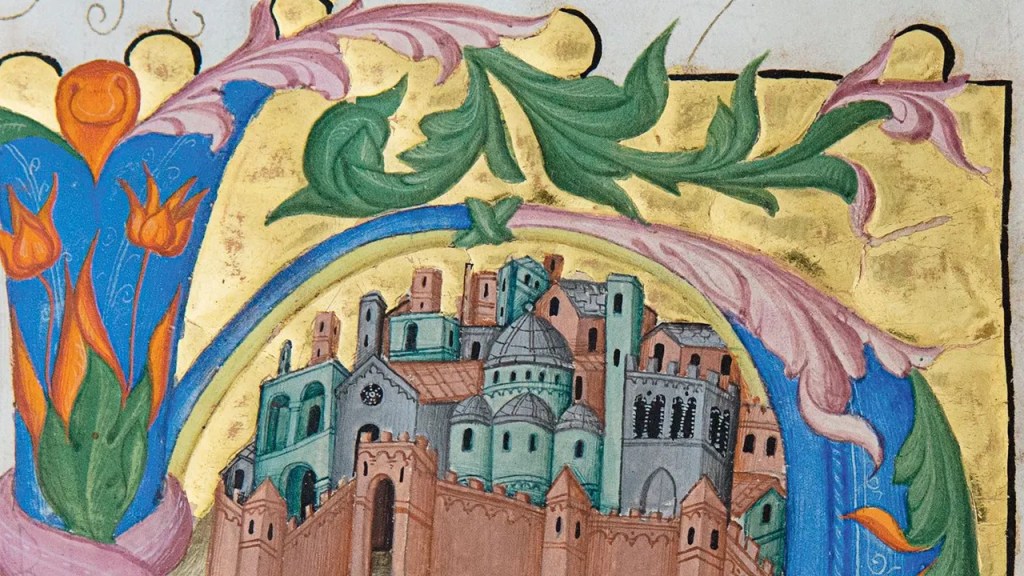
Painting by Alex Levin; Contemporary Jewish painting

And it’s this city where we see the redemption of all of the other impermanent, human-built, faithless alternative homelands transformed into what God had always wanted–a place that combines and perfects all of the other shadows into reality. For the New Jerusalem isn’t just a perfected, redeemed city; it’s also a perfected, redeemed Garden of Eden; a perfected, redeemed Sinai; a perfected, redeemed Temple; and a perfected, redeemed Church.(1)

Then I saw a new heaven and a new earth, for the first heaven and the first earth had passed away, and the sea was no more. And I saw the holy city, the new Jerusalem, coming down out of heaven from God, prepared as a bride adorned for her husband. And I heard a loud voice from the throne saying,

“See, the home of God is among mortals.
He will dwell with them;
they will be his peoples,
and God himself will be with them and be their God;
he will wipe every tear from their eyes.
Death will be no more;
mourning and crying and pain will be no more,
for the first things have passed away.”

And the one who was seated on the throne said, “See, I am making all things new.”

(Revelation 21.1–4. NRSV)

This New City for the New Heavens and New Earth is a final and perfect home because it wasn’t made by human hands, but comes down along with the God who condescends to bring heaven to earth, transforming both to a place where he can truly dwell with his people at last. But this isn’t just an image that has no application (as any good eschatology study will tell you, “There is no eschatology without ethics!”). For throughout the Scriptures the implications of these city images is that we have to be careful that we don’t replace the replace the permanent city with temporary ones, and that we do not build up cities with our own hands that would distract ourselves from the longing for or working on tending God’s Garden.

We are exiles; we should live like it.

Footnotes:

  1. If you want to read more about how the Story of God is seen through God’s tabernacling and culminates in Revelation, I am once again asking you to read Phil Roberts’ wonderful and short essay, here. Or else grab the whole book of his excellent essays, here. Or really go ham and read several other books that work through this same metanarrative. Although it’s really outdated, and I’d do things differently now, if you’d rather listen than read, I’ve also preached a series of lessons on this same narrative and you can listen to those, here.

Not Built with Hands: Cities as Tabernacles

The story of city builders in the Bible is an infamous list, a sort of Who’s Who of folks who traded in God’s promised Garden for creations of their own hands (we talked about that last time).

  • Cain built the first city after he was banished from his home, trying to create a new one apart from God. It’s not surprise that his Enoch was the opposite of walking with God (Gen 4.17, cf. 5.22–24).
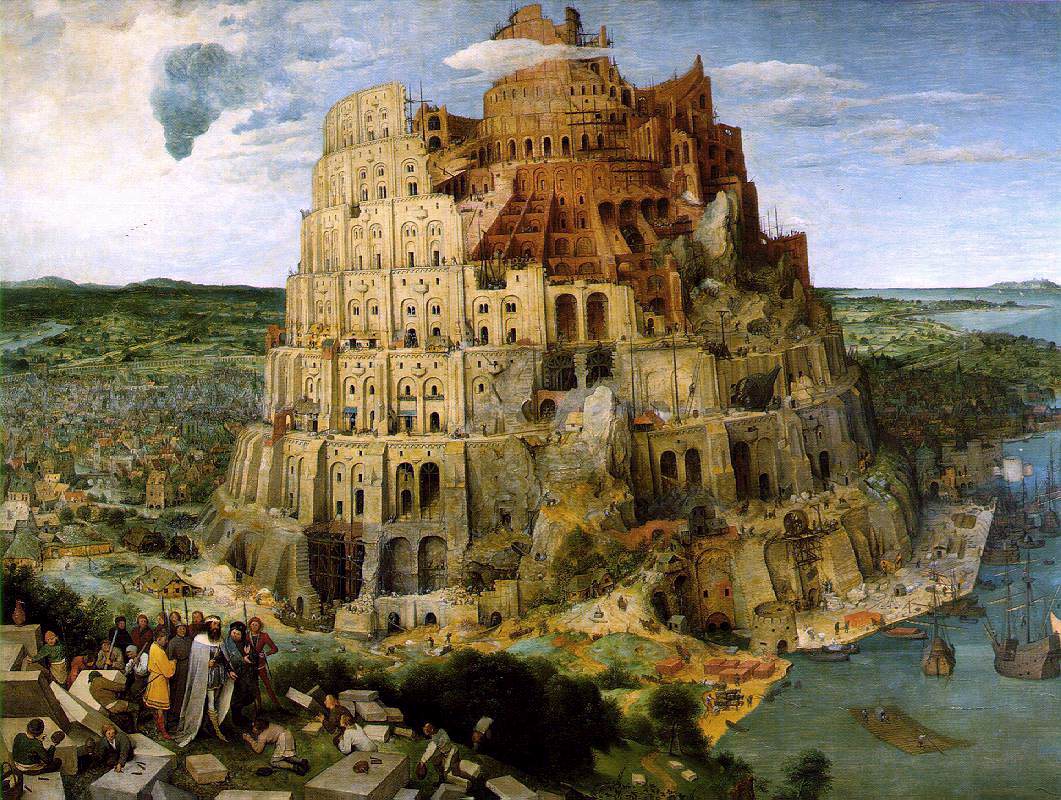
  • The Babelites built a city with a tower that they’d planned to reach heaven, to make a home and a name for themselves as a replacement for or attack on God’s own dwellings (Gen 11.4). Lot longed to live in the city of the Sodomites, longing for its comforts that would keep him from wandering and the faith in God that such required (Gen 19, especially 19.15–22).
  • Pharoah took slave labor and turned them to building the store cities of Pithom and Rameses (no, not pyramids! Exd 1.11).
  • Solomon built many cities, but most notably one for Pharoah’s Daughter with slave labor (1 Kgs 9.15–19), becoming much like Pharoah himself (3.1; 9.24), and spent double the time building his own house twice as large and rich as the temple (7.1–8), as well as many altars for foreign gods (11.7–10).
  • Jeroboam built Shechem, so it is no surprise that he also built high places and golden calves (1 Kgs 12.25; 14.23); Baasha did the same (15.17).
  • Omri built Samaria (1 Kgs 16.24) and erected altars for Baal there (16.32), and on his orders Hiel rebuilt Jericho at the cost of two of his sons, sacrificed for the false power and protection that such a worldly city promised (16.34; cf. Jos 6.26). His son Ahab followed in his footsteps (22.39).
  • The number of the kings of Judah who built up cities and refused to tear down the high places (or else built more) or altars to foreign gods is almost the entire list, for which the prophets repeatedly remind them of their worldly focus.

Among such a distinguished list of city-builders, city-lovers, and city-dwellers, we might be surprised at the “sudden” change in how cities are treated in the New Testament. Most famously,

Then I saw a new heaven and a new earth, for the first heaven and the first earth had passed away, and the sea was no more. And I saw the holy city, the new Jerusalem, coming down out of heaven from God, prepared as a bride adorned for her husband. And I heard a loud voice from the throne saying,

“See, the home of God is among mortals.
He will dwell with them;
they will be his peoples,
and God himself will be with them and be their God;
he will wipe every tear from their eyes.
Death will be no more;
mourning and crying and pain will be no more,
for the first things have passed away.”

And the one who was seated on the throne said, “See, I am making all things new.” 

Revelation 21.1–4 (NRSV).

Did you catch that? In this image of the New Heavens and New Earth, the Better Garden is a City–a New Jerusalem. How come cities are bad until all the sudden they’re perfect? The answer, of course, is that they aren’t. Building cities is bad because the narrative uses this for trying to replace the need for God. God has always provided his people with cities to live in for this world and they are good so long as they are kept in their proper place. God would provide.

Abraham is told, repeatedly as part of the Promises, that his descendants would inherit the cities of his enemies (Gen 22.17; 24.60; 28.19). When God brought Israel into Canaan to fulfil that part of the Promises, a key point was that they wouldn’t have to build cities, because God would provide them, already:

When the Lord your God has brought you into the land that he swore to your ancestors, to Abraham, to Isaac, and to Jacob, to give you—a land with fine, large cities that you did not build, houses filled with all sorts of goods that you did not fill, hewn cisterns that you did not hew, vineyards and olive groves that you did not plant—and when you have eaten your fill, take care that you do not forget the Lord, who brought you out of the land of Egypt, out of the house of slavery. The Lord your God you shall fear, him you shall serve, and by his name alone you shall swear. Do not follow other gods, any of the gods of the peoples who are all around you, because the Lord your God, who is present with you, is a jealous God. The anger of the Lord your God would be kindled against you and he would destroy you from the face of the earth.

Deuteronomy 6.10–14 (NRSV. Cf. Jos 24.13)

Do you see the point Deuteronomy emphasis, here? God will provide you cities so that you will remember him, that you will remain faithful, that you do not serve other gods. But the presence of these things is indeed a temptation to forget that they were intended still to be sojourners and wanderers. If they took these gifted cities and considered them as their due, they would be taken away, and they would be made wanderers, again (Dtr 28).

Madeba Map of Jerusalem

The primary example of this is Jerusalem, a city which had chosen for his namesake (Dtr 12.11), and which Israel did not build (cf. 2 Sam 5.6–10). Jerusalem was a heavenly gift that was–slowly, through the blood of innocents and ashes of idolatrous sacrifice–defiled and destroyed (e.g., Isa 1.4–9). But God’s Promises are not so easily annulled nor his Choices forgotten. And although Jerusalem was destroyed, it would be remade by a people who would remember the desires of their God to keep it as a gift, a city not truly built by human hands, but chosen and established by God. All of this, of course, looks toward that final city (that’s for next time). My favorite image of this comes from Isaiah:

I will not keep silent because of Zion,
and I will not keep still because of Jerusalem,
until her righteousness shines like a bright light
and her salvation, like a flaming torch.

Nations will see your righteousness
and all kings, your glory.
You will be given a new name
that the Lord’s mouth will announce.

You will be a glorious crown in the Lord’s hand,
and a royal diadem in the palm of your God’s hand.
You will no longer be called Deserted,
and your land will not be called Desolate;
instead, you will be called My Delight Is in Her,
and your land Married;
for the Lord delights in you,
and your land will be married.
For as a young man marries a young woman,
so your sons will marry you;
and as a groom rejoices over his bride,
so your God will rejoice over you.
Jerusalem,
I have appointed watchmen on your walls;
they will never be silent, day or night.
There is no rest for you,
who remind the Lord.
Do not give him rest
until he establishes and makes Jerusalem
the praise of the earth.

The Lord has sworn with his right hand
and his strong arm:
I will no longer give your grain
to your enemies for food,
and foreigners will not drink the new wine
for which you have labored.
For those who gather grain will eat it
and praise the Lord,
and those who harvest the grapes will drink the wine
in my holy courts.
Go out, go out through the city gates;
prepare a way for the people!
Build it up, build up the highway;
clear away the stones!
Raise a banner for the peoples.
Look, the Lord has proclaimed
to the ends of the earth,
“Say to Daughter Zion:
Look, your salvation is coming,
his wages are with him,
and his reward accompanies him.”
And they will be called the Holy People,
the Lord’s Redeemed;
and you will be called Cared For,
A City Not Deserted.

Isaiah 62.1–12 (CSB)

Living as Exiles: Cities and Sin

One of the type scenes (or tropes, like the Woman at the Well) folks run into in the Bible is also one of its most prevalent metanarratives: “Cities are bad.” You look at Babel, Sodom and Gomorrah, or Gibeah and quickly realize “No, cities are really bad.”1 But sometimes we don’t think further about why the Bible’s authors tend to portray them that way. To figure out way, we need to begin at the beginning. To figure out all of it, we’ll have to work to the end.

God planted humanity in a Garden. In that Garden, they were given commands to be fruitful and multiply (Gen 1.22, 28) and to tend the Garden (Gen 2.15). They implication of this narrative (and, in many ways, one of the Metanarratives of the Bible as a whole!) is thus “grow the Garden until it fills the earth.” A divine mandate poured into a coffee cup that reads “grow where you’re planted.” We know, of course, how this went: exiled from the Garden because of their sins, forced to wander, longing for home, they settle and Adam continues to bring offerings to the East of Eden.

But even when we cannot have the home in the Garden, we still long for a home. The sins of the father pass on to the son–and in the wake of his own failure at the agricultural mandate and his own subsequent exile–Cain seeks to make a home for himself so he’d feel less like an exile.2

When Cain was intimate with his wife so that she conceived and then gave birth to Enoch, Cain built a city and he named the city ‘Enoch’ after his son (Genesis 4.17).

Cain built a city because the land wouldn’t support him at all (Gen 4.11–12). After all, he was exiled not only from his family and from his home, but from his profession as farmer. When Cain set aside mud for mortar, he becomes the first person to build a city in the Bible–but far from the last. But he begins something that we’ll see carry on through the Spiritual Geography of the Bible–those who build cities aren’t doing the right thing; it’s most often an act of prideful rebellion as an attempt to end God’s exile without fixing the problem that led to it. “We’ll make a place for ourselves where we’ll belong and we don’t need your Garden or you.” The most famous example, of course, is found just a few chapters later in Genesis:

The whole earth had the same language and vocabulary. As people migrated from the east, they found a valley in the land of Shinar and settled there. They said to each other, “Come, let’s make oven-fired bricks.” (They used brick for stone and asphalt for mortar.) And they said, “Come, let’s build ourselves a city and a tower with its top in the sky. Let’s make a name for ourselves; otherwise, we will be scattered throughout the earth” (Genesis 11.4)

Here, it’s clear: They’re trying to reverse God’s scattering which would lead them to fill the earth; they’re avoiding being wanderers; they’re far from the Garden; they want a tower with its top to heaven so that they might have a home for themselves (or perhaps even take over God’s home?). But God is not mocked and just as he does not dwell in structures made by human hands, nor can structures built by our own hands ever truly provide a home. This story ends much as the first search for a city began: with exile, being scattered, and displaced across the earth (Gen 11.5–9).

But this isn’t the only example of a city! Cities throughout the rest of the Bible that are working on this same narrative end the same way: rebellion, wickedness, and questions of exile vs. home pervade these city narratives! Just consider the following briefly.

  • Sodom and Gomorrah are cities who treat those who are wanderers or exiles horrifically, are dens of wickedness, and are ultimately destroyed by God even though Lot longs to have his home there (Gen 19).
  • Gibeah in many ways retells the story of Sodom, but this time it’s an Israelite who thinks he’s found a home and safety in an Israelite city, but is still seen as a wandering exile upon whom to prey but it too is destroyed by God (Jgs 19).
  • Gezer is a city that Solomon builds to provide a “home” to his Egyptian bride, even as he becomes more and more like Pharoah himself, with his own “home” destined to be destroyed (1 Kgs 9).

Cities we build for ourselves are bad and bad things happen in them and to them! It really couldn’t be clearer. But those aren’t the only types of cities in the Bible, and the Bible’s treatment of cities is more complex than simple anti-urbanism. But for the positive reading of cities, we’ll have to wait for next time.

Footnotes (since WordPress doesn’t actually support this, right now…

1) Lots of folks have talked about these connections! The Bible Project has a new video on cities, as well as a longer discussion on their podcasts. There are numerous articles and even entire books dedicated to these ideas. Everyone’s take aways are slightly different (I once got into a bit of a tizzy with JMH at a conference over this!), but they’re all worth your time.

2) The issues with Cain and Abel are complex. But there’s a lot of folks–from antiquity until today–that don’t just see this as a confict between brothers, but also between urbanization and rural living, between farmers and pastoralists, etc. Lots has been written on this as well! I’d definitely recommend this if you’re interested in how other such stories play out in the ancient world. If you’re just interested in the question of the sacrifice, check out Wayne’s post.

Women and Wells (John 4)

Locations come loaded with meanings. When we tell stories, the location of the action communicates to us what we should expect to happen. Today, if you’re watching a horror movie and someone says “Let’s go to the basementeveryone knows what is about to happen. And although the story’s genre may change our views of those locations, we still tend to associate locations with concepts, ideas, and situations. The same is true in antiquity and also in the Bible. Places like mountains or wildernesses signal certain things; so do locations like cities or fields; and even specific settings like threshing floors or wells often indicated that certain events were about to take place. This can be a bit of an odd topic to consider, and I wanted to work through a short series of blog posts on spiritual geography, so I thought looking at wells would be a good place to start!

There are a surprising number of “Woman at the Well” passages in the Bible. Abraham’s servant meets Rebekah at a well in Paddan Aram (Gen 24.1–44), Jacob meets Rachel very near the same spot (Gen 29.1–30), and Moses meets Zipporah at a well in Midian (Exd 2.11–22). These are different people at different spots and different times, but all of these historical episodes plays out similarly. When we see such similar episodes line up closely it isn’t accidental, it’s intertextual (if you want to know a bit more about what this is, I’ve talked about it with Adam Shanks on his podcast here and here). Or, if you want to think about it more simply, I’d probably say that when we see similarities like this, it’s probably because the Holy Spirit wants us to see them and pay attention to them, so that we can use the Bible to interpret the Bible.

Genesis 24 opens this part of Abraham’s life by telling us that he is old (24.1) and that his son Isaac needs a wife (24.2–9). Abraham is too old to make a long journey, so he sends a trusted slave all the way back to Paddan Aram to find a wife who isn’t a Canaanite. This slave stops and prays that God guide his hand so that he will be faithful to his master, providing a test—whoever God chooses should offer to provide hospitality in the form of water for himself and camels from the local well (24.10–14). “Before he finished praying,” that very thing happens (24.15–28). As the rest of the story unfolds, we find out that this “random” hospitable girl is a cousin of Abraham’s and that God’s providence has guided the entire thing. As she joins in God’s provides and has faith in his future, Rebekah becomes an “Abraham Figure” herself—willing to leave her father and mother, her house and her home, because she trusts in the promise of God and goes to marry Isaac (24.29–44). We could spend more time on this story, but let’s move on.

The situation in Genesis 29 looks familiar! Just as Abraham had lived as an exile from his family in Canaan, Jacob is now exiled from his family in Canaan (29.1) and needs to find a new home and family of his own (29.2–8). He too has previously prayed that God would lead him and protect him (Gen 28.10–22), and now—like Abraham’s slave the generation earlier—meets women coming to the well, one of whom “just so happens” to be his relative and future wife (29.9–12). Like Rebekah, Rachel runs home, reports the news, and Jacob is added to the family (29.13–20). Let’s look at one more episode.

As we move from Paddan Aram to the Wilderness of Midian, we see that Exodus 2‘s situation looks quite similar to Genesis 29. Moses was forced into exile after a conflict with his brother (Exd 2.11–15). He flees home and ends up far away at a well, where he sees women coming to water the flocks (2.16–18). After this encounter, one of the women returns home and tells her father about what happened; her father invites the exile to come and make a new home with them; and Zipporah becomes Moses’ wife (2.18–22).

Daniel Bonnel, Woman at the Well

Of course, each of these stories has its own unique elements, but they also share a lot of similarities: the main male characters is an exile from their family and homeland (Abraham, Jacob, and Moses); they travel to a well in order to gain a new home or community; and there—guided by God’s providence—they gain a wife that carries on God’s providential care for God’s people (Rebekah, Rachel, Zipporah). There are “practical” reasons this happens (wells were the hot spot to meet folks in the ancient world!), but it is far more important that we recognize that God was caring for his people and providing what everyone needed. God provided wives to carry on their family lines; he provided homes to those who were in exile; he provided opportunities to these women to be grafted into Israel’s salvation.

So, by the time we get to Jesus and the Samaritan Woman in John 4, we have a lot of imported meaning as soon as we see Jesus waltz up to a well! There are expectations that come with this scene and you can quickly identify them: we expect the exiled man to meet a woman, find a new people, gain a wife, and be providentially led toward carrying on salvation. After all, that’s what’s happened every other time… And, a lot of those elements fit. Jesus is portrayed as an exile, far from home (indeed, he’s even come to the exact well that Jacob had fled to when his own brother hated him, and we know this is similar to Jesus’ situation); he arrives at a well and meets a woman; there’s going to be a request that she provide hospitable water. But there’s just so much that’s wrong–at least, from the perspective of our expectations:

  • It’s the wrong woman. This woman isn’t Jewish, worse she’s a Samaritan (who come loaded with their own proto-racist perceptions). She isn’t a virgin, she’s been married five times and is currently living with someone who isn’t her husband. This can’t be the person who will carry on salvation and peoplehood!
  • She isn’t hospitable. Jesus may ask for water, but she does not provide it! In fact, she seems far from the examples of Rachel or Zipporah, let alone Rebekah! Why this woman?!

And with the expectations of the scene, maybe now we can sympathize with the disciples who returned from grabbing food to this:

Just then his disciples arrived, and they were disturbed that he was talking with a woman. But none of them said, ‘What are you looking for?!” or “Why are you talking with her?!”

John 4.27

But Jesus–unsurprisingly!–knows exactly what he’s doing. And throughout his interchanges he both fulfils and subverts our expectations. Because he is and exile (John 4.1–6), he does find a new people (4.39–42), he does add this woman to his family (4.28–29(, and she does lead to the salvation of her people (4.30). And through this interchange–and through its intertextuality with the other women and well stories–we should be able to read something more from this story.

By reading John 4 intertextually as well as exegetically we should see that Jesus wants us to shift our understanding of what we should be primarily searching for from earthly family (a wife or husband) to spiritual family (those who want to be like Christ), and what we should value from the world’s views (in this case, virginity) to what God values (faithfulness), and who really belongs in the kingdom (those who really seem to have their lives together, like Nicodemus in the previous chapter but don’t follow him or those who do, like this woman). Jesus’ treatment of her–seeing past their own cultural animosities, her fraught past, and her own initial condescension–as a Daughter of Abraham and someone worthy of faith leads her to reject her own temptations to read Jesus according to the same script and instead embrace him as the Savior of the World (4.42).

The woman who at first mocked Jesus for not even having a bucket as he proclaimed to her the value of living water (John 4.11), left her own water jar to tell others of the waters of life (4.28).

Reflections on My Time at Florida College

I love Florida College. It has a way of getting in your bones. When I came to FC as a student in 2005, my plan was to stay only a single year. Then I changed my mind and I figured I’d just stay two years and get my AA. Then I changed my mind again and ended up double majoring for my BA in Biblical Studies and Liberal Studies. Then, in 2016 having just finished my comprehensive exams but not yet begun my dissertation, I returned once again to teach Bible.

I love Florida College. Over the past seven years of my teaching, I taught twenty-three different courses and served the Biblical Studies, Biblical Languages, History, and Humanities departments, and took on overloads nearly every semester. I presented my research at fifteen different national conferences; I wrote my dissertation; I developed myself as a scholar. And I taught.

I taught thousands of students. I taught courses as varied as Hebrew and Greek, Law of Moses and New Testament History and Geography, Great Books and Greek History. I taught freshmen, sophomores, juniors, and seniors (and fellow faculty and preachers and elders); I taught majors and non-majors alike. I taught future preachers, future graduate students, future businesspeople, and future moms. I taught Christians and non-Christians and those who’ve since become Christians. I sought to teach not only the contents of the biblical text, but to love the text, to love the Lord, and to serve one another and their communities with their whole selves.

And those students went on (and will go on) to do amazing things. My students are changing the world. I’m enormously grateful to be part of their stories.

But one of the tough parts of working here is that things are constantly changing. These young people come and stay in our classrooms (and our offices, and our homes) for just a short time before they move on to greater and more permanent things. They will leave the campus and the classroom, but will remain in our hearts. They’re my students, and it’s a blessed thing to watch them grow and mature into amazing adults and incredible friends and go out and serve the Kingdom and transform the world around them.

Florida College is a place of transition and the institutional memory is short: a generation comes, a generation goes, and no one remembers those who came before them. Life is in flux, and the only constant is change: the students, buildings, and programs may change but the work remains. Such is the case, even for me. 

It is with a heavy heart that I report that I was informed last week by the President that budget concerns at Florida College have necessitated the non-renewal of my contract for next year. I don’t know what that means for my family, yet, but God is and has always been good to us. The location may change, but my service for the Kingdom remains.

I love Florida College. It has a way of getting in your bones. So while I’m leaving the campus and the classroom, I remember that FC isn’t any of these things, FC isn’t a building or even a set of buildings in Temple Terrace. It’s not a set of programs, or even really a place located alongside the banks of the Hillsborough. Florida College is the people. And I wish all the best for those people, and especially for my students. I love you all. Thank you for making my seven years at FC a blessing.

Jared W. Saltz

Hospitality, Power, and Sacrifice: Reading the Bible’s Little Lambs

Rembrandt van Rijn: Abraham Entertaining the Angels

“Do not neglect to show hospitality to strangers, for by doing that some have entertained angels without knowing it” (Heb 13.2, NRSV). Hospitality was an enormously important ritual in the ancient world. Because traveling was dangerous, ancient Mediterranean societies often attempted to incentivize protecting strangers by honoring those who practiced hospitality. In ancient Greece–since at least the time of Homer–we read “all strangers and beggars are from Zeus” (Od. 14.57-58). Being known as a good host could benefit your status, but violating that hospitality might benefit you in a different way…

Hospitality required one to love their neighbor as themselves, extending friendship or a temporary family bond to strangers. It could and often did cost you–food, water, safety. Thus, seeing whether people would act appropriately–especially towards those who could not protect themselves from predation–was a revelation of one’s character, and stories about just this are common to the Bible and ancient Mediterranean more generally. A sample of the more famous hospitality scenes from the Bible would include Abraham and the angels (Gen 18), the angels at Sodom (Gen 19), the Levite and Concubine at Gibeah (Jgs 19), and many others (one short list included additionally Luke 7.44; Mat 22.1–14; Mark 2.15–22; Luke 19.1–10; Rom 15.7; 1 Tim 3.2; John 2.9; 3.9; Heb 13.2!). These scenes often feature similar elements (although hospitality scenes in Homer are slightly different!):

  • The host promises provision and protection (Gen 24.19, 32; 43.24; Jgs 19.21)
  • The host provides water for drinking and cleansing (Gen 24.14; Jgs 4.19; Gen 18.4; 19.2; 24.32; Jgs 19.21; 1 Sam 24.41; John 13.5; 1 Tim 5.10)
  • The host provides for eating (Gen 18.4; 19.3; 24.33; 43.16; Exd 2.19–20)
  • The host offers for the guests to stay the night, under his protection (Gen 19.2–3; Jgs 19.6–20)

By telling these stories according to a type scene (as we’ve talked about before), the storyteller helps align texts and helps the hearers better recognize differences, especially when speaking to the core concepts at play in hospitality scenes: honor, shame, and sacrifice. Let’s look at two obviously connected versions of this, and then another–more tenuous–connection and then consider what hospitality has to do with power.

Abraham’s hospitality to God and his angels in Genesis 18 is one of the most famous hospitality scenes in the Bible.

The Lord appeared to Abraham by the oaks of Mamre, as he sat at the entrance of his tent in the heat of the day. He looked up and saw three men standing near him. When he saw them, he ran from the tent entrance to meet them and bowed down to the ground. He said, “My lord, if I find favor with you, do not pass by your servant. Let a little water be brought, and wash your feet, and rest yourselves under the tree. Let me bring a little bread, that you may refresh yourselves, and after that you may pass on—since you have come to your servant.” So they said, “Do as you have said.” And Abraham hastened into the tent to Sarah and said, “Make ready quickly three measures of choice flour, knead it, and make cakes.” Abraham ran to the herd and took a calf, tender and good, and gave it to the servant, who hastened to prepare it. Then he took curds and milk and the calf that he had prepared and set it before them, and he stood by them under the tree while they ate.

Gen 18.1–8 (NRSV)

You can see that this fits the stereotypical hospitality scene we identified above, but Abraham does not merely provide the bare minimums of bread and water, but–figuratively and literally!–kills the fatted calf to feed his guests. Abraham, then, acts exemplary host. Lot, however…

The two angels came to Sodom in the evening, and Lot was sitting in the gateway of Sodom. When Lot saw them, he rose to meet them and bowed down with his face to the ground. He said, “Please, my lords, turn aside to your servant’s house and spend the night and wash your feet; then you can rise early and go on your way.” They said, “No; we will spend the night in the square.” But he urged them strongly, so they turned aside to him and entered his house, and he made them a meal and baked unleavened bread, and they ate. But before they lay down, the men of the city, the men of Sodom, both young and old, all the people to the last man, surrounded the house, and they called to Lot, “Where are the men who came to you tonight? Bring them out to us, so that we may know them.” Lot went out of the door to the men, shut the door after him, and said, “I beg you, my brothers, do not act so wickedly. Look, I have two daughters who have not known a man; let me bring them out to you, and do to them as you please; only do nothing to these men, for they have come under the shelter of my roof.” But they replied, “Stand back!” And they said, “This fellow came here as an alien, and he would play the judge! Now we will deal worse with you than with them.”

Gen 19.1–9 (NRSV)

Notice the differences? Abraham rushed to provide a feast: freshly made bread, water for washing, milk and curds, and even a fatted calf (18.6–8). Lot’s provision is meagre in comparison: a meal of unleavened bread alone (matzah), the quick and hasty meal of those rushing to leave (cf. Exd 12.8). Lot provides hospitality, but only the bare minimum necessary to fulfil the letter of the law, and he does so while in the gate where he can be “seen by men” (cf. Mat 6.1; 23.5).

But the questions of hospitality don’t end there. Remember, hospitality was created to protect strangers, and it is clear that in Sodom strangers needed protection. The inhabitants of Sodom were not merely wicked, they were particularly wicked in that they violated the rite of hospitality by taking advantage of strangers rather than providing to the needy:

This was the guilt of your sister Sodom: she and her daughters had pride, excess of food, and prosperous ease but did not aid the poor and needy. They were haughty and did abominable things before me; therefore I removed them when I saw it.

Ezk 16.48–50 (NRSV)

Still, Lot’s honor was at stake if he could not protect “those who have come under the protection of my roof” (19.8), thus he attempts to dissuade the men of Sodom from violating his reputation as a host, even so far as offering up his two daughters to be raped by this gang. And here we come to another intertextual link I’d like to make, one more tenuous than that present between Gen 18–19, but this too has to do with a story of hospitality:

“There were two men in a certain city, the one rich and the other poor. The rich man had very many flocks and herds, but the poor man had nothing but one little ewe lamb that he had bought. He brought it up, and it grew up with him and with his children; it used to eat of his meager fare and drink from his cup and lie in his bosom, and it was like a daughter to him. Now there came a traveler to the rich man, and he was loath to take one of his own flock or herd to prepare for the wayfarer who had come to him, but he took the poor man’s lamb and prepared that for the guest who had come to him.” 

2 Sam 12.1–4 (NRSV)

This story comes from the Prophet Nathan’s accusation of David’s rape of Bathsheba. But do you notice how Nathan portrays this violation? He places it in the context of hospitality: a rich man receives a visitor and wants to be seen as a gracious host. He wants to gain the honor and status that comes from being seen as such. But he is unwilling to sacrifice his own little lamb, thus he uses his power to abuse the poor man and take his little lamb which was like a daughter. And, of course, we know that the actual background of this legal fiction: David’s rape of Bathsheba.

A comparison of these three episodes reveals something pretty awful about how many in the ancient world saw their power, prestige, and those for whom they were supposed to protect and provide.

Lot cared so much for his reputation as a host that he was willing to offer up his daughters to maintain it (Gen 19.6–8), but too little for the roles associated duties to offer up a fatted calf (19.3; cf. 18.6–8).

Nathan’s parable tells a similar story about a powerful man who also cares much for his reputation as a host (2 Sam 12.4a), but not enough to sacrifice a fatted calf. Yet, he still steals another’s little lamb (12.4b).