For those of us who do entrust ourselves to Christ, then death becomes just like sleep, from which we will all awake. God creates Eden after banishing the darkness and creating light but that night grew long as the curse took hold. But when this world is over and God creates the New Heavens and the New Earth, he will not just banish the darkness during the day, but forever.
Category Archives: Topical Studies
Don’t You Care that We’re Dying? (Matthew 26)

We need sleep, but too often we want sleep on our own terms. When our sleep is not ordered and life giving, it no longer serves as a bridge that God provides to escape the darkness of night, but becomes instead a destructive spiral into deeper darkness.
Joy Comes in the Morning (Psalm 30)
I will exalt you, LORD,because you have lifted me upand have not allowed my enemiesto triumph over me.LORD my God,I cried to you for help, and you healed me.LORD, you brought me up from Sheol;you spared me from among thosegoing down to the Pit. Sing to the LORD, you his faithful ones,and praise his holyContinue reading “Joy Comes in the Morning (Psalm 30)”
New Jerusalem: A Garden City

Cities tempt us to see them as permanent dwelling and ourselves as sojourners no longer. Cities make people think “This world is my home, I’m no longer passing through.” But their permanence is a lie; cities made by human hands are still just way stops in our journey to a City with Foundations, whose builder and architect is God (Heb 11.10).
Not Built with Hands: Cities as Tabernacles

The story of city builders in the Bible is an infamous list, a sort of Who’s Who of folks who traded in God’s promised Garden for creations of their own hands (we talked about that last time). Among such a distinguished list of city-builders, city-lovers, and city-dwellers, we might be surprised at the “sudden” changeContinue reading “Not Built with Hands: Cities as Tabernacles”
Living as Exiles: Cities and Sin
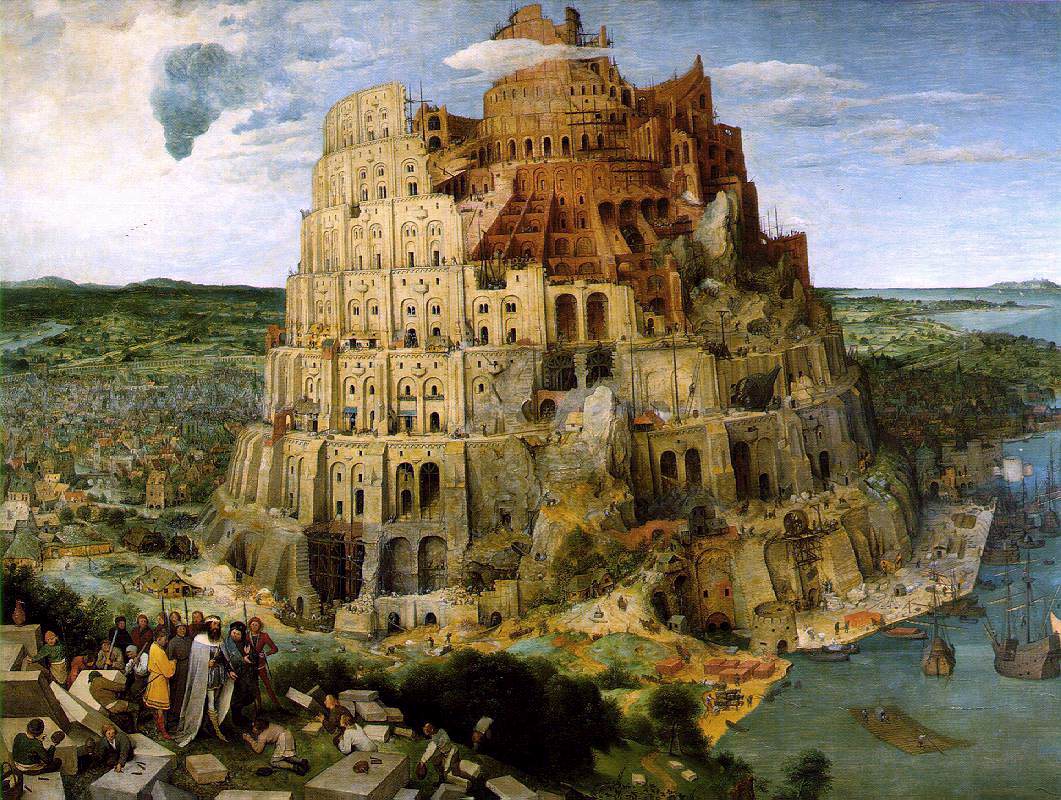
One of the type scenes (or tropes, like the Woman at the Well) folks run into in the Bible is also one of its most prevalent metanarratives: “Cities are bad.” You look at Babel, Sodom and Gomorrah, or Gibeah and quickly realize “No, cities are really bad.”1 But sometimes we don’t think further about whyContinue reading “Living as Exiles: Cities and Sin”
Women and Wells (John 4)

The woman who at first mocked Jesus for not even having a bucket as he proclaimed to her the value of living water (John 4.11), left her own water jar to tell others of the waters of life (4.28).
Subverting Commands and Expectations: Racism and Womanhood in Ruth 3
Antiquity was super racist. Or, as I’ve talked about before, antiquity was super “proto-racist.” Geography was destiny and where you were from told everyone everything they wanted to know about who you were and what your character was like. As horrible as that is—and let’s be clear, whether we want to call this proto-racism, racism,Continue reading “Subverting Commands and Expectations: Racism and Womanhood in Ruth 3”
Dismembering the Body, Disbanding the People: Judges 1

Every other Fall at Florida College, I get the chance to teach a one-credit hour class covering Judges and Ruth. It’s a blast. It’s usually populated with Juniors and Seniors, most of whom I’ve had for other (sometimes numerous other) courses, so I know most of them and they know me. Because it’s a one-hourContinue reading “Dismembering the Body, Disbanding the People: Judges 1”
Ruth the Moabitess: Proto-Racism, Literary Criticism, and Ruth 3
Antiquity was super racist. Well, that’s not quitetrue. To use the term that Benjamin H. Isaac uses in The Invention of Racism in Classical Antiquity (2004), antiquity was super “proto-racist.” Peoples in antiquity always had very strong perception of what other peoples were like. Isaac illustrates this through the Roman views of others: the EasternContinue reading “Ruth the Moabitess: Proto-Racism, Literary Criticism, and Ruth 3”
 Ben Neviim