Father, Mother, Sons, and Strife: Reading Stories Intertextually

A few posts ago, I talked about how intertextuality—the practice of lining up two or more texts that are close enough to compare in order to emphasize differences or help aid in interpretation—can help us better understand the Bible. Both of these posts used Genesis 19 to show how this text can help us better understand other texts which align in similar ways (like comparing Lot and his Daughters to Noah and Ham, or Sodom and Gomorrah to Gibeah).

Let’s look at another, more disputed text. I’m going to explain a story to you (without names!) and you tell me if you can figure it out.

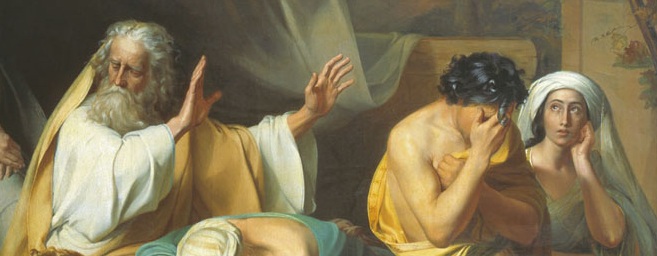
There’s a family living in Israel and this family has a long and unfortunate history of family strife; lying, cheating, and stealing are depressingly common. The Patriarch of the family has grown old and infirm, and greatly favors his oldest son, even though it seems God has favored the younger son. But the mother favors the younger son and wants him to run the family and inherit his father’s position and promise. So, the mother cooks up a plan to deceive her husband steal control of the family for her son from the favored older son. God’s plan, of course, come to pass, but not the way it was supposed to happen. Instead, we see a family rife with deceit and machinations that causes still further problems in the life of the son who himself inherits.

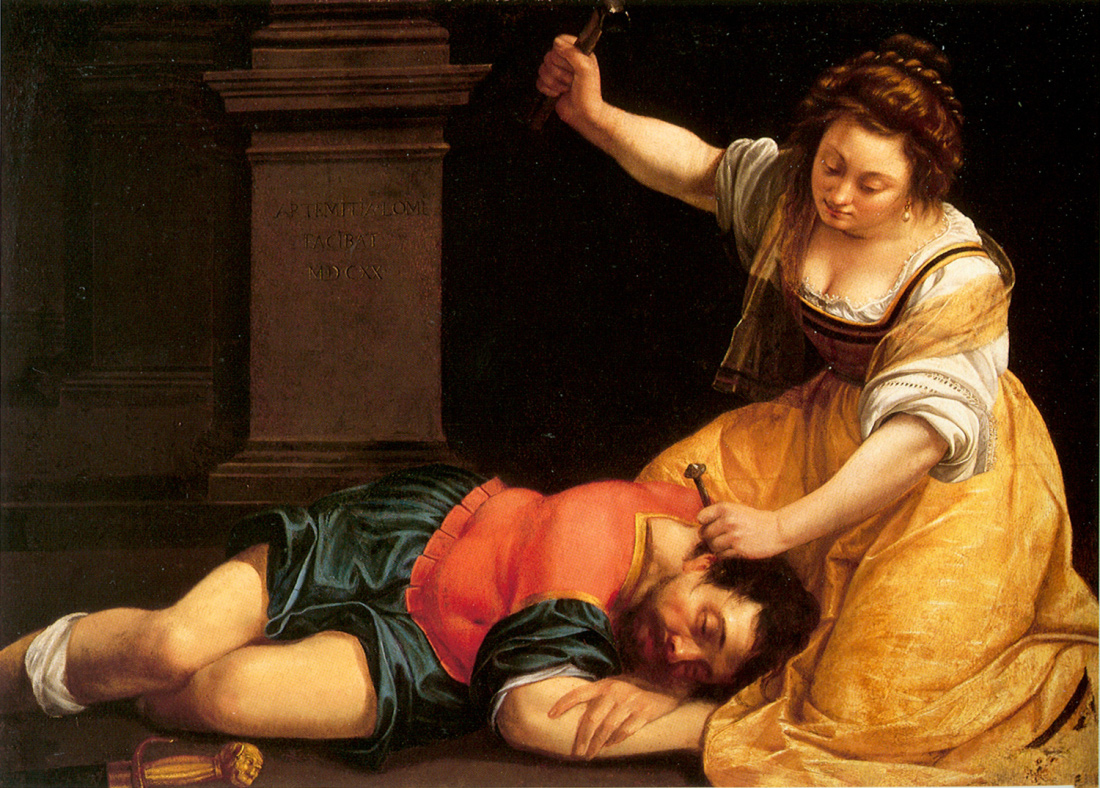
I love how Rebekah is always RIGHT THERE.

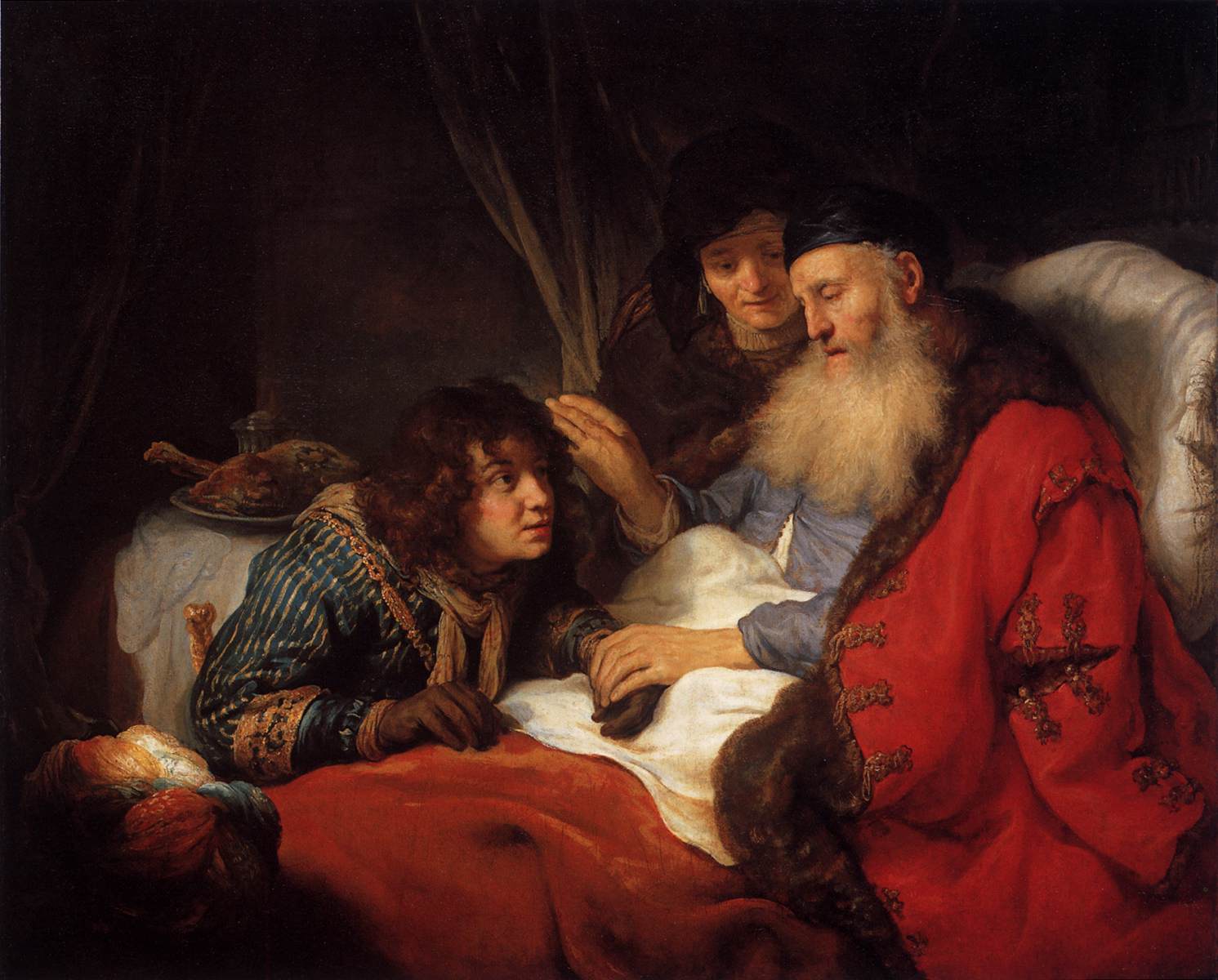
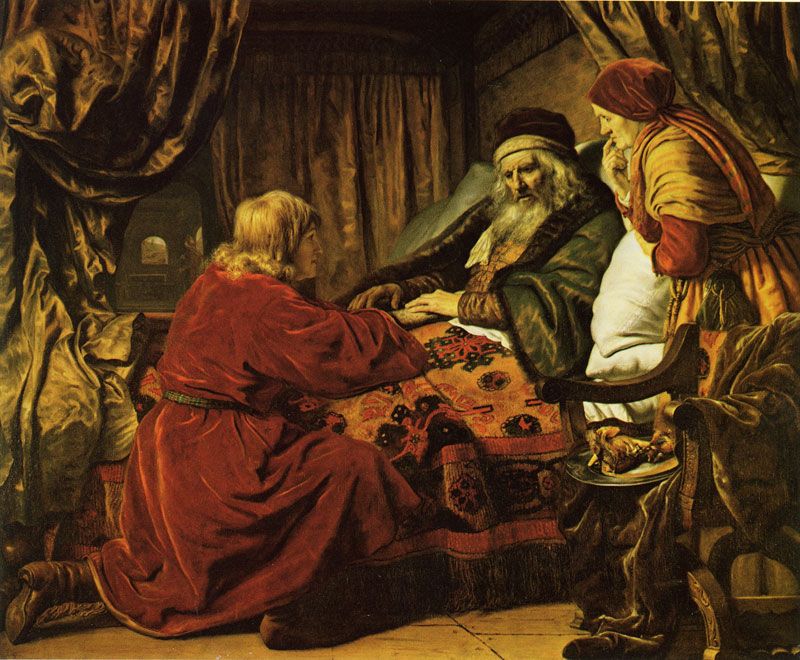
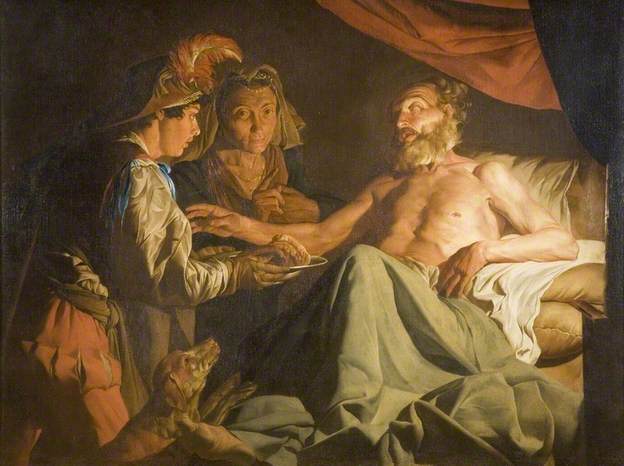
“Ah! I know that story!” you might say. “It’s Genesis 27!” And you’d be right! You remember the basics: God told Rebekah that the younger would rule over the elder, but Isaac favored Esau, the older son instead of Jacob, the younger. So, while Isaac planned on giving Esau his blessing, but—while Esau is in the process of procuring the means to gain the blessing—Rebekah connives to get Jacob the blessing first. God’s will is done, but not according God’s will. Deceit, deception, and outright lies “win” the day. But only for a day, because these practices and decisions continue to cause problems for Jacob and the rest of his family throughout his story.

But you’d also be wrong. Because there’s another episode with different characters in a different setting that nevertheless fits this same telling of events.

“Mom, seriously, be quiet or he’ll totes hear you!”

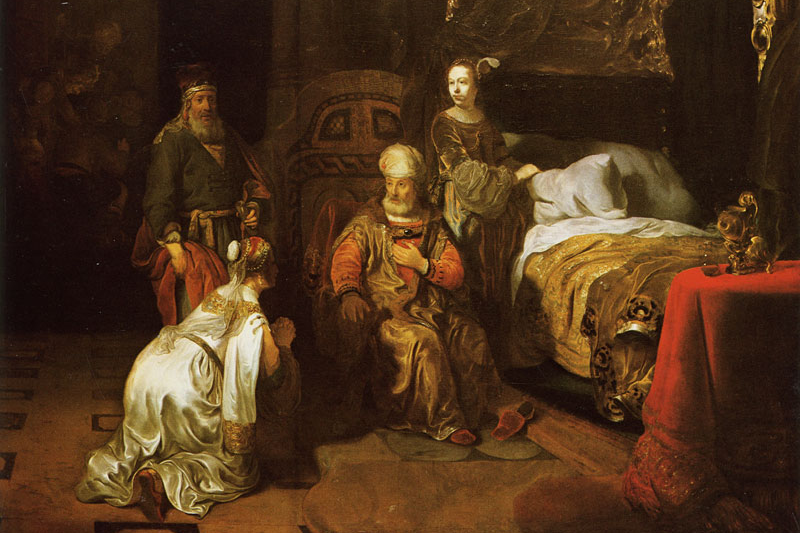
It’s 1 Kings 1. You probably remember the basics: David is old and infirm—like Isaac, confined to his bed (1 Kgs 1.1–4)—and he has continually favored his eldest son: first Amnon (make sure you check the DSS and the LXX version of this verse!), then Absalom, and now Adonijah. There is every indication that David intends to give his blessing and his throne. But Bathsheba, Solomon’s mother, wants Solomon to be king after David’s death. And so, while Adonijah is in the process of raising support for his own coronation, Bathsheba devises a plot to gain David’s blessing first. God’s will is done, but not according to God’s will. Deceit, deception, and outright lies “win” the day. But only for a day, because these practices and decisions continue to cause problems for Solomon and the rest of his family throughout the story.

Why is Rebekah ALWAYS THERE

“But wait!” you might object, “There wasn’t any lying or deceit going on in 1 Kings 1! Bathsheba said that David had promised her that Solomon would inherit the throne and Nathan the Prophet is involved. No way was she lying.” Those are important points and this reading certainly matches the way we tend to think through this text. But we need to be careful not to read teleologically (reading the story as if it always had to play out that way just because it happened to play out that way).

Consider, two quick counter points.

Bathsheba does indeed tell David that he had promised her that Solomon would inherit the throne.  But if he did, it’s nowhere else recorded (not even in 2 Sam 12, where we would expect it!), and God’s promise to David is notably vague about any particular son inheriting his throne (2 Sam 7). Equally problematic is that, if David told Bathsheba that her son would inherit the throne, he certainly hasn’t acted like that. He treated Amnon as the heir apparent, then Absalom the same, and is fully aware of what Adonijah is doing and how he has been acting as the crown prince and has said nothing to him about it! Adonijah has cause to lie, but seems to think that Bathsheba might believe that “All Israel fully expected” him to take the throne after David (1 Kgs 2.15). If anything can be discerned from the story, it’s that David favored Adonijah. Lastly, we should at least consider the possibility that even if David had told Bathsheba that her son would inherit the throne, that doesn’t mean he was telling the truth. David just might have lied a time or two in his life.

It’s even drawn similarly!

The second, more substantive, question involves Nathan’s involvement. Nathan is a Prophet and has been nothing but faithful from what we’ve seen in the story so far! Surely, a prophet wouldn’t lie or be mistaken? After all, Nathan himself was the one who delivered the message of David’s adultery with Bathsheba, the death of his firstborn, and the promise of Solomon’s birth (and naming)! Perhaps Nathan had some special revelation about Solomon inheriting the throne? All of that is either true or possibly true, but—if the implications are true—they arise from Nathan’s character and not from the text. In the text itself, things are a little different. Nathan is worried about Bathsheba’s and Solomon’s lives, not primarily about him gaining the throne (1 Kgs 1.12). Nowhere does he mention a promise that God made to him, or David to Bathsheba. Indeed, the plan he puts together is crafted as subterfuge! “First you go in…” then, “I’ll come in as if by chance, after…” to “confirm what you say” since it would require at least two witnesses! We might also want to remember that–in the book of Kings–prophets (even good ones!) are often less than dependable in their grasp of what God wants them to do. Furthermore, if Nathan is on the side of Solomon as a faithful servant of David and God, then Abiathar the Prophet is on the other, a faithful servant of David and God as well, and for even longer.

What emerges isn’t entirely clear. Are Bathsheba and Nathan lying, or telling the truth? Did David mean Solomon to have the throne originally, or not? There are good arguments either way and scholars have long debated this issue.

But one thing is certain, without making the connection between 1 Kings and Genesis, between Isaac, Esau, Rebekah, and Jacob and David, Adonijah, Bathsheba, and Solomon, we probably wouldn’t even be asking these questions. And, as we’ll talk about next time, opening our eyes to this possibility raises our awareness to other elements present in the Solomon narratives in 1 Kings.

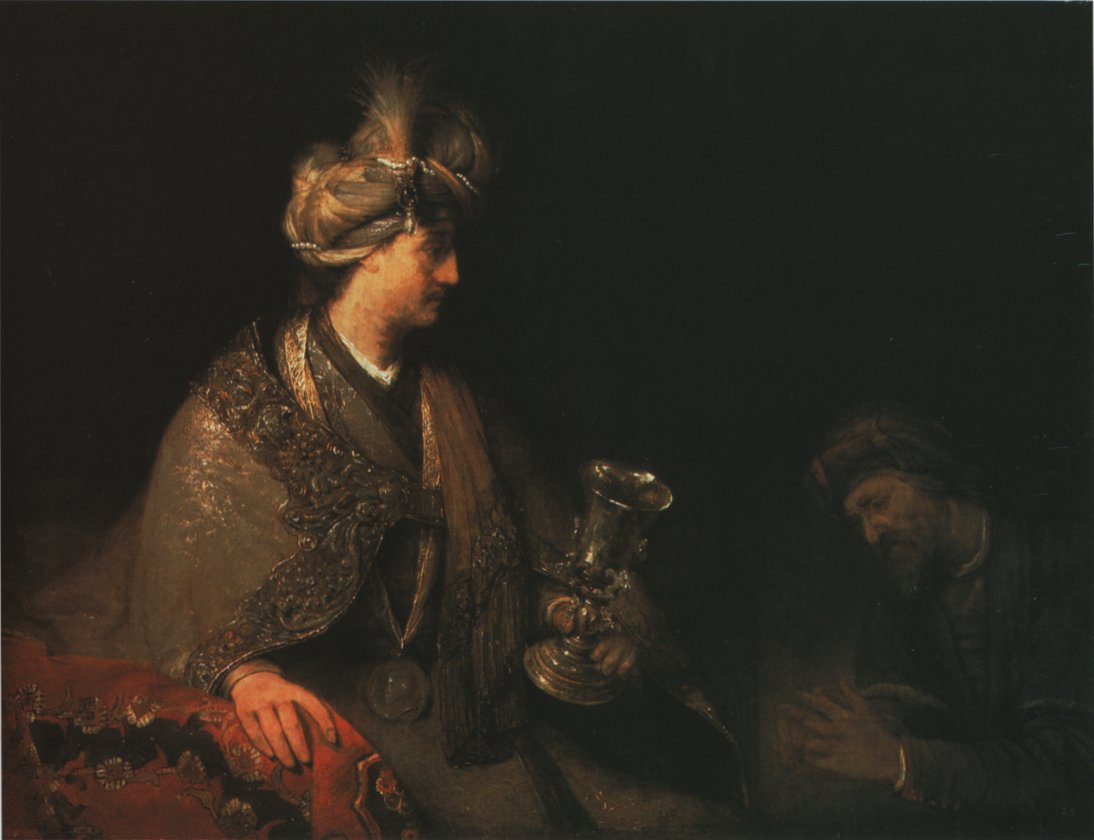
“Nice hat, bro.”

Dismembering the Body, Disbanding the People: Judges 1

Every other Fall at Florida College, I get the chance to teach a one-credit hour class covering Judges and Ruth. It’s a blast. It’s usually populated with Juniors and Seniors, most of whom I’ve had for other (sometimes numerous other) courses, so I know most of them and they know me. Because it’s a one-hour class, the workload is meant to be particularly light. But, because it’s a junior-senior level course, the content is able to be more focused and heavier. It makes for a fun mix.

But another reason that I love teaching Judges is because it’s awful. Oh, it’s incredibly well written. But the stories and the unified narrative that the book itself tells are truly horrific. It’s also extraordinarily relevant in today’s world where people are asking questions about power, gender, sexual assault, and the failure of leadership. Everyone, of course, knows that about the end, but it’s really fun showing how this all starts at a very good place to start: the beginning.

“Get some!”

In chapter one, the narrator introduces us to several themes using events that seem relatively innocuous: Judah requesting Simeon to help him capture his land; Achsah requesting a water source from Caleb for Othniel; Othniel leading Judah. And several that–if not innocuous–seem to be warranted or neutral: Judah cutting off Adoni-Bezek’s thumbs and big toes. Even if we just look at the “successful” and “best” tribe of Judah, we realize it’s all bad.

But each of these episodes is meant to highlight a catastrophic failure whose full dangers are just unrealized.

Judah requesting Simeon’s help to capture the land even though God told him he would place everything into his hands because a theme of people refusing to do God’s commands unless someone–who should be and is weaker!–accompanies them (e.g., Barak and Deborah).

Achsah’s request from Caleb for a well seems at first glance to be like the Daughters of Zelophehad in Numbers (a story of a strong minded woman concerned for her inheritance), but upon closer inspection we realize that Othniel does not ask and this failure of male leadership that begins in weakness (see again, Barak and Deborah) soon turns to predation (the rest of the book).

Even Othniel’s leadership is a carefully crafted slight against Judah! Because Othniel isn’t a Judahite, or even an Israelite, but is (most likely) an Edomite (cf. Num 32.12; Jos 14.6, 14; Gen 36.11, 15, 42). Judah cannot field a leader for herself, instead the non-Israelites are more righteous than they (Jebusites vs. Gibeonites; Jael; etc).

But it just gets worse. Although Judah’s decision to cut off Adoni-Bezek’s thumbs and big toes may seem far retribution for what he has done to others, the Law is clear about dismemberment. Judah has abandoned God’s laws in order to–and this is the theme of Judges–become just like the Canaanites.

Already, the best Israel can manage is a failure. And that failure will only grow. What one does to ones enemies and what begins with the dismemberment of the evil Adoni-Bezek ends with the dismemberment of the innocent Concubine.

Snakes and Sorcery: Joseph’s Cup and Character (Gen 44)

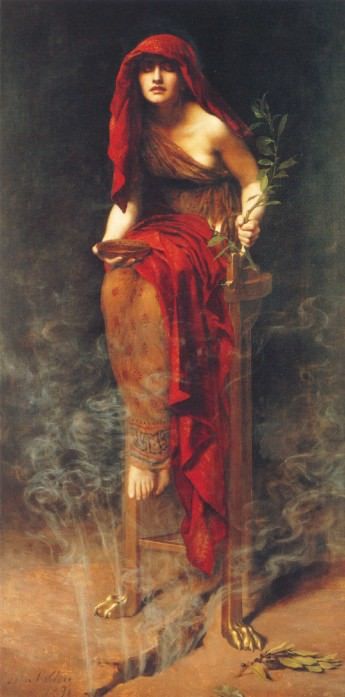
Snakes are frequently tied to knowledge, rebirth, sex, and magic in the ancient world. Asclepius—who was either the son of Apollo or a sort of adopted son—was raised by Chiron, but he gained true knowledge after rescuing some snakes who then cleaned out his ears, which gave him special knowledge of healing. His symbol was a staff flanked by a snake (not to be confused with the Caduceus). Apollo himself, one of the gods best known for granting special knowledge through prophecy, was connected with snakes. His chief shrine, where he would provide prophecies in order to speak with mortals, was at Delphi, where Apollo had killed the Python, whose spirit could still invest Apollo’s priestess, the Pythia.
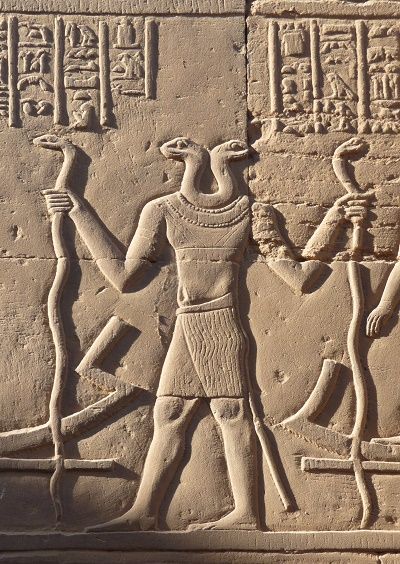
Of course, it’s not just Greek myth that held a special place for snakes. The Mediterranean world was not so separate as we may have at times believed. Scholars like M. L. West in his monumental volume, East Face of Helicon, have shown that many of the early myths and stories from Greece actually find their origin (or at least influence) in the ancient Near East. For example, in Egypt, Atum was a Sun God and eldest of the Heliopolis Ennead, generated himself and regenerated himself every morning in the visage of a Snake and he later turned himself into the form of a snake, which was connected to eternity. Throughout the ancient Near East, serpents, snakes, and dragons are connected to primordial powers that only the gods can control or slay.
We even see this in the Bible! Moses’ staff (as well as Aaron’s and the Egyptian Magicians’, through their own magic) can turn a staff into a snake (Exd 4.1–5; 7.8–13). Moses of course makes a bronze serpent which functions as religious paraphernalia used to heal poison (Num 21.8–9), and later on is worshipped as the god Nehushtan (2 Kgs 18.4). We find smaller bronze serpents throughout the land, remnants of Canaanite culture, and the shape of serpents inscribed even on altars (likely to help gain information from God). Of course, how could we forget the nexus of all of the snake imagery in Genesis 3! (But we probably shouldn’t get into that, here…)
Original Horned altar from Beersheba in the Israel Museum, note the inscribed serpents on the right. Which are notably missing in the reconstruction on-site. Ferrell Jenkins has photos of both, here.

But there is a specific nexus of these issues I dowant to get into, here. The Hebrew word for serpent is nahash but the noun, nahash can also mean “divination” (e.g., Num 23.23; 24.1). The verb, nihesh (in the Piel for those who care), means \”to practice divination.\” This is because it’s the snake that is most often associated with deities and demons that provided knowledge or healing. Like many such rites, snake magic (often translated as “divination” but when I teach Hebrew I like to teach the word as “divinassssssion”) is expressly forbidden by the law collections of the Bible:
  • “You shall not eat any flesh with the blood in it. You shall not practice divination or tell fortunes” (Lev 19.26)
  • “There shall not be found among you anyone who burns his son or his daughter as an offering, anyone who practices divination or tells fortunes or interprets omens, or a sorcerer (Dtr 18.10, and the same connections between idolatry and divination also occur in the book of kings as well, cf. 1 Kgs 20.33; 2 Kgs 17.17).

But the Bible also specifically links snake magic to Egypt. Probably the most famous example of that is when Moses and Aaron’s face-off with the Egyptian magician-priests :

Then the LORD said to Moses and Aaron, “When Pharaoh says to you, ‘Prove yourselves by working a miracle,’ then you shall say to Aaron, ‘Take your staff and cast it down before Pharaoh, that it may become a serpent.’” So Moses and Aaron went to Pharaoh and did just as the LORD commanded. Aaron cast down his staff before Pharaoh and his servants, and it became a serpent. Then Pharaoh summoned the wise men and the sorcerers, and they, the magicians of Egypt, also did the same by their secret arts. For each man cast down his staff, and they became serpents. But Aaron’s staff swallowed up their staffs. Still Pharaoh’s heart was hardened, and he would not listen to them, as the LORD had said (Exd 7.8–13).

Pharaoh’s magician priests—a common sight in ancient courts, we see the same in Babylon (Dan 2.1–11; Ezk 21.21)—were able to do some of the things that Moses and Aaron could do (although not as well!). I’ve written before that Joseph himself is portrayed in Genesis as a similar sort of magician-priest. So, when we get to the climax of the action between Joseph and is his brothers, where Joseph told his chief servant to plant evidence in his brothers bags and then bring them back to him for justice, we shouldn’t be completely surprised to read:
Joseph said to his Major Domo, “Get up, go after the men. And when you reach them, you say to them, ‘Why do you repay evil for good? Is it not the case that my master drinks from it and he is surely able to perform divination with it? (Gen 44.3–5).
Reading this statement should open our eyes (you know, if all of the mental torture, manipulation, and self-aggrandizement he’s already shown!) to Joseph’s character. Because there are only two choices: either Joseph is lying about his prophetic insight (which, you know, is problematic since he’s also made claims about this in chapter 37), or he’s telling the truth and is performing forbidden, sorcerous practices and he thinks this is where his prophetic insight arises.
 
Of course, this is exactly the sort of thing the Egyptians would have expected their magician priests to practice. And there is every reason to believe that—whether Joseph actually did perform Egyptian magic rituals or not!—he acted like a priest: he married a priest’s daughter, he favors the priests with wealth and land, he interprets messages from the gods, and he dresses like one. What else would pharaoh and the people around him (including his brothers!) think?
 
The last Joseph post I made suggested this same possibility for how we read his first dreams (Gen 37) and asked, “What if he’s lying?” To say that there was some backlash is probably too strong, but not by far. By and large, folks who have grown up reading or being taught the Bible have been presented with a Joseph cleaned and purified from all of his (many!) character flaws. But here at the climax of the story, there is no way to “make this better.” 
 
Either Joseph is lying, or he’s telling the truth. And whichever way you go, you’ve got to wrestle with this decision.

Ruth the Moabitess: Proto-Racism, Literary Criticism, and Ruth 3

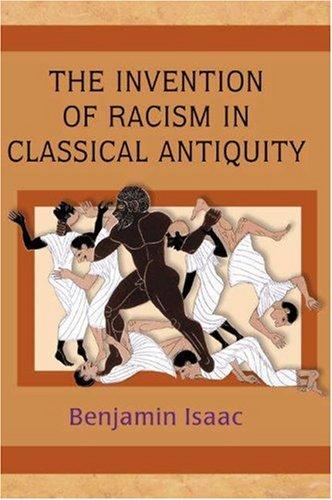
Antiquity was super racist. Well, that’s not quitetrue. To use the term that Benjamin H. Isaac uses in The Invention of Racism in Classical Antiquity (2004), antiquity was super “proto-racist.” Peoples in antiquity always had very strong perception of what other peoples were like. Isaac illustrates this through the Roman views of others: the Eastern Asiastics were effeminate, clever liars; the Syrians, Carthaginians, and Phoenicians were decadent, servile, effeminate, and unreliable; the Egyptians were promiscuous, greedy, and arrogant; the Greeks were sometimes dangerous (especially doctors!), decrepit, and degraded from their former glory, but sometimes they were worthy of  (private) emulation and respect and owed a debt for their academic pursuits. This probably doesn’t surprise us, but what is interesting is that these are consistently applied images, archetypes, and slanders across various authors and centuries. That isn’t to say that major events couldn’t influence these understandings, but such were rare.
We see the same thing in the Bible.
If you read through the biblical narrative, you see that certain peoples stick out: they are portrayed in certain ways and various authors are able to harness those examples in order to provide a lot of information and expectation into a very little text. For example, when we read that the people of the world gather at the plain of Shinar in Genesis 10, we know we are expecting a certain type of story. Babylon is an easy example of this, which many others have noted, is held up as a paradigm of rebellion against God, both in Old and New Testaments.
But I want to look at a different text and a different cultural identity. This story opens in Ruth:
Then Naomi, Ruth’s mother-in-law, said to her, “My daughter, should I not seek rest for you, that it may be well with you? Is not Boaz our relative, with whose young women you were? See, he is winnowing barley tonight at the threshing floor. Wash therefore and anoint yourself, and put on your cloak and go down to the threshing floor, but do not make yourself known to the man until he has finished eating and drinking. But when he lies down, observe the place where he lies. Then go and uncover his feet and lie down, and he will tell you what to do.” And she replied, “All that you say I will do” (Ruth 3.1–6).
This text has brought about a great deal of comment. But before we get into that, we need to do a bit of background work. That’s because Ruth’s identity is a key element of the entire book and how her identity interacts with Boaz’ and Naomi’s is just as important. When we see how Ruth is portrayed in her self-titled book, we read that she is Ruth the Moabitess (Ruth 1.4, 22; 2.2, 21; 4.5, 10) or “She is a Moabitess” (2.6). Over and over and over, we have a stated focus on her ethnic identity. That’s because Moab—like Babylon—has a particular understanding. That is that the Moabitesses are femmes fatales or seductresses.
Think about it: Moab is the incestual child of Lot and his oldest daughter, who got her father dunk and seduced him in order to provide an heir (Gen 19.30–38). Later, Balaam sends Moabite women into the Israelite camp to seduce them and cause them to worship false gods (Num 25.1–5). Throughout the Law, marriage to Moabitesses was viewed as particularly sinful (Dtr 23.3).
With that in mind—and particularly Gen 19.30–38, where the situation is nearly exactly like that of Ruth!—we realize a bit more of what Naomi is implying that Ruth should do.
Like in Genesis 19 (which we’ve talked about before), there is no heir to the line (Gen 19.31;Ruth 3.1). Like In Genesis 19, Naomi tells Ruth to wait until the man has drunk wine (Gen 19.32; Ruth 3.3, 7). Like in Genesis 19, Naomi tells Ruth to lie with the man (Gen 19.32; Ruth 3.4). And like in Genesis 19, Boaz does not know who she was (Gen 19.33; Ruth 3.9).
Once you see this intertextual connectedness, Noami’s implication is clear: she wants Ruth to act like a Moabitess and seduce Boaz! Of course, this makes it even more startling when, after Boaz asks who is there, she answers “I am Ruth, your servant” and not—as she so often has throughout the rest of the book—“I am Ruth, the Moabitess.”

Joseph’s Dreams

I’m going to tell you something shocking: Joseph is not a hero.

Well, ok, there are two misleading things in that statement. First of all, if you’ve known me for very long, taken my classes, or read more than one of my blogs, you probably aren’t shocked that I would say that Joseph isn’t a hero. But the second misleading thing about that statement is that I do think that Joseph becomes a hero. I just don’t think that he starts the story as a hero; he has to become one.

We all know how Joseph’s story begins in Genesis:

Jacob lived in  the land of his father’s sojournings, in the land of Canaan and these are the generations of Jacob.

Joseph, a 17 year old, was shepherding the sheep with his brothers. Now, he was the tag-along with the sons of Bilhah and the sons of Zilpah, his father’s second-class wives, but Joseph brought a bad report about them to their father. Now, Israel loved Joseph more than all of his brothers, because he was the son of his old age, so he made for him a fancy-pants coat. When his brothers saw that their father loved him more than his brothers, they hated him and were unable to speak anything good about him.

Then, when Joseph dreamed a dream and declared it to his brothers, they had even more reason to hate him. But he said to them, “Listen up to this dream which I dreamed! Now, pay attention, we were binding sheaves in the midst of the field, and pay attention! My sheaf arose and even stood up, and your sheaves, surrounding it, bowed down to my sheaf!” Then his brothers said to him, “Will you really rule over us?  So help me if you should actually reign over us!” Then they hated him even more because of his dreams and because of his words.

But he dreamed another dream and he told it again and again to his father and to his brothers, and he said, “Pay attention, I dreamed a dream again, and—pay attention!—the son and the moon and eleven stars  were bowing down to me!” But when he recounted it to his father and to his brothers, his father rebuked him as follows, “What is this dream which you ‘dreamed’? Would myself, your mother, and your brothers really come to prostrate ourselves on the ground to you?”

So his brothers were jealous of him, but his father kept his words in mind (Gen 37.1–11).

Now, if you’re like me and most other folks who are familiar with this story (but perhaps haven’t actually studied it since childhood), you’ve probably thought of Joseph as a near-perfect person. Oh, maybe you’ll allow that he can sometimes be a bit of a brat, but nothing out of the ordinary. After all, look at where he ends up at the end of the story!

But we’ve got to be careful that we don’t read the story teleologically.  And we should read the story with an eye towards its literary features (if you want to consider some of those, I’ve talked about intertextuality in these two posts!). The two most important being “how is Joseph portrayed in this story?” and “how is the rest of his family portrayed in the story of Genesis?”

Today we’re going to look at how Joseph is introduced and focus on the two most important elements of his introduction: the “bad report” and the “dreams.”

The first thing that Joseph does in the story—the thing from which we should make our first impressions about his character—is bring a “bad report” about his brothers. Once we look at this a little closer, without assuming that Joseph must be telling the truth about his brothers, we recognize that a “bad report” (דִּבָּה) isn’t a value neutral term. In fact, it’s a loaded term against the person who would speak it! Consider two of the most important uses: In Numbers the unfaithful spies being a “bad report” about the land of Canaan and die before the LORD because of their wicked heart (Num 14.36; 13.32). In Proverbs, only a fool utters a “bad report” and is compared to someone who is a liar (Prv 10.18). In fact, every time this relatively rare word occurs, it indicates wickedness or lying (cf. Psa 31.13; Jer 20.10; etc). If we read intertextually, we realize that our author is telling us—right away!—that Joseph is like the unfaithful spies and the proverbial fool. This should guide our reading of his character, and yet he gets off Scot-free with us, just like he does with his father! In fact, he’s rewarded for his choices with status and a fancy coat. This is not the action of a hero.

But what about the dreams?! How could those be bad?

Joseph is well-known as a dreamer, so we don’t think much about Joseph’s dreams in chapter 37. However, when we look at them a little more closely, something is off. They are unlike the rest of the dreams that we have in the rest of the story, whether they come from the baker and cupbearer or pharaoh himself…

  • We don’t read that they’re from God
  • Joseph dreams them instead of interprets them
  • Everyone knows exactly what these dreams mean; they’re far from difficult!
  • Joseph continually tells them to his brothers (the “told” in 37.9 is a repetitive Piel)

These dreams are not like other dreams, and if he would lie about what he brothers have done, isn’t it at least possible that we’re supposed to discount what he says he has done?

But, perhaps more convincingly, these actions are exactly what the entire thrust of Genesis 12–50. There are no real heroes at the beginning of the Genesis characters’ stories. Abraham pimps out his wife not once but twice. Isaac does the same and shows the same sort of favoritism that Jacob does. Jacob shows the same sort of favoritism and bartering of favor to his son that he himself dealt with from his father. Jacob stole his birthright and his blessing. Joseph connives his coat the same way (of course, this will become a big part of his story!). When we read the Joseph story as part of Genesis it becomes obvious that Joseph doesn’t start out as a hero just as none of the other characters does, either.

Joseph doesn’t start out as a hero; he becomes one.

Joseph isn’t a hero because of his innate goodness, but because—through his story—he is transformed.

The “Other Brother”: Genesis 43 and Father’s Day

The story of Joseph (Gen 37–50) is a family drama. And like so many family dramas, from Wes Anderson films to Inception, the focus is on redemption and reconciliation. All of the action that takes place serves only to move the characters into the right place—both locationally and mentally—to confront their past mistakes and each other. Certainly, there are enough family members that need redemption.
But—even though none of the characters is a hero and all of them have serious flaws (yes, even Joseph!)—the blame rests most heavily on Jacob. Jacob, after all, is the father. And in a patriarchal system as they lived in, it is the father who sets the tone for the family. While many things may be uncertain in Joseph’s story one thing that isn’t is that Jacob is a bad father.
 
The strange and sad thing is this: Jacob being a bad father isn’t unexpected. You don’t have to read the Bible for very long to realize how many bad fathers are contained in its pages and how much it must be to be a good father. Even the Bible’s heroes, those men who were so often courageous, faithful, and sure seem to have a hard time passing down their good qualities to their sons. And that says nothing for those fathers who seem to cultivate their children’s sin, themselves!
Think about it. Abraham’s choices to procure his own safety in the house of a foreign monarch (Gen 12; 20) is followed by Isaac’s choice of the same (Gen 26). And although Isaac was not yet born at the time of his father’s sinful choices, it is hard to imagine him not being influenced by them.
Isaac’s decision to show incredible favoritism to Esau at the detriment of his younger son, Jacob (Gen 27), certainly influenced Jacob’s own incredible favoritism to Joseph at the detriment of his older sons (Gen 37). Just as Esau sought to kill Jacob because of his treatment, Joseph’s brother’s seek to kill him because of his treatment.
 
Moses’ entire family is placed in mortal peril because he did not take his faith seriously enough to circumcise his son (Exd 4.24–31).
 
The last judge and high priest, Eli, raised his sons so poorly that the Bible records that they were “worthless men” who “did not know the LORD”! (1 Sam 2.12). Instead of serving the people as priests, they saw their position as a way to serve themselves (1 Sam 2.12–17). Eli knew about it, but did nothing (1 Sam 2.22–25).
 
Even David, a “man after God’s own heart,” fails, indulging in favoritism like Jacob and refusing to judge the wickedness of his children like Eli (2 Sam 13).
 
No, we don’t have to read the Bible for very long to realize how hard it must be to be a father. And perhaps some of us have had fathers like these.
 
On the other hand, there are constant recognitions of good fatherhood, as well. Paul records:
 
For you remember, brothers, our labor and toil: we worked night and day, that we might not be a burden to any of you, while we proclaimed to you the gospel of God. You are witnesses, and God also, how holy and righteous and blameless was our conduct toward you believers. For you know how, like a father with his children, we exhorted each one of you and encouraged you and charged you to walk in a manner worthy of God, who calls you into his own kingdom and glory (1 Ths 2.9–12).
 
The apostle John certainly sees himself as a father—and one not like Eli or David!—when he warns those Christians he knew, “Little children, keep yourselves from idols!” (1 John 5.21).
 
Jesus notes that no father, if his son asks for a fish, would give him a serpent (Luke 11.11).
 
When we read the many statements like these, we recognize something about fatherhood: the most important thing isn’t just being a friend, or offering sage advice, or teaching you how to fix a car. It’s serving the LORD and providing an example to children and encouraging them to do the same. It’s for this reason that we read (from the perspective of Jesus), “Although he was a son, he learned obedience through suffering” (Heb 5.8).
 
Once we see that is the lens that the NT provides for seeing OT fatherhood, we may better understand the faithfulness of Abraham when he was willing to sacrifice his son because he was a true son of his heavenly father (Gen 22). As the writer of Hebrews records:
 
By faith Abraham, when he was tested, offered up Isaac, and he who had received the promises was in the act of offering up his only son, of whom it was said, “Through Isaac shall your offspring be named.” He considered that God was able even to raise him from the dead, from which, figuratively speaking, he did receive him back (Heb 11.17–19).
 
Abraham’s faith was seen that he trusted that God might even raise his son from the dead and thus receive him back, even if it was the only way that would happen. That was Abraham’s moment of faith, and—it seems—the moment as a father that influenced Isaac’s own faith as well.
 
At this point you might be saying, “Ok, but what does this have to do with Jacob and Genesis 43?!” Good question! You see, it’s this same idea—that a father might receive back a lost son from the dead in resurrection, even if in no other way—that we find a hint and a hope for Jacob, as well.
 
In Genesis 43, Jacob (like Abraham thought, before him) has been bereaved of his beloved “son of old age” (Joseph) for years. He is certain that he is dead and may even think that his other sons had killed him. And yet, when he sends Benjamin down to Egypt along with Judah to procure more food, notice what he says:
 
May God Almighty grant you mercy before that man in charge in Egypt, and may he send back your other brother as well as Benjamin (Gen 43.14).
 
This statement is ambiguous because it could mean two entirely different things. The “he” can refer either to Joseph (the “man in charge”) or it can refer to God (who will grant mercy). The phrase, the “other brother,” is ambiguous as well. If we think the “he” is Joseph, then the “other brother” is Simeon, who Joseph has locked in prison until they return (Gen 42.24). But, if the “he” is God, then Jacob speaks more truly than he knows, because—in Genesis 37–50—the “other brother” is always Joseph. It’s like what the brother’s say when speaking to Joseph, “the youngest is with our father, and the other is no more” (42.13), or “We are twelve brothers, sons of our father, the other is no more…” (42.32).
 
And this is what’s interesting. Jacob thinks Joseph is dead. He may even think that the brothers killed him. But the Joseph story isn’t written down by Jacob or Joseph or anyone there. They’re not the author. Someone else is. And that author is doing something more than telling a story about Joseph (or even about Judah). And that author can play around with the words of the characters in such a way as to teach his readers—living long after everyone living in these stories is dead!—particular things. And, by bringing up this ambiguity, we see that “particular thing” revealed is resurrection.
 
You see, the story of Joseph is a family drama. God has moved the pieces around—the plot, the characters, the famine, everything—in order to bring about redemption and reconciliation of the family. Joseph to his brothers and the brothers to Joseph. The brothers to their father and Jacob to his sons. But not only those. Because the story of Joseph is also about the reconciliation and redemption of all of those sons to their heavenly father. And that father is always longing to welcome his sinful children home:
 
But the father said to his servants, “Bring quickly the best robe, and put it on him, and put a ring on his hand, and shoes on his feet. And bring the fattened calf and kill it. Let us eat and celebrate! For this my son was dead, and is alive again; he was lost, and is found.” (Luke 15.22–24).

Intertextuality, Literary Criticism, and Genesis 19: Part 2

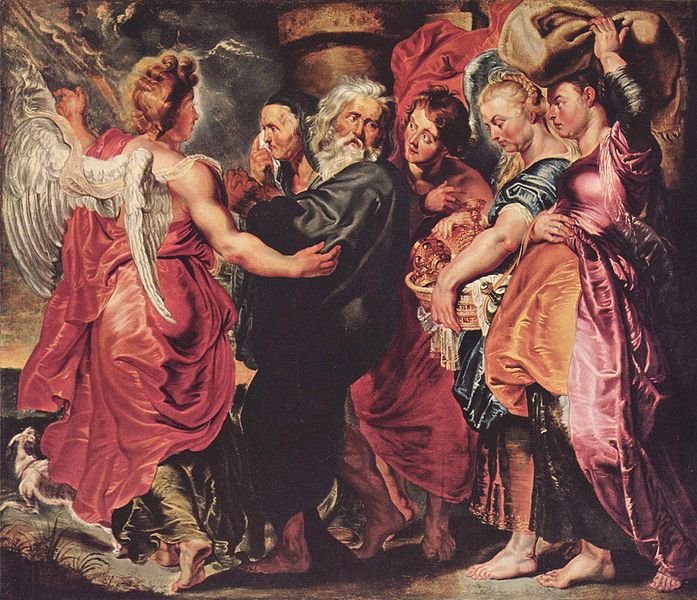
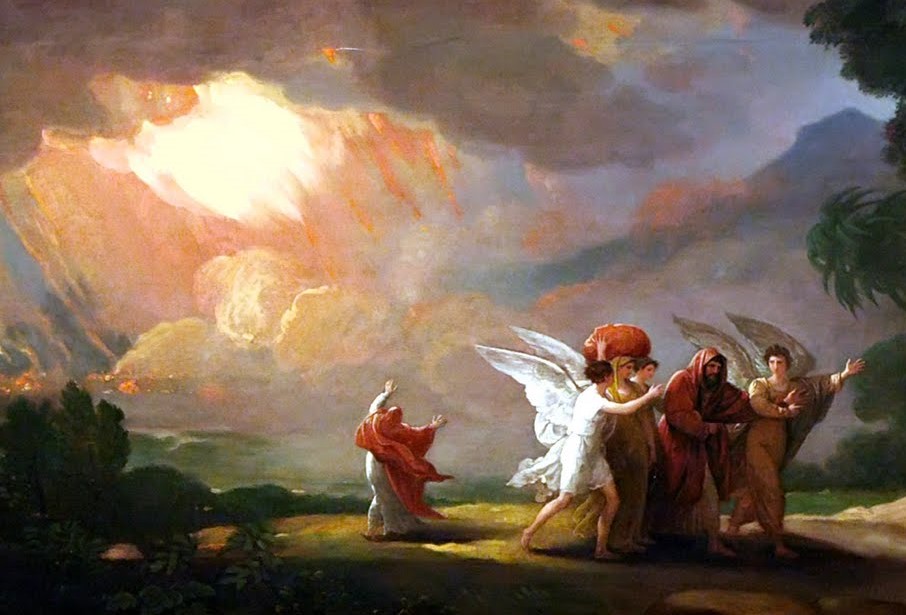
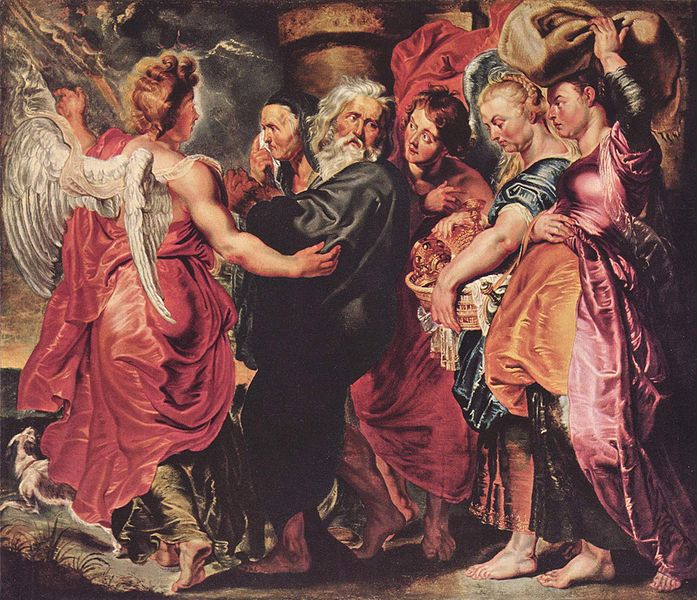
Genesis 19 is one of the most famous episodes (involving minor characters!) in the Old Testament for numerous reasons. Well, the first half of the text is. The second half of the text tends to get skipped over in most children’s bible class curricula! We talked last time about the first half of Genesis 19, where God sent two messengers to test Sodom and Gomorrah to see whether they were righteous or not. When they failed their test, those same messengers rescued Lot and his family before destroying the cities. Because of this, Lot, his wife, and his daughters were saved (although his sons-in-law refused, since they thought Lot was crazy). Up to this point, the story is pretty familiar. Many probably even know that—upon turning back toward the city that “looked like Egypt”—Lot’s wife died a salty death. But what comes afterward is the real boogaboo. Alone near Zohar, without his wife, his sons-in-laws, and his city, we read:

Lot went up out of Zoar and lived in the hills with his two daughters, for he was afraid to live in the city of Zoar. So he lived in a cave with his two daughters.

The firstborn said to the younger, “Our father is old, and we have no male heir or progeny to come in to us after the manner of all the earth. Let’s get our father drunk on wine, and we will have sex with him, so that we may carry on our name from our father.” So they made their father drink wine that night. And the firstborn went in and lay with her father. (He did not know when she lay down or when she arose.)

The next day, the firstborn said to the younger, “Look, I lay last night with my father. Let’s get him drunk on wine again tonight. Then you go in and lie with him, that we may preserve offspring from our father.” So they got their father drunk on wine again that night. Then the younger arose and had sex with him. (He did not know when she lay down or when she arose.)

In this way both of Lot‘s daughters became pregnant by their father. The firstborn bore a son and called his name Moab (he is the progenitor of today’s Moabites). The younger also bore a son and called his name Ben-ammi (he is the father of today’s Ammonites) (Gen 19.30–38).

Now, this story is doing all sorts of things. Among others, it’s an aetiological explanation for the Moabites and Ammonites; it functions as a polemic against Israel’s neighbors; and it neatly cuts off the potential for Lot (or his progeny) being the inheritors of Abraham’s promise, removing one more “logical alternative” on the road to Isaac. In other words, there’s a lot (sorry, I just couldn’t help it!) we could talk about in this episode. Even if we moved outside of the specific Lot storyline to see what is in the background, we could talk about the importance of progeny, ancient Israelite (and near Eastern, in general) ideas about sex, purity, or incest, and lots of other things. But, for today, I want to return to our ideas of intertextuality.

Intertextuality and literary criticism connects stories through verbal and literary connections in order to better interpret itself. This is particularly true when we’re reading episodes as part of the same book or written in the same fashion. So what episode am I going to connect to this? Well, first, lets see if we can figure out the major literary markers:
  • God Rescues a Single Family from Mass Destruction
    • We have information about the husband, wife, and children included
    • The narrative focuses primarily on the interaction of father and children
  • Others have a chance to flee destruction, but refuse and perish
  • The Destruction of the Masses and After-Episode of Salvation are interrupted by God remembering a covenant
  • Salvation of the Family is Immediately Followed by Sin
    • The sin includes parent and child (Lot and Daughters)
    • The sin includes drunkenness (Lot is drunk when this happens)
    • The sin includes sex (They lay with their father)
    • The sin explains the origin of one of Israel’s neighbors (Moabites and Ammonites)
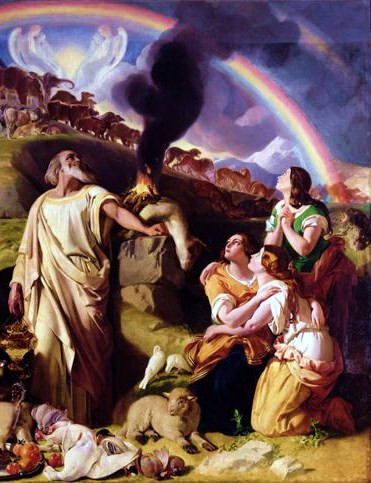
By this point, you’ve probably figured it out. But let’s see how this plays out and turn to Genesis 9. After God has destroy the world with a flood, he nevertheless saved Noah and his family (including his wife, sons, and daughters-in-law), and—immediately after the flood—we read:

The sons of Noah who went forth from the ark were Shem, Ham, and Japheth. (Ham was the father of Canaan.) These three were the sons of Noah, and from these the people of the whole earth were dispersed.

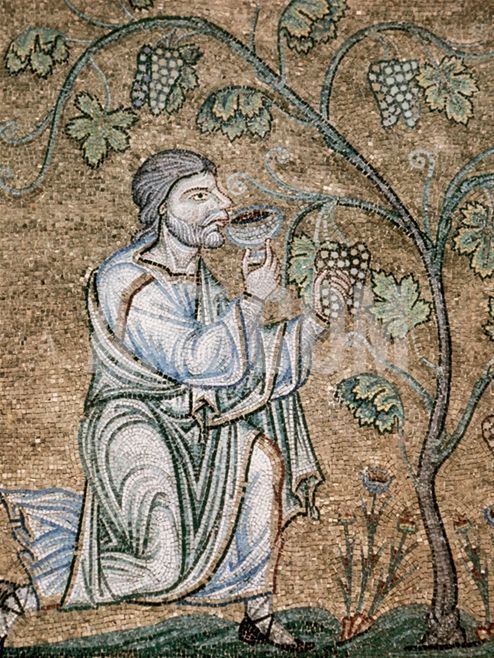
Noah became a farmer: he planted a vineyard; he drank his wine; he got drunk; and he lay, uncovered, in his tent. Then Ham, the father of Canaan, saw the “nakedness of his father” and told his two brothers outside. But Shem and Japheth took a garment, laid it on both their shoulders, and walked backward and covered the nakedness of their father. Their faces were turned backward, and they did not see their “father’s nakedness.”

When Noah awoke from his stupor and knew what his youngest son had done to him, he said:  “Cursed be Canaan; a servant of servants shall he be to his brothers.”
He also said: “Blessed be the LORD, the God of Shem; and let Canaan be his servant. May God enlarge Japheth, and let him dwell in the tents of Shem, and let Canaan be his servant\” (Gen 9.18–28).

Now, before we talk anything about the specifics of this passage (don’t worry; we’ll talk about the weirdness in a minute!), let’s just notice the literary connections. Just like with Genesis 19, we see:
  • The sin includes parent and child (Noah* and Ham)
  • The sin includes drunkenness (Noah is drunk when this happens)
  • The sin includes sex (Yes, debated, we’ll discuss this in a second, but at least *sexual*)
  • The sin explains the origin of one of Israel’s neighbors (Canaanites)
If we wanted to break these literary connections down further, we still could (e.g., a sub-point for the parent and child aspect would be that the first offender invites the other the siblings to do the same, or both separate the destruction and sin with a short note about covenant renewal).
So, in these two very short episodes (Noah = 9 vss; Lot = 8 vss) we have four of the same major literary markers. It provides both number, density, and specificity. This method shows that we’re supposed to link these two stories together, to let Scripture interpret Scripture, then what does it give us?
Let’s circle back around to Genesis 9. There’s a lot of weird stuff happening there, but the main source of disagreement is over what exactly Ham did. It breaks down to three options: 1) Voyeurism (the most popular view among recent evangelical commentators, focusing mostly on the comment that Ham saw Noah’s nakedness), 2) Paternal Incest (recently popular among some audiences, focusing mostly on the comment what Ham had done to him), 3) Maternal Incest (a minority view, focusing on how the term “nakedness of your father” is used in Lev 18 and like texts, the focus on progeny, and subversion of expectations).

Now, we’re already running a tad longer than I like so we can’t go in depth here (although, if you’re interested in learning more and don’t mind reading something longer, I’d highly recommend this article!), but what I want to touch on is how reading this story intertextually may also help resolve this question.

Because of the closeness of Genesis 9 and Genesis 19, I would suggest that we use the clearer example to help interpret the less clear. Because of their similarities, it’s extremely likely that these two texts were written in order to interact with each other! Because all of the rest of these connections, we are pushed towards the final connection: Ham’s sin (and why his progeny is cursed and emphasized repeatedly throughout the episode) is because he had sex with his mother just as Lot’s daughters had sex with their father! This fits, and makes the connections between these two episodes extremely similar. Now, of course, if we’ve already written off one of the incest views for Ham’s sin, or if we are necessarily convinced that it must be mere voyeurism, then this likely won’t influence us. But if we want to argue that these two episodes don’t interact or provide commentary, there are a few ways to disprove the tightness of the connection: 1) you show that these literary markers aren’t exclusive by finding other episodes of similar length which have all (or nearly all!) of the same literary markers, 2) you disprove one or more of the literary connections (not counting the one you’re trying to prove), 3) you show that later author couldn’t have known the text of the former author (or an Ur Text that both authors used to form their stories).But the thing that is really cool to me is that—once you recognize these sorts of things happen (and they do!)—then you’ll start seeing these connections all over the place. And that will make you a closer, better, more aware reading of text: we’re all interested in that!

Intertextuality, Literary Criticism, and Genesis 19: Part 1

Genesis 19 in one of the most famous episodes (involving minor characters!) in the Old Testament for numerous reasons. In this chapter, we are told that two travelers come to a city: they arrive at evening among strangers, they plan to sleep in the city square but Lot begs that they stay with him and provides hospitality. Lot acts as a host: he washes their feet, he shares a meal with them, etc. But during the night, we read that the “men of the city” surround the house and demand that Lot send out his travelers so that they can rape them. Lot at first tries to protest and—when that doesn’t work—he offers his daughters as substitutes. The story is obviously awful, but—surprise!—these two travelers are not common men but angels sent to judge the city and save Lot. They blind the men of the city and bring Lot and his family out, safely (at least temporarily).

Now, there’s obviously a lot (heh) we could talk about in this episode: treatment of stranger, importance of hospitality, the value of women, etc., and perhaps I’ll address some of those episodes in the future, but for today I instead want to talk about something else even more exciting: intertextuality and literary criticism!

You see, literary criticism is the idea that we should read individual episodes as part of larger stories. And students of the Bible—whether religious or areligious, whether they think the Bible is inspired or not—all do this in some way, if for differing reasons. But for (largely Protestant) “conservatives” who believe that the Bible is (in some way) ultimately the product of a single, divine author, and that “Scripture Interprets Scripture” then it’s obvious that you should want to connect stories to other stories (although see some issues, here). But how do you know which stories to connect? There are two primary ways.

The first way to connect stories together is by finding verbal connections. Now, you don’t want to succumb to parallelomania, where any and every minor connection is a reason to make any and every major connection, so there are some ground rules. Generally the way I explain this to my students is:

  1. The higher the number of verbal connections, the better
  2. The higher the density of the verbal connections, the better
  3. The more exclusive the verbal connections, the better
Number is easy: two stories connected only by a single verbal connection is week; three or more verbal connections within two episodes is quite strong. Density is related: if we have two stories with three verbal connections, but those stories are very long, it’s less certain than if the episodes are very short (in other words, the more connections per space, the more likely you should connect them). Exclusivity means that these connections are more likely to be legitimate the rarer the words that connect the stories are (i.e., you don’t get to count “the” or “that” or “a” etc!).

The second way to connect stories together is tougher: you find literary connections. These are where the same thing happens in the same way within two stories. Although we have a harder time thinking this way, and certainly (thanks to software like Accordance or Logos which can make searching for verbal connections a snap!) a harder time finding these connections, in many ways they’re more convincing. But, otherwise, the same rules apply: number of connections, density of connections, and exclusivity of connections is important! But we add one more: the sequence of the connections is also important (not just the same things happening, but happening in the same order).

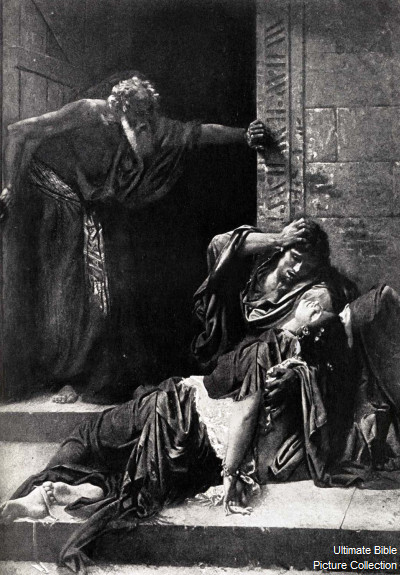
So, with that in mind, let me tell you the story of another biblical passage: Judges 19. In this chapter, we are told that two travelers come to the city of Gibeah: they arrive at evening among those who shouldn’t be stranger, they decide to sleep in the city square when no one provides them hospitality until at last someone does. This man acts as a host: he washes their feet, he shares a meal with them, etc. But during the night, we read that the “men of the city” surround the house and demand that the host send out his male traveler so that they can rape him. The host at first tries to protest and—when that doesn’t work—he offers his daughter and the Levite’s concubine in exchange. But these two travelers are not angels and the Levite is heinous enough that he throws his own wife out to be gang raped by the men while he sits back down to eat his meal.

When aligned this way, it’s obvious that these two stories are meant to be read against each other. But let’s see if we can add a little specificity to the why. So we’ll look at verbal connections and then at literary connections:

Verbal Connections:

Literary Connections:

  • Two travelers arrive at a city
  • They arrive in the evening
  • The travelers are strangers
  • They decide to sleep in the square
  • They receive an invitation from a host
  • The host washes their feet
  • The host and guest share a meal
  • Depraved men surround the house
  • The men demand the male guest(s) to rape
  • The host protests the wickedness
  • Two female substitutes are offered
Clearly, these two stories are connected, intertextually, but now we can show for certain that the connections are numerous, dense, and relatively exclusive. But what’s the point? There are two main strategies that the ancient authors intended when they linked such stories so closely together. The first is to compare and the second is to contrast.

This is already a much longer post than I normally like, so let’s look at just two points from this passage, one of comparison and the other of contrast:

Gibeah is Sodom. If these two connections are made, then the connections between the cities is clearly one of the points. But whereas everyone expects the cities of Sodom and Gomorrah (those terrible, evil, Canaanite cities!) to be wicked, they did not think the same about Israel. But if God destroyed Sodom for what she tried to do, then if Israel does the same thing then she should expect the same to be done to her. What’s good for the goose is good for the Gander.

Israel is worse than Canaan. But these two stories aren’t exactly the same! Although the two angels are truly stranger to Sodom, the Levite and his 2nd class wife are Israelites and they come to an Israelite town. They should be safe (in fact, they pass up a Canaanite town to get to a safe place!)! But they aren’t. And just as it was awful for Lot to offer his two daughters, it is even worse for the Levite to offer his own wife, and the callousness with which he treats her (sitting back down to eat a meal while she is being raped, and then—I would content—killing her himself since she shamed him, afterwards) are far worse than what happened at Sodom. So if God destroyed Sodom (and certainly any Israelites who knew that story would have agreed she deserved it), will not God destroy Israel too?

Now, I’m far from the first person to note these connections. If you want more information you could definitely check out the commentaries by Susan Niditch or Ken Way or many others (if Sasson would finish the second volume…). If you’re more interested in learning more about how literary criticism, a great place to start is Robert Alter’s Art of Biblical Narrative.

But just as I’m far from the first person to note these connections, this is far from the only stories that should be connected! In fact, in my next post I’m going to show how the second half of Genesis 19 is also connected in a similar way, even if it’s not as well known.


“They Did Not Recognize Him”: Identity and Dress and Joseph

Travelling to Egypt

I’ve taught the Joseph Cycle in Hebrew several times and am currently preaching through it, so I’ve thought about it a lot. I will probably be blogging on and off about it in the near future, but as I was working through chapter 42, I came across a cool tie-in to the Law and wanted to start with it! So, sorry for beginning in the middle…

In the story of Joseph (Genesis 37–50), we have a dramatic and compelling story of the rise, fall, and resurgence of one of the Bible’s most famous characters. Joseph and his coat of many colors is one of the stories that most people—even those who don’t know their Bibles well (whenever a Bible story has lots of colors or animals it always makes the cut for children’s Bibles…)—know something about and most of us who do know our Bible’s well understand the disastrous effects that coat played in Joseph’s life.

Deceit by sheep? Not original.

In Genesis 37, we read that Joseph is 17 years old (37.2) and his father’s favorite “because he was the son of his old age” (37.3). Because was his father’s favorite child, Jacob made him a coat of many colors (or perhaps, a “long sleeved coat”?). This coat distinguished Joseph from the rest of the sons, and showed that—while everyone else had to work—Joseph was “above” such things. But, although the coat was meant to raise him in the eyes of those who saw him, it ultimately became his undoing.

That’s because Joseph wasn’t content with just being the favorite: he had to make sure that everyone else knew and recognized it as well. He wears the coat everywhere, even when going out to “work” (37.18ff). His brothers, then, hated him for his position, his coat, and his dreams. Then, after they kidnapped him and sold him into slavery, they used that same distinctive coat given to him by Jacob to deceive their father (37.31–33).

Joseph’s coat, then, shared the same fate as its owner. But, if we follow Joseph’s story further, we see that his clothes are tied to his story in other ways as well (although I’m by no means the first to note it!).

Snarky Caption Here

After Joseph is sold as a slave to Egypt, he serves a high official named Potiphar. Unfortunately, Mrs. Potiphar lusts after Joseph and wants him to sleep with her, commanding him continually to “Lie with me!” (Gen 39.7–12). Recognizing the blessings that his master and God had given him, he repeatedly refused saying, “How could I do this great sin against God?” (37.9). However, after another refusal Potiphar’s wife tries to take hold of him forcefully, keeping hold of his robe after he runs away. With this piece of “evidence” in hand, she deceives Potiphar and charges Joseph with attempted rape (39.16–18). Once again, Joseph has been betrayed by his clothes.

Sometime after this (40.1), Joseph has been placed in custody but has again begun to rise in responsibility and status until he virtually ran the prison (40.1–4). There, rather than having dreams, he interprets them for others. His ability having been established and known to the Chief Cupbearer, when Pharaoh begins to have disturbing dreams Joseph is called upon to interpret them. The problem of course is that he has been in prison. Therefore, they “At once brought him out from the pit, shaved him, and changed his clothes before bringing him before Pharaoh” (41.14). As Joseph’s clothes change, so does his position and he rises to second in the kingdom (41.41–45).
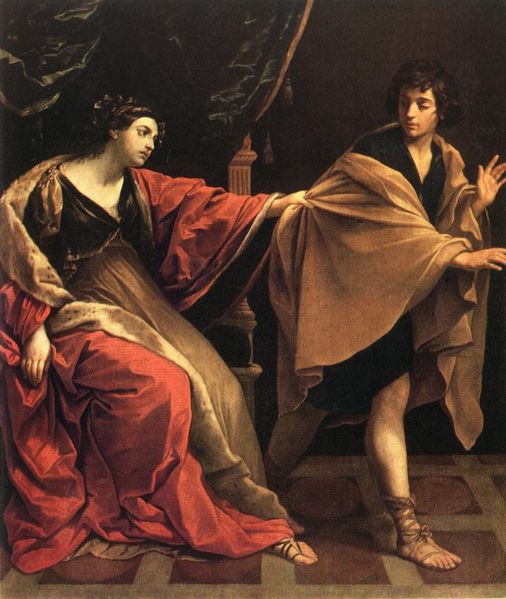
Although Joseph is now secure in his position, exactly where God and his providence placed him, it is not the end of clothing playing out in his story. When Canaan also suffers famine like Egypt, his long-lost family runs out of food and Jacob sends his ten older brothers to buy food from Egypt. Joseph recognizes them immediately, but—in his shaved appearance, dressed in the finery of Egypt—they do not recognize him (42.7–8). He sets out to test them, and—after a series of tests to see whether they would sell out another brother (42.18–25), or whether the same jealousy over his coat still infected his brothers over Benjamin. After he compels the ten older brothers to return with Benjamin, lest he take them for spies and execute Simeon, he invites them to a (mandatory) banquet where he gives them all a portion of food, but provides Benjamin with five times as much (43.34). But, even after he reveals himself to his brothers, and tells them to bring his father and their families down to join him, he cannot help but test them once again: he gives all of his brothers a change of clothes, but to Benjamin he gives 300 shekels of silver and five changes of clothes (45.22). It is no longer just Joseph’s clothes, but his ability to bestow clothing and favoritism on others that best shows his great wealth and power.

Clothes makes the man. Naked people have little influence on society.

So clothing is a key part of Joseph’s story, but many times we miss the real point behind this clothing situation. As we’ve discussed before, clothing is a big deal in the ancient world because it’s a marker of identity. So, when his brothers come before Joseph in Gen 42, they come before an Egyptian priest. His name had been changed to “God Speaks and he Lives” (41.45), he is married to a priestess, the daughter of a priest, and is implied to be a priest himself (41.45b). He names his children the equivalents of “forget home” (41.51) and “I like it here better” (41.52).

Joseph has left behind his Canaanite heritage and God’s promises, he seems to have left behind his God and his family; he is an Egyptian now. The question of Joseph’s clothes is not just one of how fancy he is, or even of his status, but whether he will be—at the end of the story—an Israelite serving the God of Abraham, Isaac, and Jacob, or an Egyptian serving Re, On, or Neith.

Solomon, Qoheleth, and Kyle Korver: the Consequences of Our Actions

We’re nearing the end of the school year (phew!). One of the courses that I get to teach most Spring semesters is Introduction to Old Testament Poetry, which covers Psalms, Proverbs, Ecclesiastes, and Song. We just finished the unit which covers Proverbs and Ecclesiastes. These books, which both deal with wisdom, are incredibly different in how they deal with comparable questions. In many ways, Ecclesiastes is the “Anti-Proverbs,” but one of the places that you can see this the most is in the question of consequences.
In Proverbs, if you do the right thing everything will work out well for you: you’ll be wealthy, wise, etc., if only you’re godly! Perhaps the best example of this comes from the end of chapter 11:

The righteous is repaid on earth, how much more than the wicked and the sinner! (Prv 11.31).

Because of this connection between righteousness, wisdom, long life, and wealth, if you’re poor, or bad things happen to you, it\’s because you\’re stupid, ungodly, or both:

The light of the righteous rejoices, but the lamp of the wicked will be extinguished (Prv 13.9).

Certainly, that’s the approach of Job’s “comforters,” who quote proverbial wisdom and use this reasoning in their attacks (cf. Job 21.17).
But Ecclesiastes says that these truisms don’t work out because of the incredible power of injustice. This injustice and oppression is a frequent refrain that frustrates the hopes and securities of wisdom or wealth or godliness:

Again, I saw all the oppressions that are done under the sun. And behold, the tears of the oppressed, and they had no one to comfort them! On the side of their oppressors there was power, and there was no one to comfort them (Ecl 4.1).

If you see in a province the oppression of the poor and the violation of justice and righteousness, do not be amazed at the matter, for the high official is watched by a higher, and there are yet higher ones over them (Ecl 5.8).

Surely oppression drives the wise into madness, and a bribe corrupts the heart (Ecl 7.7)

People are greedy, unjust, and oppressive. If you read through Ecclesiastes, you see that—often—the government itself (often seen in the position of the King) is to blame for this injustice. Because of this system of oppression luck has more to do with the outcome of a person than their wisdom, hard work, or godliness.
Oh, Ecclesiastes still thinks that these things matter: if a man is lazy, his rafters will sag (10.18), and wisdom is better than folly (2.13), and may even make one more powerful than rulers (7.19), but—other times—wisdom doesn’t save you from the rulers (9.13–16), because one sinner destroys much good (9.18).
This “Yes, but…” is the key to reading Ecclesiastes. We live in a world contaminated by sin where the natural consequences of things have been perverted, where injustice, sin, and death reign. Much of the meta-narrative of Ecclesiastes is a refutation of the “God’s Good Earth” theology to show that we no longer live in the Garden, but a world torn by sin. But recognizing and admitting this fact is unsettling! We instead prefer to think that—because we are so often rich beyond the standard of the rest of the world—Proverbs was right: We earned this! We worked hard for this! This is ours! Luck had nothing to do with it! And, sometimes that’s true, but most of the time there are far more influences on our lives that we sometimes want to admit.
One of the things that can trip us up, is the very system of oppression and greed that Ecclesiastes talks about throughout (such as in the passage I cited). Time and chance may happen to us all, but they happen more to some than others.
But I have to admit that the end of the semester musings aren’t the only thing that made me reflect on this concept and how we often want to believe that we live more in a Proverbs-style life than one of Ecclesiastes. I read Kyle Korver’s reflections on his own personal struggle with this question and then I read the responses of some of my friends and I realized that many of the ways people approach the question of “privilege” comes down to a basic understanding of how direct a correlation there is between effort and outcome, between action and consequence: the exact interaction we see in Proverbs and Ecclesiastes!
In other words, reading Ecclesiastes helps us recognize that a little evil can go a long way and has a disproportionate power over the outcome of events (10.1).
Interestingly enough, Korver notes in a different place, this exact issue. When folks insist on things like “white privilege” folks which fit that demographic can react badly because we work hard; our lives were hard; and we didn’t grow up rich! We want to think that–whatever position and success we have–it’s because of our own smarts and savvy and sacrifice. We want to believe in a Proverbs position because we have and therefore we want to believe it’s because of ourselves and our choices (this, by the way, is the main reason that the Sadducees didn’t believe in Fate).
But time and chance happen to us all. And Ecclesiastes demands that we consider that—maybe just maybe—it’s not because we were wise, but because our parents were and we are just the fool who inherits the consequences of their wisdom (2.19–21). Certainly, we can pass on poverty and bad consequences just as easily as riches and good ones.
But whether we recognize the influence of our parents on our own lives, our own success, or our own failure, we need to recognize what Ecclesiastes says: systems of injustice exist, they can destroy the good we do, and that our inheritances can tip the scales of chance for or against us. And once we realize that, maybe Korver’s points about race don’t seem quite so strained as we may have first believed.