“Check me out. I’ve got blonde hair! That’s how I know this is a dream.” -Solomon Good writing has structure. What we see at the beginning prepares us for what comes at the end. Better writing prepares us at the beginning for what comes at the end without making it obvious. On other words, itContinue reading “Beginning at the End: Structure and Solomon”
Category Archives: Textual Studies
Father, Mother, Sons, and Strife: Reading Stories Intertextually
A few posts ago, I talked about how intertextuality—the practice of lining up two or more texts that are close enough to compare in order to emphasize differences or help aid in interpretation—can help us better understand the Bible. Both of these posts used Genesis 19 to show how this text can help us betterContinue reading “Father, Mother, Sons, and Strife: Reading Stories Intertextually”
Dismembering the Body, Disbanding the People: Judges 1

Every other Fall at Florida College, I get the chance to teach a one-credit hour class covering Judges and Ruth. It’s a blast. It’s usually populated with Juniors and Seniors, most of whom I’ve had for other (sometimes numerous other) courses, so I know most of them and they know me. Because it’s a one-hourContinue reading “Dismembering the Body, Disbanding the People: Judges 1”
Snakes and Sorcery: Joseph’s Cup and Character (Gen 44)
Snakes are frequently tied to knowledge, rebirth, sex, and magic in the ancient world. Asclepius—who was either the son of Apollo or a sort of adopted son—was raised by Chiron, but he gained true knowledge after rescuing some snakes who then cleaned out his ears, which gave him special knowledge of healing. His symbol wasContinue reading “Snakes and Sorcery: Joseph’s Cup and Character (Gen 44)”
Ruth the Moabitess: Proto-Racism, Literary Criticism, and Ruth 3
Antiquity was super racist. Well, that’s not quitetrue. To use the term that Benjamin H. Isaac uses in The Invention of Racism in Classical Antiquity (2004), antiquity was super “proto-racist.” Peoples in antiquity always had very strong perception of what other peoples were like. Isaac illustrates this through the Roman views of others: the EasternContinue reading “Ruth the Moabitess: Proto-Racism, Literary Criticism, and Ruth 3”
Joseph’s Dreams

I’m going to tell you something shocking: Joseph is not a hero. Well, ok, there are two misleading things in that statement. First of all, if you’ve known me for very long, taken my classes, or read more than one of my blogs, you probably aren’t shocked that I would say that Joseph isn’t aContinue reading “Joseph’s Dreams”
The “Other Brother”: Genesis 43 and Father’s Day
The story of Joseph (Gen 37–50) is a family drama. And like so many family dramas, from Wes Anderson films to Inception, the focus is on redemption and reconciliation. All of the action that takes place serves only to move the characters into the right place—both locationally and mentally—to confront their past mistakes and eachContinue reading “The “Other Brother”: Genesis 43 and Father’s Day”
Intertextuality, Literary Criticism, and Genesis 19: Part 2
Genesis 19 is one of the most famous episodes (involving minor characters!) in the Old Testament for numerous reasons. Well, the first half of the text is. The second half of the text tends to get skipped over in most children’s bible class curricula! We talked last time about the first half of Genesis 19,Continue reading “Intertextuality, Literary Criticism, and Genesis 19: Part 2”
Intertextuality, Literary Criticism, and Genesis 19: Part 1
Genesis 19 in one of the most famous episodes (involving minor characters!) in the Old Testament for numerous reasons. In this chapter, we are told that two travelers come to a city: they arrive at evening among strangers, they plan to sleep in the city square but Lot begs that they stay with him andContinue reading “Intertextuality, Literary Criticism, and Genesis 19: Part 1”
“They Did Not Recognize Him”: Identity and Dress and Joseph
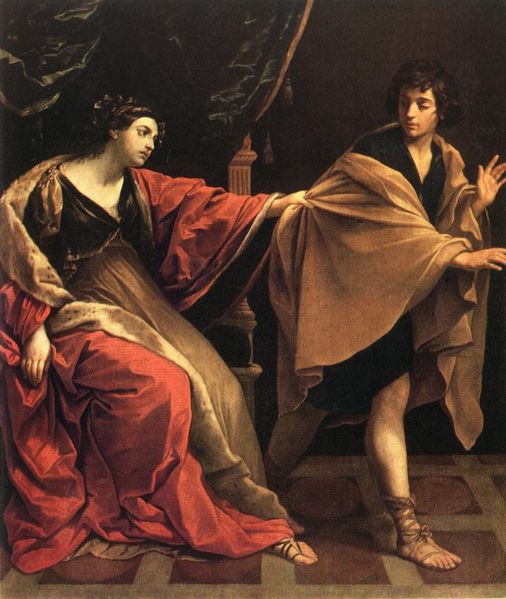
Travelling to Egypt I’ve taught the Joseph Cycle in Hebrew several times and am currently preaching through it, so I’ve thought about it a lot. I will probably be blogging on and off about it in the near future, but as I was working through chapter 42, I came across a cool tie-in to theContinue reading ““They Did Not Recognize Him”: Identity and Dress and Joseph”
 Ben Neviim